I want to seek nothing at all, if this is possible. but only to be led without looking and without seeking. For thus to seek is to find. – Thomas Merton, journal entry – August 2, 1960
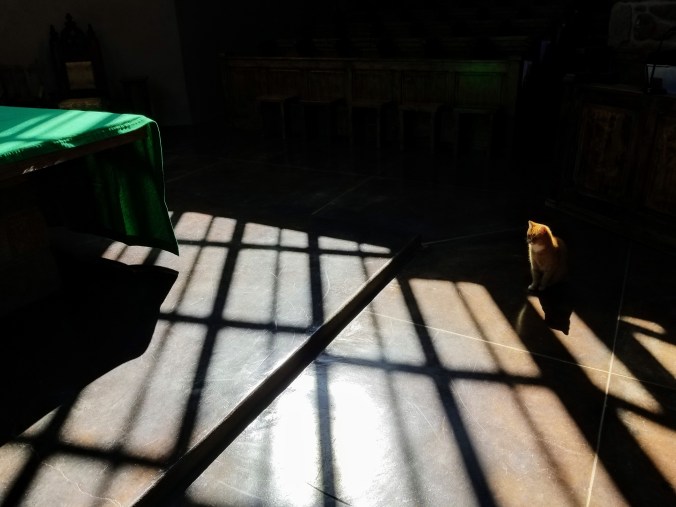
(Photo: Abiquiu, NM, September 2018
I want to seek nothing at all, if this is possible. but only to be led without looking and without seeking. For thus to seek is to find. – Thomas Merton, journal entry – August 2, 1960
(Photo: Abiquiu, NM, September 2018
Presently the two mares and the two colts came over to see me and to take a drink. The colts looked like children with their big grave eyes, very humble…and they were tamer than I expected. They came over and nudged me with their soft muzzles and I talked to them a bit. – Thomas Merton
A Blessing – James Wright

Photo by Tomasz Filipek on Pexels.com

(photo: Sat Manav Yoga Ashram, Maine – 2018)
We don’t teach meditation to the young monks. They are not ready for it until they stop slamming doors.
— Thich Nhat Hanh to Thomas Merton in 1966
The grip the present has on me. That is the one thing that has grown most noticeably in the spiritual life – nothing much else has. The rest dims as it should. I am getting older. The reality of now – the unreality of the rest. The unreality of ideas and explanations and formulas. I am. The unreality of all the rest. The pigs shriek. Butterflies dance together against the blue sky at the end of the woodshed. The buzz saw stands outside there, half covered with dirty and tattered canvas. The trees are fresh and green in the sun (more rain yesterday). Small clouds, inexpressibly beautiful and silent and eloquent, over the silent woodlands. What a celebration of light, quietness, and glory! This is my feast, sitting here in the straw!
– Thomas Merton, journal entry – August 25, 1958

(photo: Runaround Pond, Maine – June 2019)

The things of Time are in connivance with eternity. The shadows serve You. The beasts sing to You before they pass away. The solid hills shall vanish like a worn-out garment. All things change and die and disappear. Questions arrive, assume their actuality, and also disappear. In this hour I shall cease to ask them and silence shall be my answer. The world that Your love created and that the heat has distorted and that my mind is always misinterpreting shall cease to interfere with our voices.
Minds which are separated pretend to blend in one another’s language. The marriage of souls in concepts is mostly an illusion. Thoughts which travel outward bring back reports of You from outward things – but a dialogue with You, uttered through the world, always ends by being a dialogue with my own reflection in the stream of time. With You there is no dialogue unless You choose a mountain and circle it with cloud and print Your words in fire upon the mind of Moses. What was delivered to Moses on tablets of stone, as fruit of lightning and thunder, is now more thoroughly born in our souls, as quietly as the breath of our own being.
You, who sleep in my breast, are not met with words, but in the emergence of life within life and of wisdom within wisdom. With You there is no longer any dialogue, any contest, any opposition. You are found in communion! Thou in me and I in Thee and Thou in them and they in me: dispossession within dispossession, dispassion within dispassion, emptiness within emptiness, freedom within freedom. I am alone. Thou art alone. [God] and I are one.
– Thomas Merton, Journal entry, July 4, 1952
As Moses came down from Mount Sinai
with the two tablets of the commandments in his hands,
he did not know that the skin of his face had become radiant
while he conversed with the LORD.
When Aaron, then, and the other children of Israel saw Moses
and noticed how radiant the skin of his face had become,
they were afraid to come near him.
Only after Moses called to them did Aaron
and all the rulers of the community come back to him.
Moses then spoke to them.
Later on, all the children of Israel came up to him,
and he enjoined on them all that the LORD
had told him on Mount Sinai.
When he finished speaking with them,
he put a veil over his face.
Whenever Moses entered the presence of the LORD to converse with him,
he removed the veil until he came out again.
On coming out, he would tell the children of Israel
all that had been commanded.
Then the children of Israel would see
that the skin of Moses’ face was radiant;
so he would again put the veil over his face
until he went in to converse with the LORD.
Ex 34:29-35
There is greater comfort in the substance of silence than in the answer to a question. Eternity is in the present. Eternity is in the palm of the hand. Eternity is the seed of fire whose sudden roots break the barriers that keep my heart from being an abyss.
– Thomas Merton, Journal Entry – July 4, 1952
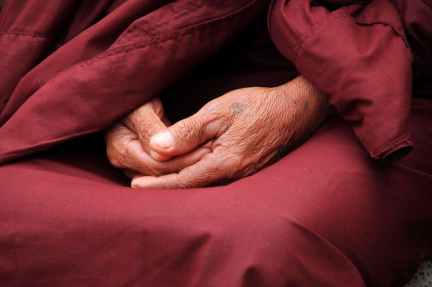
Photo by Pixabay on Pexels.com
How high the corn is this year, and what joy there is in seeing it! The tall crests nodding twelve to fifteen feet above the ground and all the silk-bearded ears. You come down out of the novitiate, through the door in the wall, over the trestle, and down into this green paradise of stalks and silence. I know the joy and worship the Indians must have felt, and the Eucharistic rightness of it! How can one not feel such things – so that I love the Mayas and the Incas as perhaps the most human of peoples, as the ones who did most honor to our continents.

Photo by Gustavo Rodrigues on Pexels.com
The irreligious mind is simply the unreal mind, the zombie, abstracted mind, that does not see things that grow in the earth and feel glad about them, but only knows prices and figures and statistics. In a world of numbers you can be irreligious, unless the numbers themselves are incarnate in astronomy and music. But, for that, they must have something to do with seasons and with harvests, with the joy of the Neolithic peoples, who for millennia were quiet and human.
– Thomas Merton, journal entry – July 26, 1963
Perhaps going nowhere is better, I don’t know.
– Thomas Merton, journal entry, July, 18, 1967
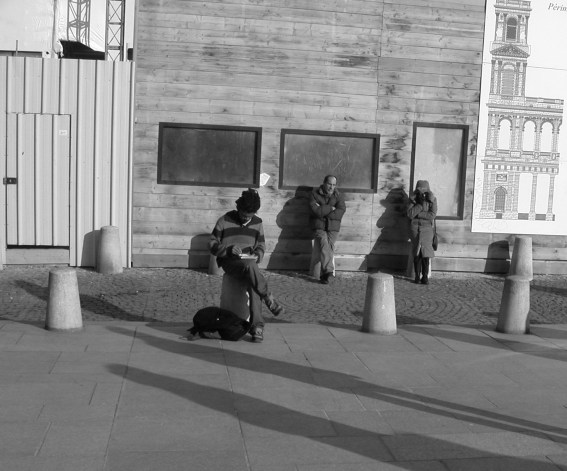
Photo: Paris, February 2008

Photo: Evergreen Cemetery, Portland, Maine – May 19, 2019
Either you look at the universe as a very poor creation out of which no one can make anything, or you look at your own life and your own part in the universe as infinitely rich, full of inexhaustible interest, opening out into the infinite further responsibilities for study and contemplation and interest and praise. Beyond all and in all is God.
Perhaps the book of life, in the end, is the book of what one has lived, and if one has lived nothing, one is not in the book of life.
– Thomas Merton, Journal entry
The best thing I can give to others is to liberate myself from the common delusions and be, for myself and for others, free so grace can work in and through me for everyone.
– Thomas Merton, Journal entry – June 29, 1968
 Edge of Atlantic