Go away.

Go away.
Is anyone reading this blog?
I enjoy doing it but not to an empty room.
Please let me know if I should continue.
Looking forward to your comments.
Peace and good
If it were possible for us to see further than our knowledge reaches, and a little beyond the outworks of our intuitions, perhaps we should then bear our sadnesses with greater assurance than our joys. For they are the moments when something new enters into us, something unknown to us; our feelings, shy and inhibited, fall silent, everything in us withdraws, a stillness settles on us, and at the centre of it is the new presence that nobody yet knows, making no sound.
Rainer Maria Rilke

I live in a complex, consumer society, which exploits both people and the earth itself. St Benedict would tell me that I can live simply and with respect and reverence, for people, for material things, for the environment. I can live with concern, responsibility, stewardship.
I live in a highly competitive and individualistic society, and one that is constantly mobile and changing. I can refuse to live under pressure like that. I can try to be stable, not only in my innermost self, but in my relations to those around me, and in my continuous search for God.
I live in a world of injustice and exploitation, where people are denied the right to live with honour and dignity, a world divided by race, colour, class. I can refuse to live by divisions like this, for I try to find the face of Christ in all I see.
I live in a world in which the churches are split and torn apart. The Rule of St Benedict comes from the undivided Church of the past, and it points me on to the undivided Church of the future, and I must try to play my part in helping that search for unity to grow in my own lifetime, while still remaining faithful to my own tradition.
I live in a world of battering noise, insistent media claims for attention, and endless words of confrontation, constant talk and ceaseless chatter. I can try instead to become a listening person, listening to those around me, and listening above all to God.
I live in a world that is angry, fear-ridden, distracted. I can try instead to carry a heart of stillness, an awareness of God’s presence and his gaze upon me. So that I hold on to the contemplative vision even in the midst of the most busy and active daily life.
Esther de Waal, Living With Contradiction
To bless means to say good things. We have to bless one another constantly. Parents need to bless their children, children their parents, husbands their wives, wives their husbands, friends their friends. In our society, so full of curses, we must fill each place we enter with our blessings. We forget so quickly that we are God’s beloved children and allow the many curses of our world to darken our hearts. Therefore we have to be reminded of our belovedness and remind others of theirs. Whether the blessing is given in words or with gestures, in a solemn or an informal way, our lives need to be blessed lives.
When you finally come to maturity, you can look back at your life and forgive every bit of it. You can let go of everyone who hurt you, even your first wife or husband. You don’t even need to hate the church that hurt you. Wisdom is where you see it all and you eliminate none of it and include all of it as important training. Finally, “everything belongs.” You are able to say, from some larger place that even surprises you, “It is what it is” and even the “bad” was good.
These are the people who will change the world. These are the people who will transform history. We call them “larger than life” because they are living more than their own life. As Paul says, “I live no longer, not I, but Christ lives in me” (Galatians 2:20). Non-dualistic people are able to be fully present to the now and trust God with the future and the past. God can use them because their small and petty self is finally out of the way.
The false self is the prison from which one must escape in order to reach the true self, and God. For if I find him, I will find myself, and if I find myself, I will find him.
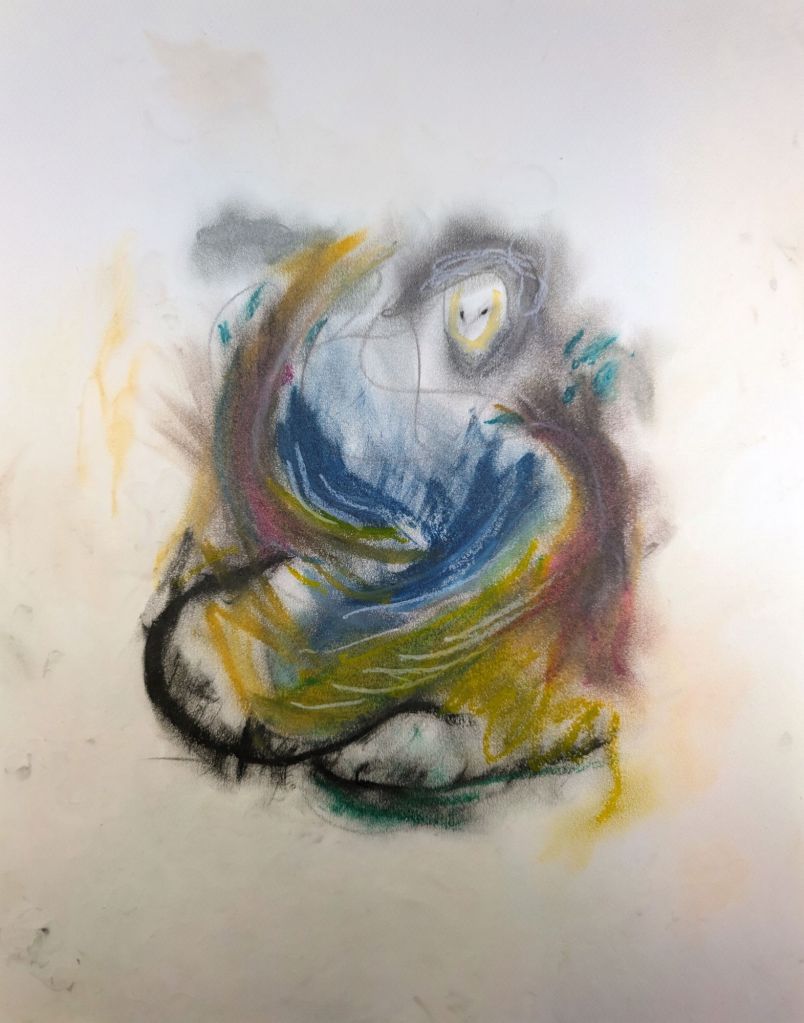

If you hold close to nature, to what is simple in it, to the small things people hardly see and which all of a sudden can become great and immeasurable; if you have this love for what is slight, and quite unassumingly, as a servant, seek to win the confidence of what seems poor – then everything will grow easier, more unified and somehow more conciliatory, not perhaps in the intellect, which, amazed, remains a step behind, but in your deepest consciousness, watchfulness and knowledge.
Rainer Maria Rilke, Letters to a Young Poet
My worst habit is I get so tired of winter
I become a torture to those I’m with.
If you’re not here, nothing grows.
I lack clarity. My words
tangle and knot up.
How to cure bad water? Send it back to the river.
How to cure bad habits? Send me back to you.
When water gets caught in habitual whirlpools,
dig a way out through the bottom
to the ocean. There is a secret medicine
given only to those who hurt so hard
they can’t hope.
The hopers would feel slighted if they knew.
Look as long as you can at the friend you love,
no matter whether that friend is moving away from you
or coming back toward you.
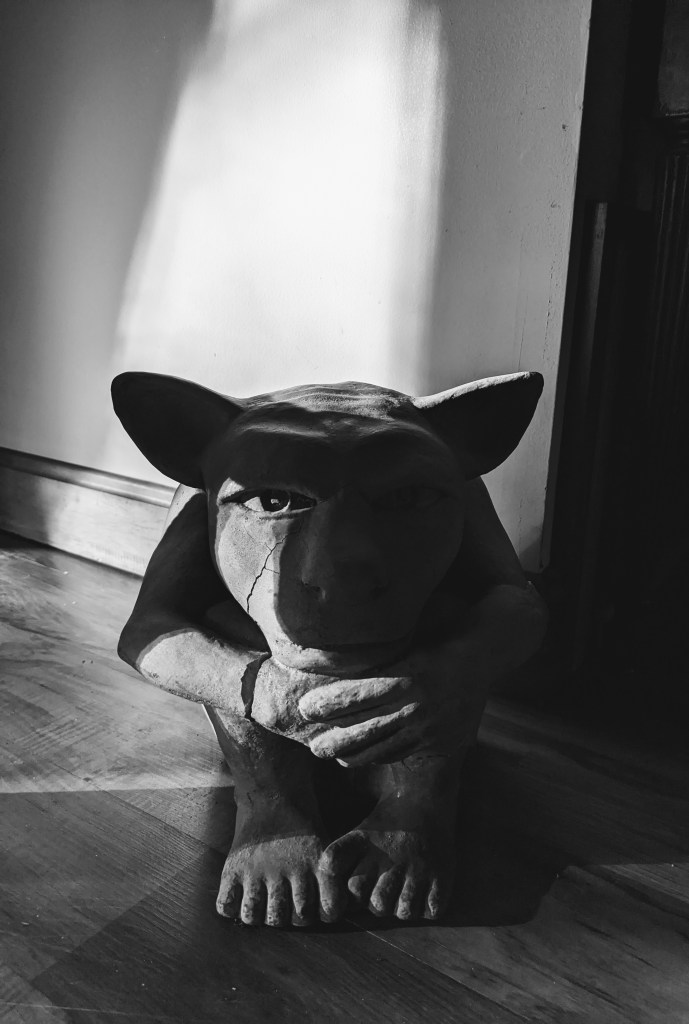

With great difficulty advancing by millimetres each year, I carve a road out of the rock. For millenniums my teeth have wasted and my nails broken to get there, to the other side, to the light and the open air. And now that my hands bleed and my teeth tremble, unsure in a cavity cracked by thirst and dust, I pause and contemplate my work. I have spent the second part of my life breaking the stones, drilling the walls, smashing the doors, removing the obstacles I placed between the light and myself in the first part of my life.
Octavio Paz, from Eagle or Sun

