Pain teaches…

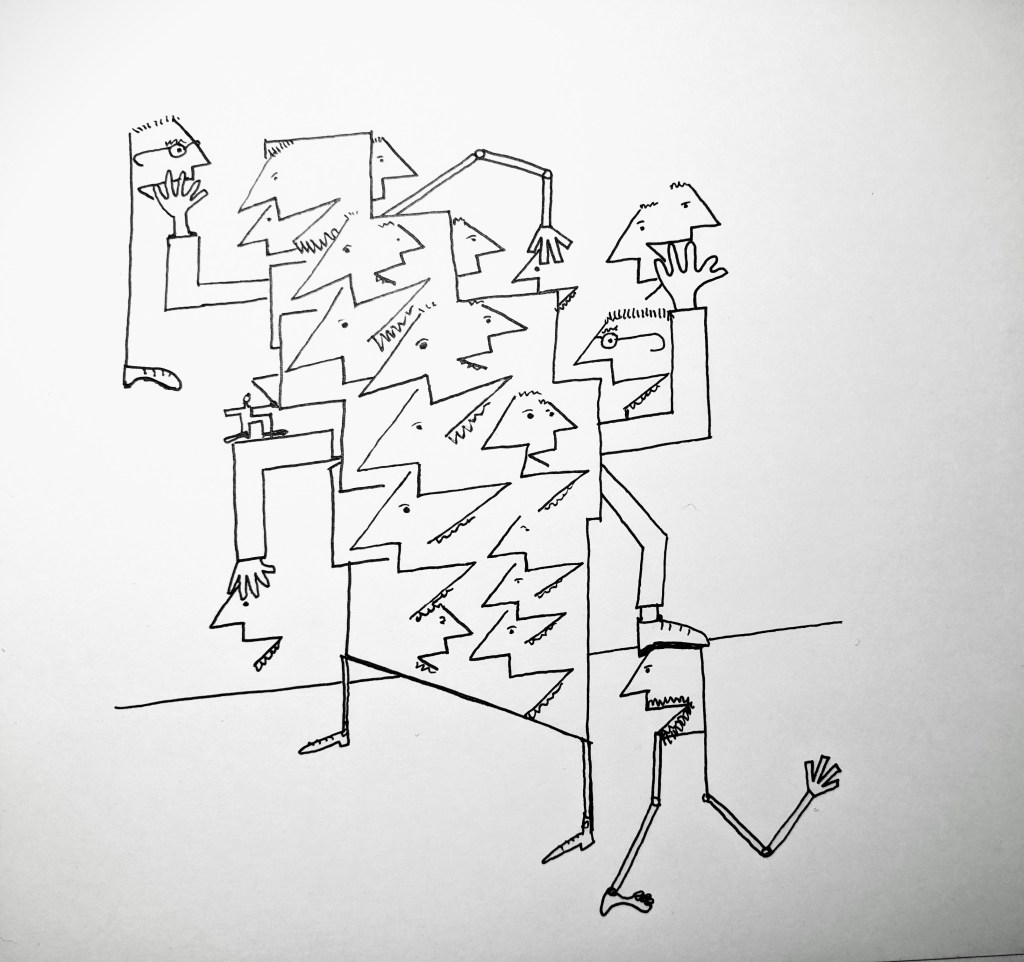
Pain teaches a most counterintuitive thing—that we must go down before we even know what up is. It is first an ordinary wound before it can become a sacred wound. Suffering of some sort seems to be the only thing strong enough to destabilize our arrogance and our ignorance. I would define suffering very simply as “whenever you are not in control.”

All healthy religion shows you what to do with your pain. If we do not transform our pain, we will most assuredly transmit it. If your religion is not showing you how to transform your pain, it is junk religion. It is no surprise that a crucified man became the central symbol of Christianity.

If we cannot find a way to make our wounds into sacred wounds, we invariably become negative or bitter—because we will be wounded. That is a given. All suffering is potentially redemptive, all wounds are potentially sacred wounds. It depends on what you do with them. Can you find God in them or not?

If there isn’t some way to find some deeper meaning to our suffering, to find that God is somehow in it, and can even use it for good, we will normally close up and close down, and the second half of our lives will, quite frankly, be small and silly.

Richard Rohr

You are already home…

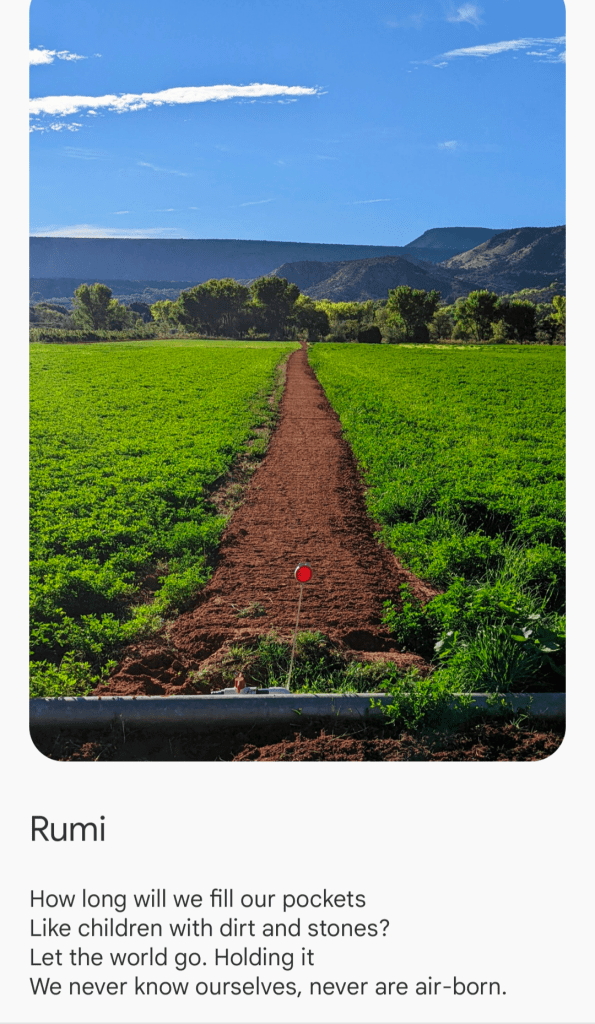
Until you can forgive and include all of the parts-every part belonging, every part forgiven, even the tragic parts now seen as necessary lessons—you cannot come home.

The full gift of the final journey is discovering that you are already home. I hope you have seen it in at least some elders in your lifetime. They are at home in their own bodies, their own lives, and their own minds.

When you succeed at your real task, or what I like to call “the task within the task,” then wherever God leads you, it doesn’t really matter. Home is no longer a geographic place. It is a place where everything belongs, everything can be held, and everything is another lesson and another gift. The saint and the true elder grow from everything, even and especially their failures.

Richard Rohr

The country that is nowhere…

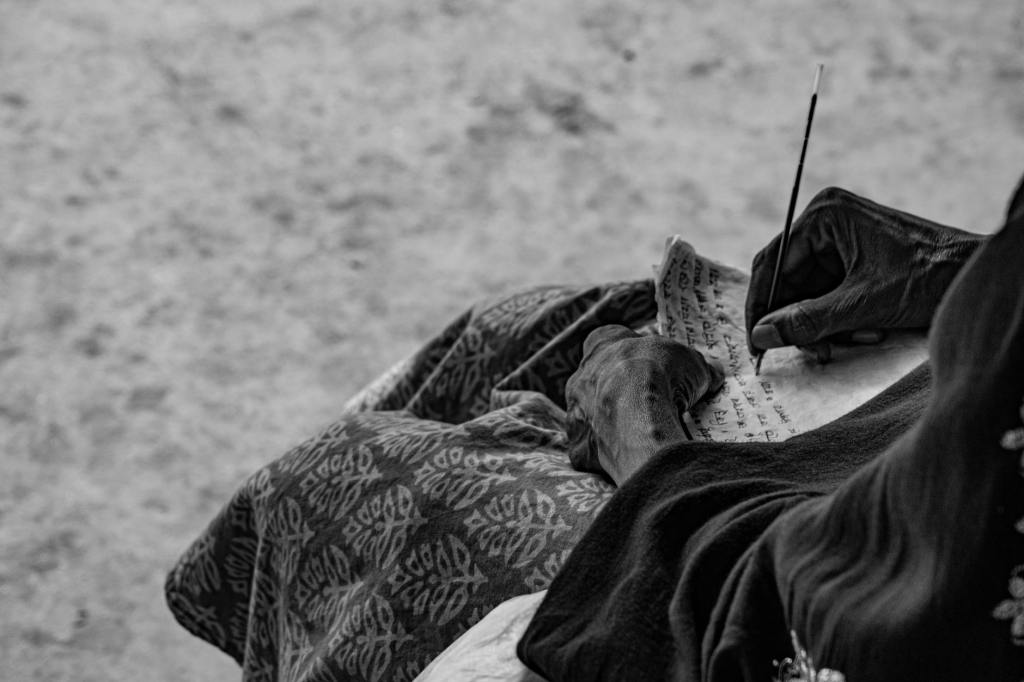
I sit in the cool back room, where words cease to resound, where all meanings are absorbed in the consonantia of heat, fragrant pine, quiet wind, birdsong, and one central tonic note that is unheard and unuttered. Not the meditation of books, or of pieties, or of systematic trifles. In the silence of the afternoon all is present and all is inscrutable. One central tonic note to which every other sound ascends or descends, to which every other meaning aspires, in order to find its true fulfillment. To ask when the note will sound is to lose the afternoon: it has sounded, and all things now hum with the resonance of its sounding.

The country that is nowhere is the real home.

Thomas Merton

the development of hell

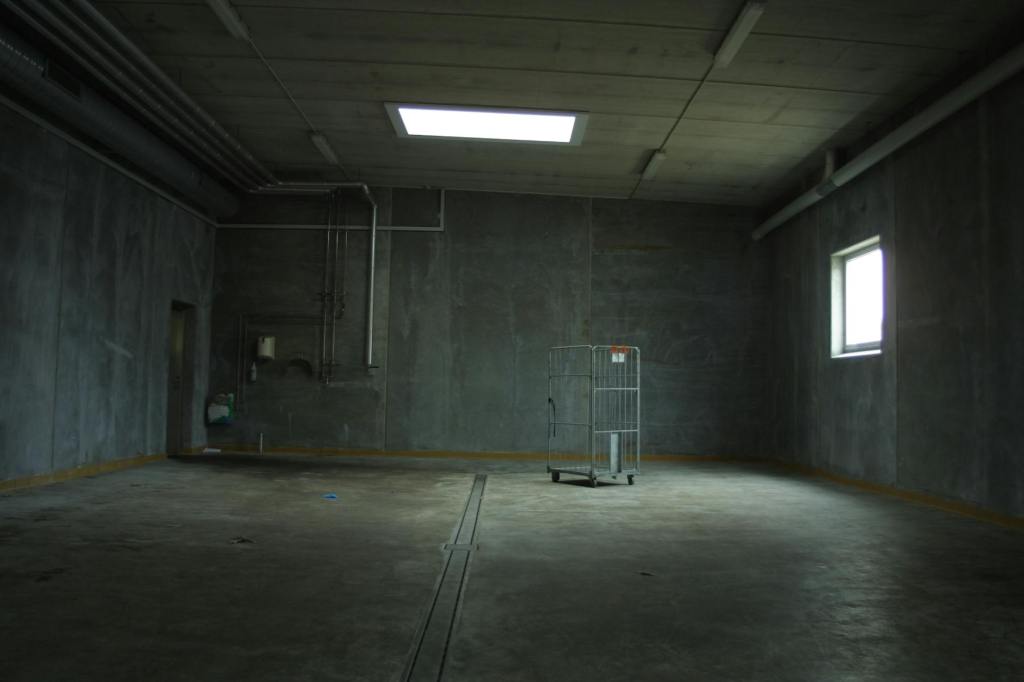
It is like the story of the hermit who saw a leg of lamb in front of him, and wanted to pick it up and cook it. His teacher told him to mark it with a cross, then later he discovered that the cross was marked on his own chest. It is that kind of notion; you think there is something outside to attack or fight or win over. In most cases hatred is like that. You are angry with something and try to destroy it, but at the same time the process becomes self-destructive, it turns inward and you would like to run away from it; but then it seems too late, you are the anger itself, so there is nowhere to run away. You are haunting yourself constantly, and that is the development of hell.

From commentary on Tibetan Book of The Dead

This post is for…

…anyone who is struggling with depression, addiction; anyone who may be giving up, suicidal or self-harming.

I know you. I think I know what you are going through. I’ve been there.

Nine years ago on December 22, 2016, a cold, icy day, with freezing rain pouring down, I pulled into my garage thinking it would be a good time for me to die there. I was so turned around and struggling to recover from addictions, the darkness of the winter solstice seemed to have found a home within me.

After what felt like hours, I realized that my plan was selfish and would only serve to hurt the people–family, friends–who had been caring for me, carrying me until I could get back on my feet. I reached out to people, wise friends and family, who gave me good orderly direction. They told me to listen to the professionals who, without hesitation, were there to guide me.

I spent Christmas and several days after in a mental hospital, a place where I found rest and a sense of peace that I hadn’t felt for several years. I’m not saying that the path was easy, far from it. But I was on a different path in a different direction.

Kenosis is a theological term. In short, it means that we empty our own will and become entirely receptive to God’s will for us. The God that I came to know and hear was not a Catholic or Christian God, not Allah, not Yahweh, not Buddha but an internal light that shone on my place in the unified field of existence.

Over time I learned to listen to the wisdom of others who had lived through similar experiences, no longer trying to control the direction of my life.

So today I bless you and pray you can make the turn to life, the life you are meant to live.

If you are interested in a completely anonymous chat, please contact me.

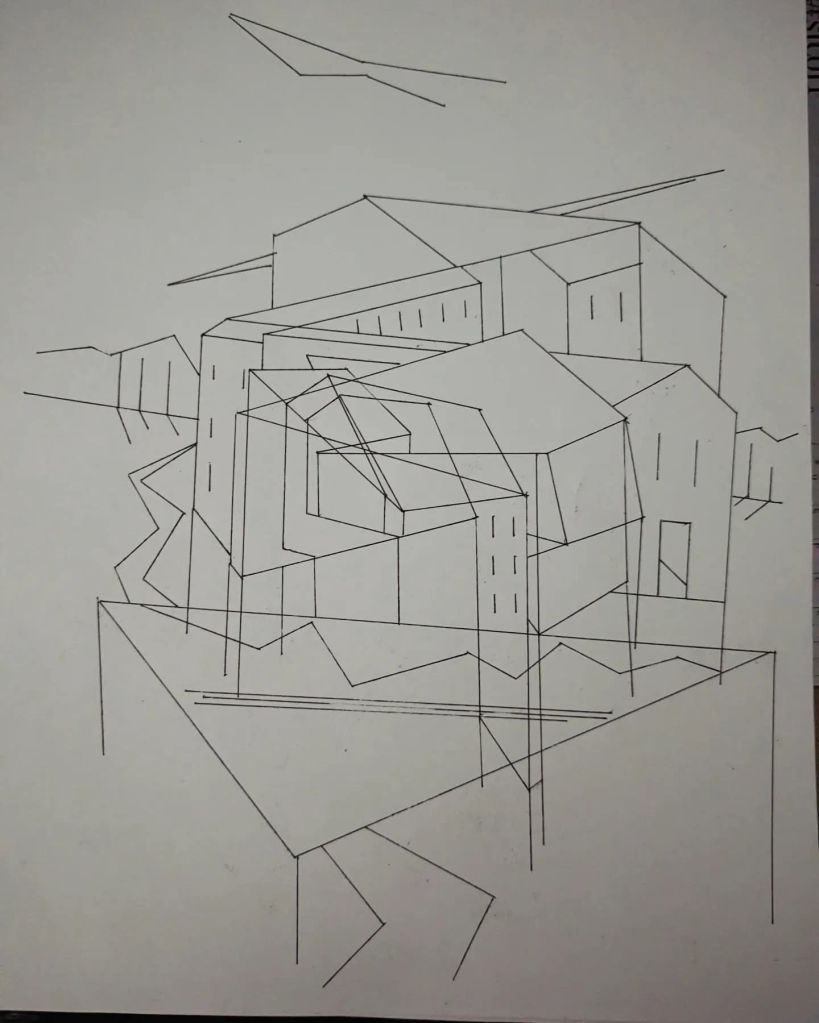
My world in December 2016:

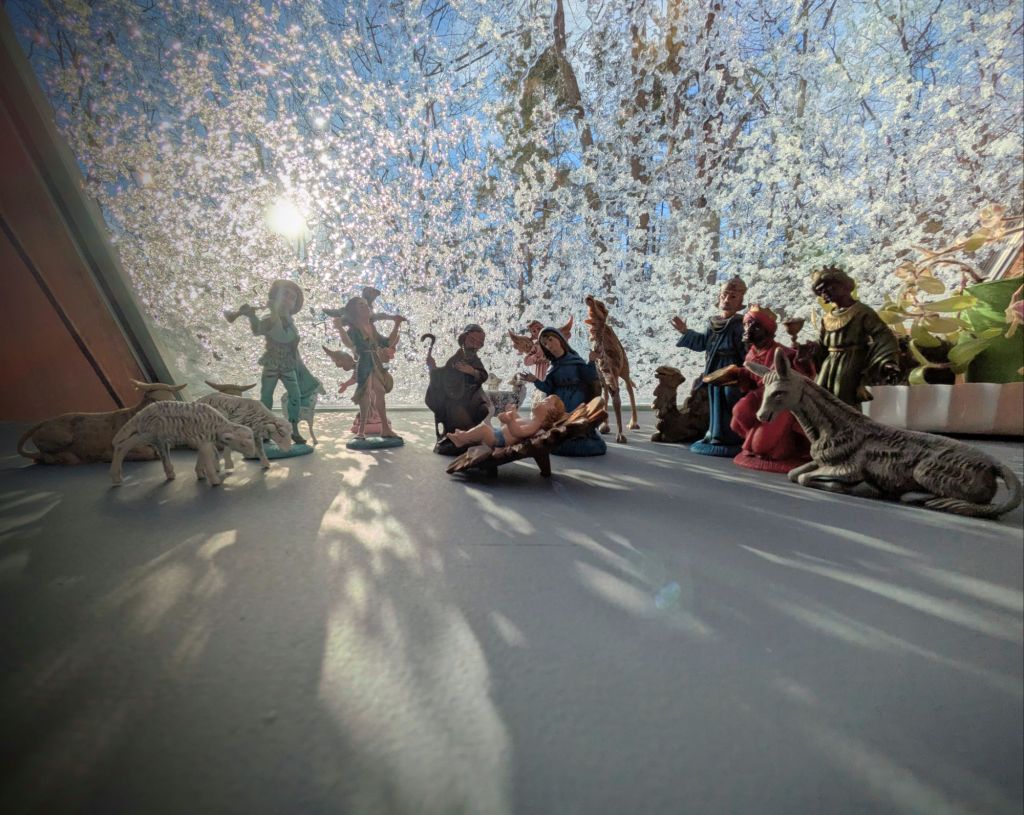
My world today

On this day when the earth begins to turn towards the light, I wish you peace and all good things.

Steady, They Say – Gary Snyder

Clambering up the rocks of a dry wash gully, warped sandstone, by the San Juan River,

look north to stony mountains shifting clouds and sun – despair at how the human world goes down.

Consult my old advisers

“steady” they say

“today”

(At Slickhorn Gulch on the San Juan River, 1999)