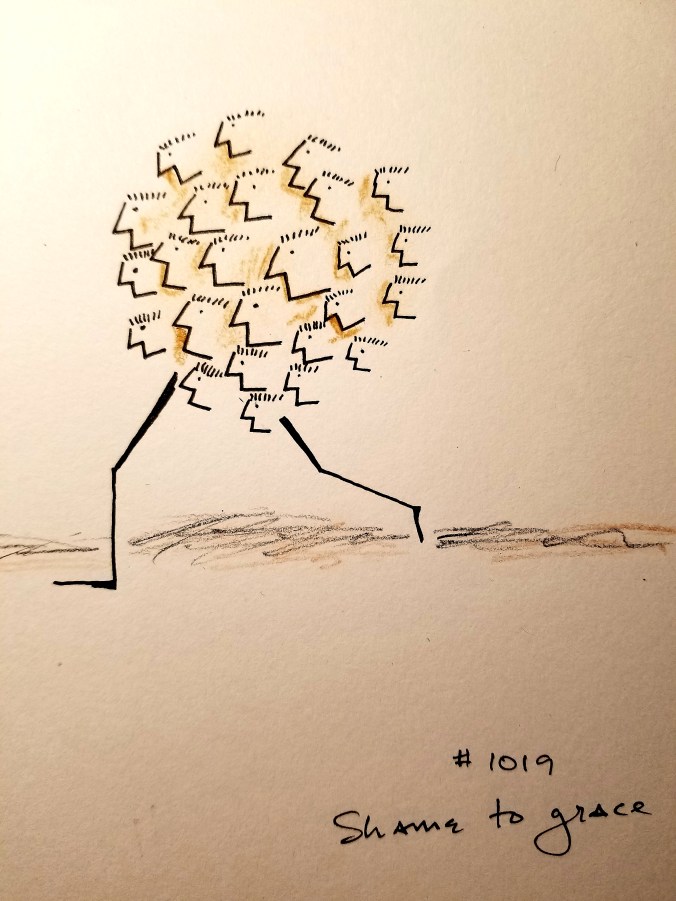
#1019
Bless your persecutors; never curse them, bless them. … Never pay back evil with evil. … Never try to get revenge. … If your enemy is hungry, give him something to eat; if thirsty, something to drink. … Do not be mastered by evil, but master evil with good. (Romans 12:14-21)

(Photo: Monastery of Christ in The Desert, Abiquiu, NM – September 2018)
Do You Yourself in kindness dispose of me, my thoughts and actions according to Your good pleasure, so that Your will may always be done by me and in me and concerning me. – St. Anselm
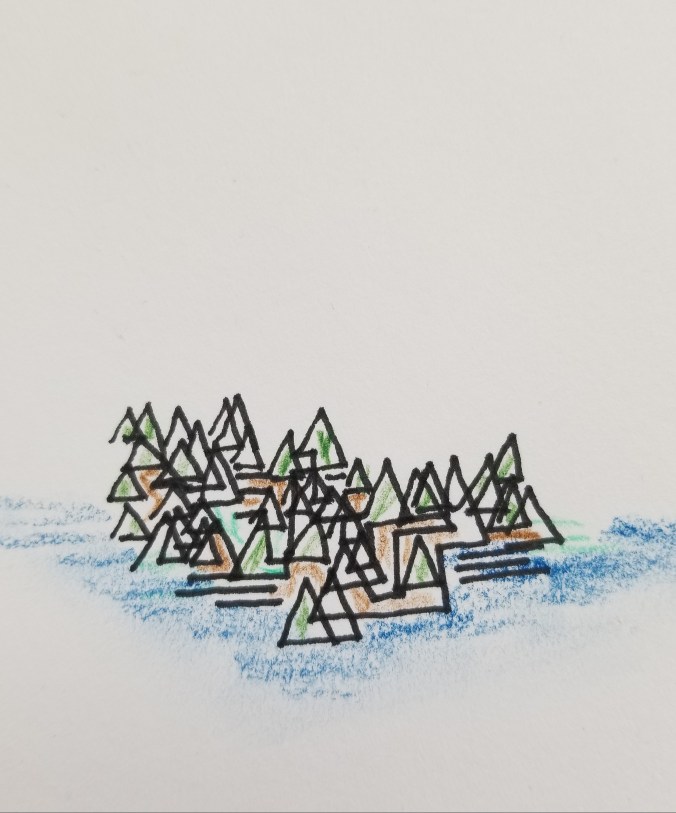
God says, “I am offering you life or death, blessing or curse. Choose life, then, so that you and your descendants may live” (Deuteronomy 30:19).
“Choose life.” That’s God’s call for us, and there is not a moment in which we do not have to make that choice. Life and death are always before us. In our imaginations, our thoughts, our words, our gestures, our actions … even in our nonactions. This choice for life starts in a deep interior place. Underneath very life-affirming behaviour I can still harbour death-thoughts and death-feelings. The most important question is not “Do I kill?” but “Do I carry a blessing in my heart or a curse?” The bullet that kills is only the final instrument of the hatred that began being nurtured in the heart long before the gun was picked up. – Henri Nouwen

(Photo: Portland, Maine – 8.30.19)

THE BUDDHA SAID that we should not be afraid of the past; but he did warn us not to lose ourselves in it, either. We should not feed our regret or pain over the past, and we should not get carried away by the past. We do need to study and understand the past, however, because by looking deeply into the past we learn a lot of things that can benefit the present and the future. The past is an object of our study, of our meditation, but the way to study it or meditate on it is by remaining anchored in the present moment.
– Thich Nhat Hanh
I want to seek nothing at all, if this is possible. but only to be led without looking and without seeking. For thus to seek is to find. – Thomas Merton, journal entry – August 2, 1960
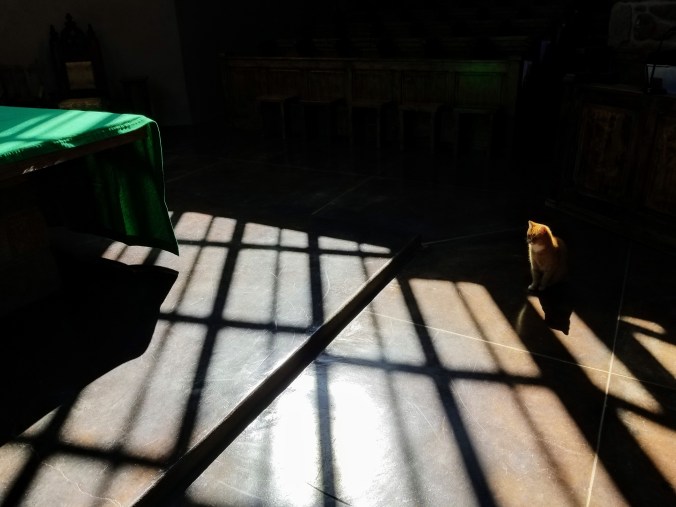
(Photo: Abiquiu, NM, September 2018
It just comes. That is the miracle of it.
The false self is your psychological creation of yourself in space and time. It comes from your early conditioning, family, roles, education, mind, culture, and religion. The false self is who you think you are! But thinking doesn’t make it so. The false self dies and passes away. Yet it is the raw material through which you discover your True Self in God, so you must not hate it or kill it. Just learn from it. Of itself, it does not know how to pray, because it does not understand simple presence, communion, or relationship. The false self is all about utility and “What can I get out of this?” Not bad, but very incomplete.
The True Self is not created by anything you have done right or wrong. Nor can you lose it by doing anything good or bad. The True Self is not formed by adhering to any requirements; it’s about relationship itself—the quality and capacity for connection. Only the True Self can pray. The false self will say prayers but the True Self is a prayer and looks out at reality from a different pair of eyes larger than its own. This is why in Ephesians it can say “pray always” (6:18). We pray always whenever we act in conscious and loving union with things—which eventually can be all the time. Then whatever you do is a prayer, not a recited prayer but a full-bodied, bigger-than-mind, contemplative prayer. When you are in your True Self, your prayer and your breath are the same thing.
– R. Rohr
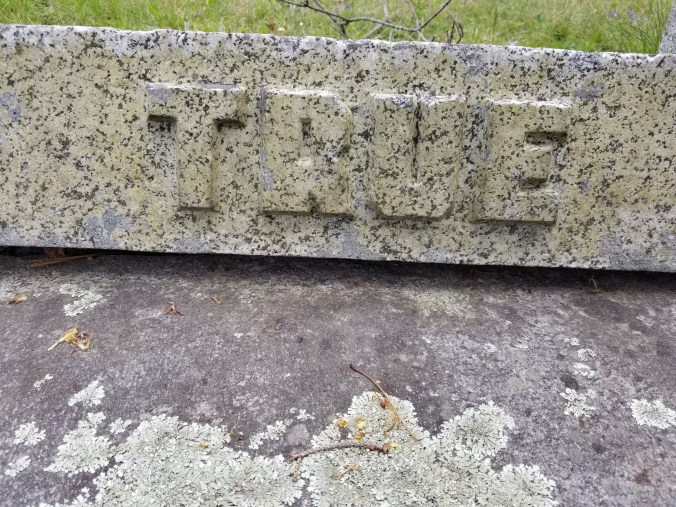
Even the purest metaphysical Taoist thinkers, the Lungman Taoists, say that people “can assist in improving the divine handiwork” – or, as the modern Taoist puts it, people may “follow the Will of the Creator in guiding the world in its evolution towards the ultimate Reality.” Even Meister Echhart said, “God needs man.” God needs man to disclose him, complete him, and fulfill him, Teilhard said. His friend, Abbe’ Paul Grenet paraphrased his thinking about God: “His name is holy, but it is up to us to sanctify it; his reign is universal, but it is up to us to make him reign; his will is done, but it is up to us to accomplish it.” “Little by little,” – the paleontologist himself said, “the work is being done.”
– Annie Dillard, For The Time Being

(Photo: Portland, Maine – August 2012)
 Edge of Atlantic