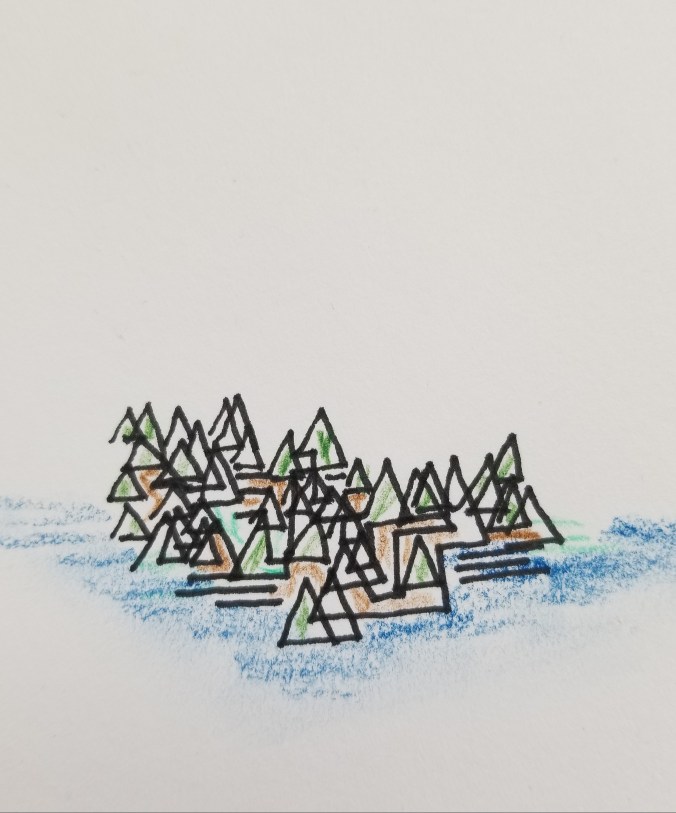
#1014
God says, “I am offering you life or death, blessing or curse. Choose life, then, so that you and your descendants may live” (Deuteronomy 30:19).
“Choose life.” That’s God’s call for us, and there is not a moment in which we do not have to make that choice. Life and death are always before us. In our imaginations, our thoughts, our words, our gestures, our actions … even in our nonactions. This choice for life starts in a deep interior place. Underneath very life-affirming behaviour I can still harbour death-thoughts and death-feelings. The most important question is not “Do I kill?” but “Do I carry a blessing in my heart or a curse?” The bullet that kills is only the final instrument of the hatred that began being nurtured in the heart long before the gun was picked up. – Henri Nouwen

(Photo: Portland, Maine – 8.30.19)

THE BUDDHA SAID that we should not be afraid of the past; but he did warn us not to lose ourselves in it, either. We should not feed our regret or pain over the past, and we should not get carried away by the past. We do need to study and understand the past, however, because by looking deeply into the past we learn a lot of things that can benefit the present and the future. The past is an object of our study, of our meditation, but the way to study it or meditate on it is by remaining anchored in the present moment.
– Thich Nhat Hanh
I want to seek nothing at all, if this is possible. but only to be led without looking and without seeking. For thus to seek is to find. – Thomas Merton, journal entry – August 2, 1960
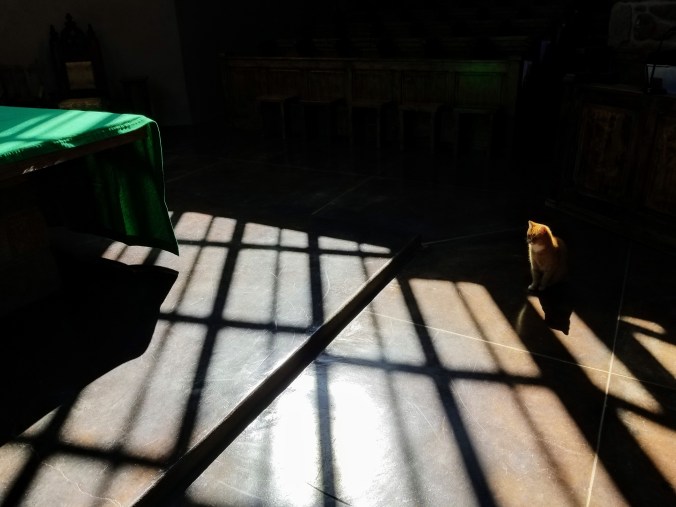
(Photo: Abiquiu, NM, September 2018
It just comes. That is the miracle of it.
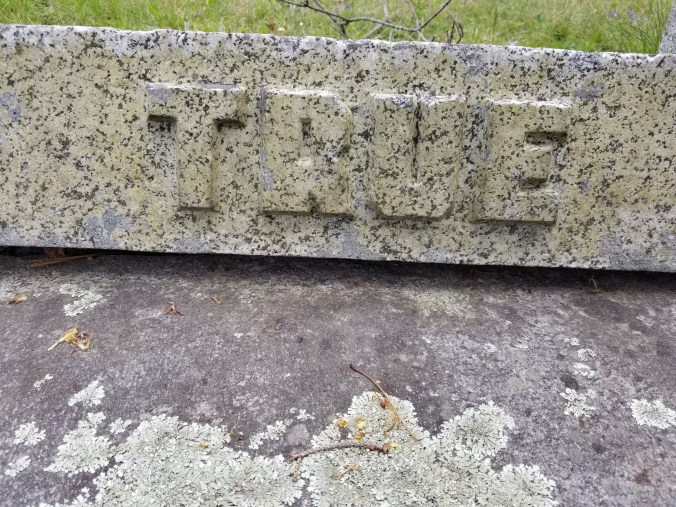
The false self is your psychological creation of yourself in space and time. It comes from your early conditioning, family, roles, education, mind, culture, and religion. The false self is who you think you are! But thinking doesn’t make it so. The false self dies and passes away. Yet it is the raw material through which you discover your True Self in God, so you must not hate it or kill it. Just learn from it. Of itself, it does not know how to pray, because it does not understand simple presence, communion, or relationship. The false self is all about utility and “What can I get out of this?” Not bad, but very incomplete.
The True Self is not created by anything you have done right or wrong. Nor can you lose it by doing anything good or bad. The True Self is not formed by adhering to any requirements; it’s about relationship itself—the quality and capacity for connection. Only the True Self can pray. The false self will say prayers but the True Self is a prayer and looks out at reality from a different pair of eyes larger than its own. This is why in Ephesians it can say “pray always” (6:18). We pray always whenever we act in conscious and loving union with things—which eventually can be all the time. Then whatever you do is a prayer, not a recited prayer but a full-bodied, bigger-than-mind, contemplative prayer. When you are in your True Self, your prayer and your breath are the same thing.
– R. Rohr
Even the purest metaphysical Taoist thinkers, the Lungman Taoists, say that people “can assist in improving the divine handiwork” – or, as the modern Taoist puts it, people may “follow the Will of the Creator in guiding the world in its evolution towards the ultimate Reality.” Even Meister Echhart said, “God needs man.” God needs man to disclose him, complete him, and fulfill him, Teilhard said. His friend, Abbe’ Paul Grenet paraphrased his thinking about God: “His name is holy, but it is up to us to sanctify it; his reign is universal, but it is up to us to make him reign; his will is done, but it is up to us to accomplish it.” “Little by little,” – the paleontologist himself said, “the work is being done.”
– Annie Dillard, For The Time Being
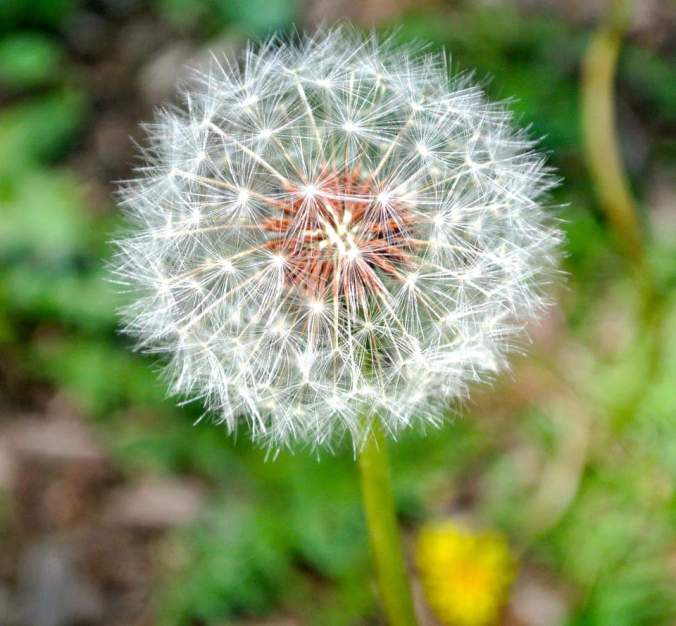
(Photo: Portland, Maine – August 2012)
Late June, walking the deer runs
to Goose Pond after supper,
summer begins. Sidestepping
stormblown poplars,
dry-wading the slash from the pulper’s camps
ten years ago, keeping the imaginary
straight line from Duck Island Light to the north side
of Goose Pond Mountain in our minds’ eyes, poking
straight-arms, trying to keep from snagging
the green fur, the purple stars in the schooldesk landscape
of the nautical chart.
Yellow, blue.
The island woods are yellow. The evening sun
sprays through from the other side of the evergreens.
Watercolors, our first grade pegs
arranging. We push for the first view
of the marsh-edged shore, spruce stumpsticks
edging deep water trout
neverminding the cold. We know where we are:
a mile straight in on the yellow.
We lose our way. My son climbs a blue spruce
to see where we’ve been: the two Sisters,
Long Island Plantation. On the left, the Baptist
church in Atlantic. We head into the sun.
Late June, walking the deer runs
to Goose Pond after supper,
summer begins suddenly. We can hear
the creeing of gulls. Beyond the trees
they are landing, taking off, landing.
Saltwhite. Freshblue. It is all
prearranged. In a minute now
we will see the pond. Nothing has changed.
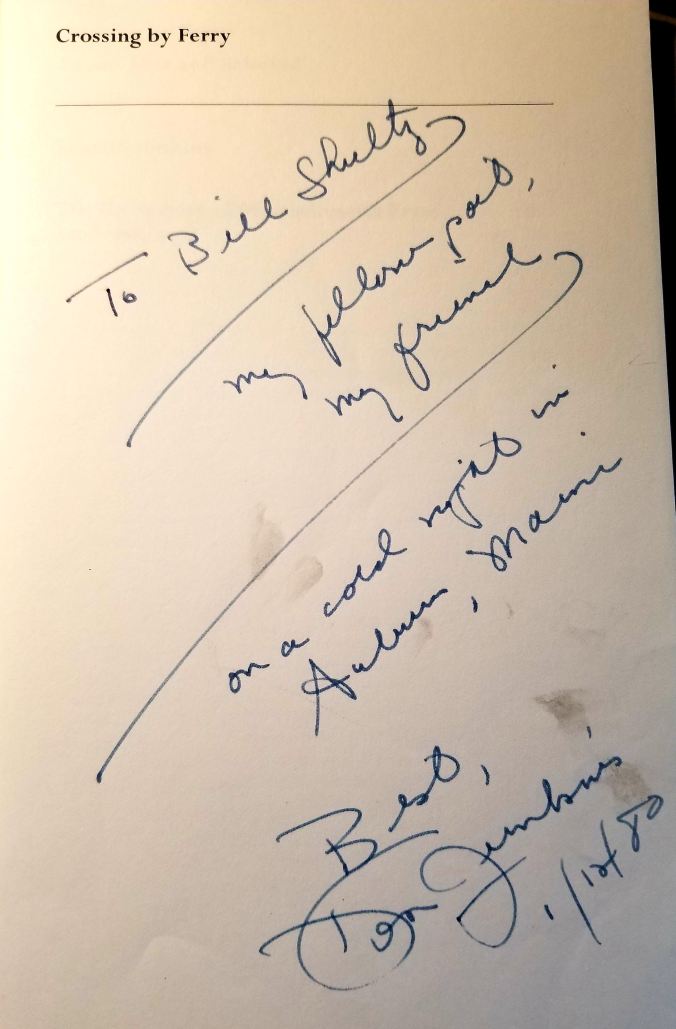
Donald Junkins, The New Yorker, June 1977
Presently the two mares and the two colts came over to see me and to take a drink. The colts looked like children with their big grave eyes, very humble…and they were tamer than I expected. They came over and nudged me with their soft muzzles and I talked to them a bit. – Thomas Merton
A Blessing – James Wright

Photo by Tomasz Filipek on Pexels.com
Strangely, forgiveness never arises from the part of us that was actually wounded. The wounded self may be the part of us incapable of forgetting, and perhaps, not actually meant to forget, as if, like the foundational dynamics of the physiological immune system our psychological defenses must remember and organize against any future attacks — after all, the identity of the one who must forgive is actually founded on the very fact of having been wounded.
Stranger still, it is that wounded, branded, un-forgetting part of us that eventually makes forgiveness an act of compassion rather than one of simple forgetting. To forgive is to assume a larger identity than the person who was first hurt, to mature and bring to fruition an identity that can put its arm, not only around the afflicted one within but also around the memories seared within us by the original blow and through a kind of psychological virtuosity, extend our understanding to one who first delivered it. Forgiveness is a skill, a way of preserving clarity, sanity and generosity in an individual life, a beautiful way of shaping the mind to a future we want for ourselves; an admittance that if forgiveness comes through understanding, and if understanding is just a matter of time and application then we might as well begin forgiving right at the beginning of any drama rather than put ourselves through the full cycle of festering, incapacitation, reluctant healing and eventual blessing.
To forgive is to put oneself in a larger gravitational field of experience than the one that first seemed to hurt us. We reimagine ourselves in the light of our maturity and we reimagine the past in the light of our new identity, we allow ourselves to be gifted by a story larger than the story that first hurt us and left us bereft.
– Robert A. Johnson
 Edge of Atlantic