Marginalia by W.H Auden

The gregarious
And mild-tempered never know
Each other by name:
Creatures who make friends are shy
And liable to anger.
*
Unable to see
A neighbor to frown at,
Eutroplus beat his wife.
(after K. Lorenz)
*
A dead man
Who never caused others to die
Seldom rates a statue.
*
Small tyrants, threatened by big,
Sincerely believe
They love Liberty.
*
Tyrants may get killed,
But their hangmen usually
Die in their beds.
*
Patriots? Little boys
Obsessed by bigness,
Big pricks, big money, big bangs.
*
He praised his God
For the expertise
Of his torturer and his chef.
*
Reluctant at first
To break his sworn promise
Of Safe Conduct, after
Consulting his confessor,
In good spirits
He signed a death-warrant.
*
“Be godly,” he told his flock,
“Bloody and extreme
Like the Holy Ghost.”
*
After the massacre,
They pacified their conscience
By telling jokes.
*
When their Infidel
Paymaster fell in arrears,
The mercenaries
Recalled their unstained childhoods
In devout Christian homes.
*
With silver mines,
Recruiting grounds,
A general of real genius,
He thought himself invulnerable:
In one battle
He lost all three.
*
The last king
Of a fallen dynasty
Is never well spoken of.
*
Intelligent, rich,
Humane, the young man dreamed of
Posthumous glory
As connoisseur and patron
Of Scholarship and the Arts.
An age bent on war,
The ambitions of his king,
Decreed otherwise:
He was to be remembered
As a destroyer of towns.
*
Born to flirt and write light verses,
He died bravely
By the headsman’s axe.
*
Into the prosperous quiet
Between two wars
Came Anopheles.
*
The Queen fled, leaving
Books behind her
That shocked the pious usurper.
*
Assembling
With ceremonial pomp,
The Imperial Diet
Cravely debated
Legislation
It had no power to reject.
*
Victorious over
The foreign tyrant,
The patriots retained
His emergency
Police regulations,
Devised to suppress them.
*
In States unable
To alleviate Distress,
Discontent is hanged.
*
In semi-literate countries
Demagogues pay
Court to teen-agers.
*
To maintain a stud
Of polo ponies he now
Was too stout to ride,
He slapped taxes on windows,
Hearth-stones and door-steps and wives.
*
He walked like someone
Who’d never had to
Open a door for himself.
*
Abandoning his wives,
He fled with their jewels
And two hundred dogs.
*
Providentially
Right for once in his lifetime
(His reasons were wrong),
The old sod was permitted
To save civilization.
*
Who died in Nineteen-Sixty-Five
More worthy of honors
Than Lark, the cow
Who gave to mankind
One hundred and fifteen thousand
Litres of milk?
*
When we do evil,
We and our victims
Are equally bewildered.
* *
The decent, probably,
Outnumber the swine,
But few can inherit
The genes, or procure
Both the money and time,
To join the civilized.

Snake


By D. H. Lawrence

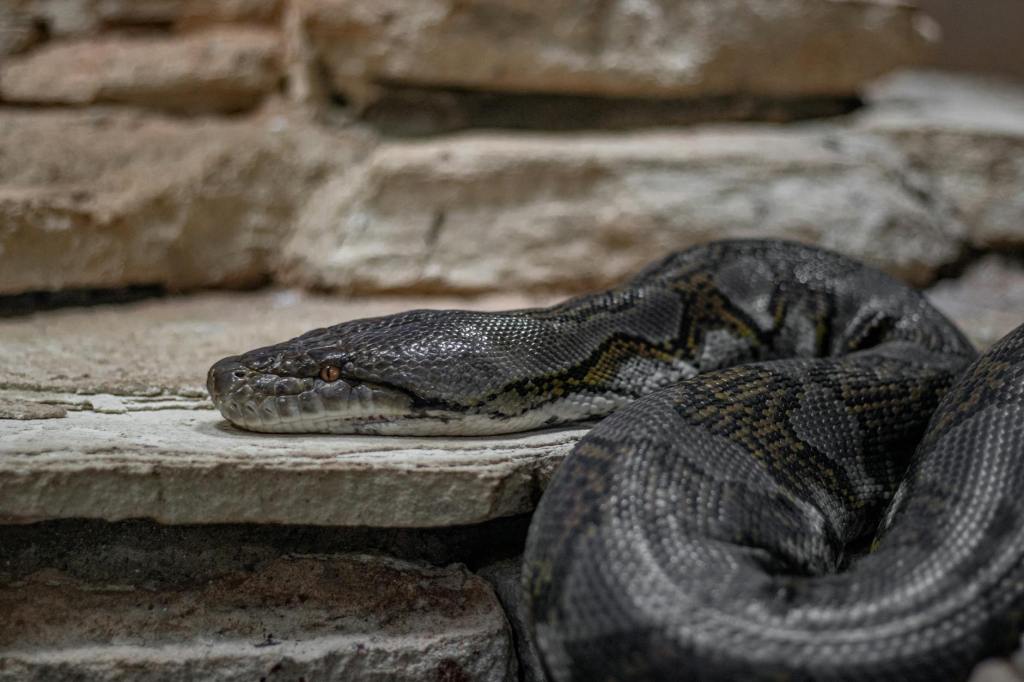
A snake came to my water-trough
On a hot, hot day, and I in pyjamas for the heat,
To drink there.

In the deep, strange-scented shade of the great dark carob tree
I came down the steps with my pitcher
And must wait, must stand and wait, for there he was at the trough
            before me.

He reached down from a fissure in the earth-wall in the gloom
And trailed his yellow-brown slackness soft-bellied down, over
            the edge of the stone trough
And rested his throat upon the stone bottom,
And where the water had dripped from the tap, in a small clearness,
He sipped with his straight mouth,
Softly drank through his straight gums, into his slack long body,
Silently.

Someone was before me at my water-trough,
And I, like a second-comer, waiting.

He lifted his head from his drinking, as cattle do,
And looked at me vaguely, as drinking cattle do,
And flickered his two-forked tongue from his lips, and mused
             a moment,
And stooped and drank a little more,
Being earth-brown, earth-golden from the burning bowels
            of the earth
On the day of Sicilian July, with Etna smoking.

The voice of my education said to me
He must be killed,
For in Sicily the black, black snakes are innocent, the gold are venomous.

And voices in me said, If you were a man
You would take a stick and break him now, and finish him off.

But must I confess how I liked him,
How glad I was he had come like a guest in quiet, to drink at my water-trough
And depart peaceful, pacified, and thankless,
Into the burning bowels of this earth?

Was it cowardice, that I dared not kill him?
Was it perversity, that I longed to talk to him?
Was it humility, to feel so honoured?
I felt so honoured.

And yet those voices:
If you were not afraid, you would kill him!

And truly I was afraid, I was most afraid,
But even so, honoured still more
That he should seek my hospitality
From out the dark door of the secret earth.

He drank enough
And lifted his head, dreamily, as one who has drunken,
And flickered his tongue like a forked night on the air, so black,
Seeming to lick his lips,
And looked around like a god, unseeing, into the air,
And slowly turned his head,
And slowly, very slowly, as if thrice adream,
Proceeded to draw his slow length curving round
And climb again the broken bank of my wall-face.

And as he put his head into that dreadful hole,
And as he slowly drew up, snake-easing his shoulders,
            and entered farther,
A sort of horror, a sort of protest against his withdrawing into
            that horrid black hole,
Deliberately going into the blackness, and slowly drawing
            himself after,
Overcame me now his back was turned.

I looked round, I put down my pitcher,
I picked up a clumsy log
And threw it at the water-trough with a clatter.

I think it did not hit him,
But suddenly that part of him that was left behind convulsed
            in an undignified haste,
Writhed like lightning, and was gone
Into the black hole, the earth-lipped fissure in the wall-front,
At which, in the intense still noon, I stared with fascination.

And immediately I regretted it.
I thought how paltry, how vulgar, what a mean act!
I despised myself and the voices of my accursed human education.

And I thought of the albatross,
And I wished he would come back, my snake.

For he seemed to me again like a king,
Like a king in exile, uncrowned in the underworld,
Now due to be crowned again.

And so, I missed my chance with one of the lords
Of life.
And I have something to expiate:
A pettiness.

sometimes a man – Rilke

Sometimes a man stands up during supper and walks outdoors, and keeps on walking, because of a church that stands somewhere in the East.

And his children say blessings on him as if he were dead.

And another man, who remains inside his own house, stays there, inside the dishes and the glasses, so that his children have to go far out into the world toward that same church, which he forgot.

Tuscana

if you don’t have – Rumi

if you don’t have
enough madness in you
go and rehabilitate yourself

if you’ve lost a hundred times
the chess game of this life
be prepared to lose one more

if you’re the wounded string
of a harp on this stage
play once more then resonate no more

if you’re that exhausted bird
fighting a falcon for too long
make a comeback and be strong

you’ve carved a wooden horse
riding and calling it real
fooling yourself in life

though only a wooden horse
ride it again my friend
and gallop to the next post

you’ve never really listened
to what God has always
tried to tell you

yet you keep hoping
after your mock prayers
salvation will arrive

live the questions

Be patient toward all that is unsolved in your heart and try to love the questions themselves…. Do not now seek the answers, which cannot be given you because you would not be able to live them. And the point is, to live everything. Live the questions now. Perhaps then you will gradually, without noticing it, live along some distant day into the answer. – Rilke, from Letters to a Young Poet

Healing

I am not a mechanism, an assembly of various sections.
And it is not because the mechanism is working wrongly, that I am ill.
I am ill because of wounds to the soul, to the deep emotional self
and the wounds to the soul take a long, long time, only time can help and a certain difficult repentance,
and patience, long, difficult repentance, realisation of life’s mistake, and the freeing oneself
from the endless repetition of the mistake
which mankind at large has chosen to sanctify.

D. H. LAWRENCE

my father moved through dooms of love – E. E. Cummings

my father moved through dooms of love
through sames of am through haves of give,
singing each morning out of each night
my father moved through depths of height

this motionless forgetful where
turned at his glance to shining here;
that if (so timid air is firm)
under his eyes would stir and squirm

newly as from unburied which
floats the first who, his april touch
drove sleeping selves to swarm their fates
woke dreamers to their ghostly roots

and should some why completely weep
my father’s fingers brought her sleep:
vainly no smallest voice might cry
for he could feel the mountains grow.

Lifting the valleys of the sea
my father moved through griefs of joy;
praising a forehead called the moon
singing desire into begin

joy was his song and joy so pure
a heart of star by him could steer
and pure so now and now so yes
the wrists of twilight would rejoice

keen as midsummer’s keen beyond
conceiving mind of sun will stand,
so strictly (over utmost him
so hugely) stood my father’s dream

his flesh was flesh his blood was blood:
no hungry man but wished him food;
no cripple wouldn’t creep one mile
uphill to only see him smile.

Scorning the Pomp of must and shall
my father moved through dooms of feel;
his anger was as right as rain
his pity was as green as grain

septembering arms of year extend
less humbly wealth to foe and friend
than he to foolish and to wise
offered immeasurable is

proudly and (by octobering flame
beckoned) as earth will downward climb,
so naked for immortal work
his shoulders marched against the dark

his sorrow was as true as bread:
no liar looked him in the head;
if every friend became his foe
he’d laugh and build a world with snow.

My father moved through theys of we,
singing each new leaf out of each tree
(and every child was sure that spring
danced when she heard my father sing)

then let men kill which cannot share,
let blood and flesh be mud and mire,
scheming imagine, passion willed,
freedom a drug that’s bought and sold

giving to steal and cruel kind,
a heart to fear, to doubt a mind,
to differ a disease of same,
conform the pinnacle of am

though dull were all we taste as bright,
bitter all utterly things sweet,
maggoty minus and dumb death
all we inherit, all bequeath

and nothing quite so least as truth
-i say though hate were why men breathe-
because my Father lived his soul
love is the whole and more than all

Cast all your votes for dancing by Hafiz

I know the voice of depression
Still calls to you.

I know those habits that can ruin your life
Still send their invitations.

But you are with the Friend now
And look so much stronger.

You can stay that way
And even bloom!

Keep squeezing drops of the Sun
From your prayers and work and music
And from your companions’ beautiful laughter.

Keep squeezing drops of the Sun
From the sacred hands and glance of your Beloved
And, my dear,
From the most insignificant movements
Of your own holy body.

Learn to recognize the counterfeit coins
That may buy you just a moment of pleasure,
But then drag you for days
Like a broken man
Behind a farting camel.

You are with the Friend now.
Learn what actions of yours delight Him,
What actions of yours bring freedom
And Love.

Whenever you say God’s name, dear pilgrim,
My ears wish my head was missing
So they could finally kiss each other
And applaud all your nourishing wisdom!

O keep squeezing drops of the Sun
From your prayers and work and music
And from your companions’ beautiful laughter

And from the most insignificant movements
Of your own holy body.

Now, sweet one,
Be wise.
Cast all your votes for Dancing!