The reality of now

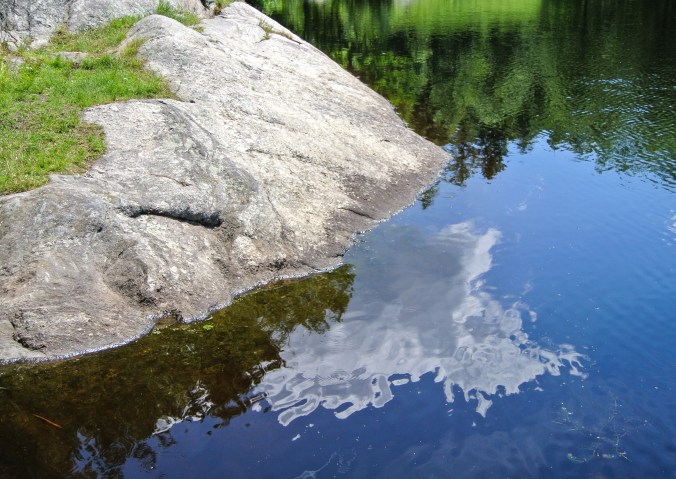
The grip the present has on me. That is the one thing that has grown most noticeably in the spiritual life – nothing much else has. The rest dims as it should. I am getting older. The reality of now – the unreality of the rest. The unreality of ideas and explanations and formulas. I am. The unreality of all the rest. The pigs shriek. Butterflies dance together against the blue sky at the end of the woodshed. The buzz saw stands outside there, half covered with dirty and tattered canvas. The trees are fresh and green in the sun (more rain yesterday). Small clouds, inexpressibly beautiful and silent and eloquent, over the silent woodlands. What a celebration of light, quietness, and glory! This is my feast, sitting here in the straw!
– Thomas Merton, journal entry – August 25, 1958

DSC_7743

(photo: Runaround Pond, Maine – June 2019)

You have been wounded in many ways

adult alone boy building

Photo by Pixabay on Pexels.com

You have been wounded in many ways. The more you open yourself to being healed, the more you will discover how deep your wounds are. You will be tempted to become discouraged, because under every wound you uncover you will find others. Your search for true healing will be a suffering search. Many tears still need to be shed.

But do not be afraid. The simple fact that you are more aware of your wounds shows that you have sufficient strength to face them.

The great challenge is living your wounds through instead of thinking them through. It is better to cry than to worry, better to feel your wounds deeply than to understand them, better to let them enter into your silence then to talk about them. The choice you face constantly is whether you are taking your hurts to your head or to your heart. In your head you can analyze them, find their causes and consequences, and coin words to speak and write about them. But no final healing is likely to come from that source. You need to let your wounds go down into your heart. Then you can live them through and discover that they will not destroy you. Your heart is greater than your wounds.

Understanding your wounds can only be healing when that understanding is put at the service of your heart. Going to your heart with your wounds is not easy; it demands letting go of many questions. You want to know Why was I wound it? When? How? By whom? You believe that the answers to these questions will bring relief. But at best they only offer you a little distance from your pain. you have to let go of the need to stay in control of your pain and trust in the healing power of your heart. There your hurts can find a safe place to be received, and once they have been received, they lose their power to inflict damage and become fruitful soil for new life.

Think of each wound as you would of a child who has been hurt by a friend. as long as that child is ranting and raving, trying to get back at the friend, one wound leads to another. But when the child can experience the consoling embrace of a parent, she or he can live through the pain, return to the friend, forgive, and build up a new relationship. Be gentle with yourself, and let your heart be your loving parent as you live your wounds through.

Henri Nouwen

a book open to the sky

I don’t think it is enough appreciated how much an outdoor book the Bible is. It is a ‘hypaethral book,’ such as Thoreau talked about – a book open to the sky. It is best read and understood outdoors, and the farther outdoors the better. Or that has been my experience of it. Passages that within walls seem improbable or incredible, outdoors seem merely natural. This is because outdoors we are confronted everywhere with wonders; we see that the miraculous is not extraordinary but the common mode of existence. It is our daily bread. Whoever really has considered the lilies of the field or the birds of the air and pondered the improbability of their existence in this warm world within the cold and empty stellar distances will hardly balk at the turning of water into wine – which was, after all, a very small miracle. We forget the greater and still continuing miracle by which water (with soil and sunlight) is turned into grapes.
Wendell Berry, “Christianity and the Survival of Creation” in Sex, Economy, Freedom & Community

As a man is, so he sees

blake_divinecomedy8.jpg?zoom=2&w=680

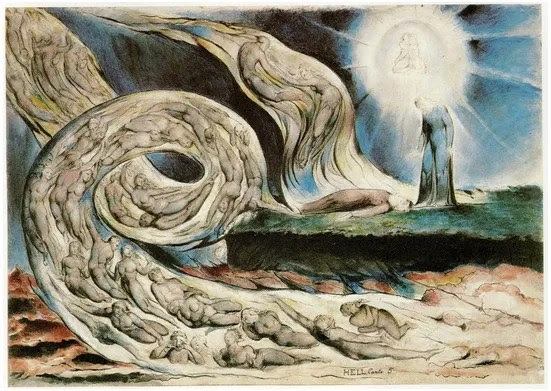
[one of William Blake’s drawings for Dante’s Inferno]

Fun I love, but too much fun is of all things the most loathsome. Mirth is better than fun, and happiness is better than mirth. I feel that a man may be happy in this world. And I know that this world is a world of imagination and vision. I see every thing I paint in this world, but everybody does not see alike. To the eyes of a miser a guinea is far more beautiful than the Sun, and a bag worn with the use of money has more beautiful proportions than a vine filled with grapes. The tree which moves some to tears of joy is in the eyes of others only a green thing which stands in the way. Some see nature all ridicule and deformity, and by these I shall not regulate my proportions; and some scarce see nature at all. But to the eyes of the man of imagination, nature is imagination itself. As a man is, so he sees. – Wm. Blake

quiet and human

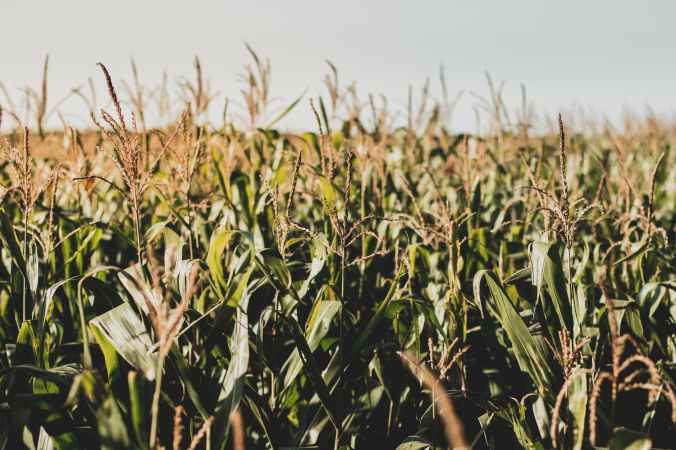
How high the corn is this year, and what joy there is in seeing it! The tall crests nodding twelve to fifteen feet above the ground and all the silk-bearded ears. You come down out of the novitiate, through the door in the wall, over the trestle, and down into this green paradise of stalks and silence. I know the joy and worship the Indians must have felt, and the Eucharistic rightness of it! How can one not feel such things – so that I love the Mayas and the Incas as perhaps the most human of peoples, as the ones who did most honor to our continents.

photo of corn field

Photo by Gustavo Rodrigues on Pexels.com

The irreligious mind is simply the unreal mind, the zombie, abstracted mind, that does not see things that grow in the earth and feel glad about them, but only knows prices and figures and statistics. In a world of numbers you can be irreligious, unless the numbers themselves are incarnate in astronomy and music. But, for that, they must have something to do with seasons and with harvests, with the joy of the Neolithic peoples, who for millennia were quiet and human.
– Thomas Merton, journal entry – July 26, 1963

Should God expect any less of us…

The desire we must possess, according to Bonaventure, is essentially the desire of the heart for the good. What would Bonaventure say to a contemporary world that upholds money, wealth, power, and prestige as the principal desires? His answer would probably be that given to the Poor Clare Nun: desire God alone. Pure desire is what Bonaventure teaches and his advice on how to strive for this is simple: one must turn one’s entire heart, mind, and soul to God. Since that which brings happiness and peace rests in God, only the desire for God can lead to happiness and peace. In the incarnation, God has turned his entire being, all that he has and all that he is, to us. Should God expect any less of us than what God has given and continues to give to us?
– —from the book Crucified Love: Bonaventure’s Mysticism of the Crucified Christ by Ilia Delio, OSF

Image result for bonaventure

Your heart can also bloom

IN THE SPRINGTIME, thousands of different kinds of flowers bloom. Your heart can also bloom. You can let your heart open up to the world. Love is possible—do not be afraid of it. Love is indispensable to life, and if in the past you have suffered because of love, you can learn how to love again.
– thich nhat hanh

IMG_1010

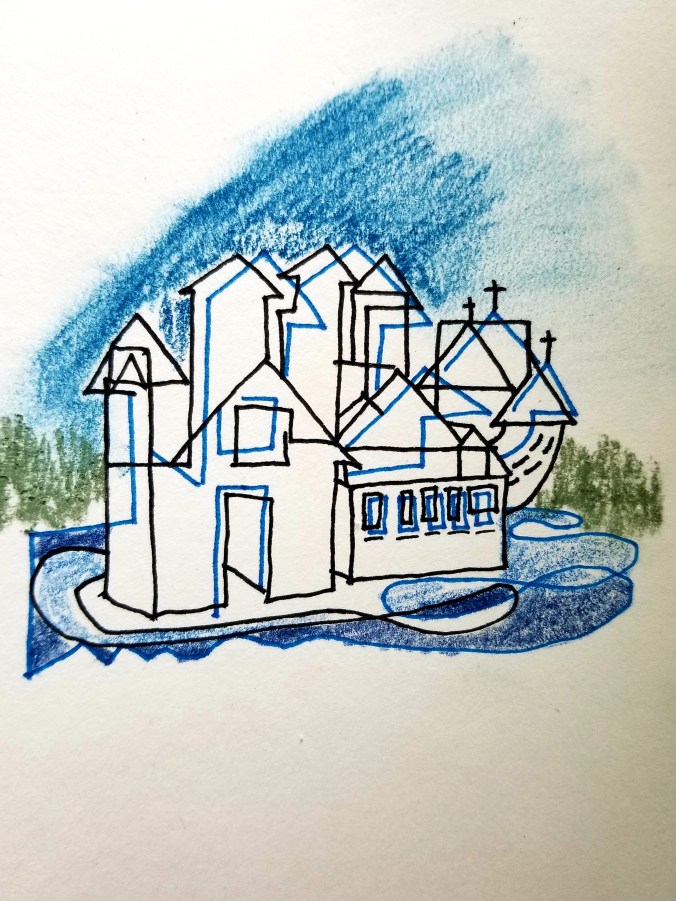
Photo: Portland, Maine – August 2012