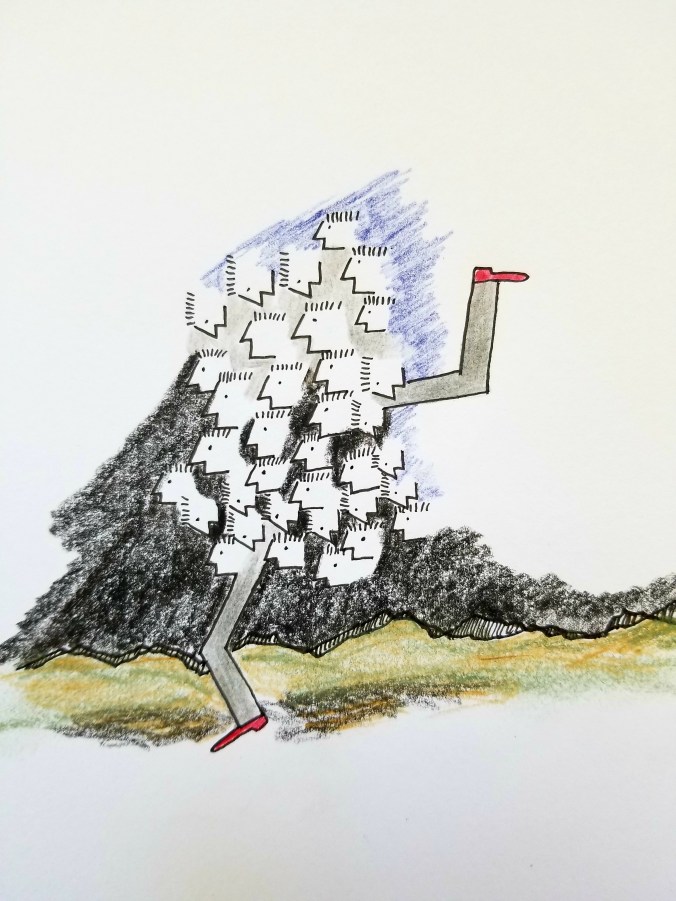
No turning back, he said
The greatest gift of centered and surrendered people is that they know themselves as part of a larger history, a larger Self. Their life is not about them! They are just one lovely instance of a Much Larger and More Wonderful Life, the very life of God.
Holy people are in one sense profoundly conservative, knowing that they only stand on the shoulders of their ancestors and will be shoulders for the generations to come. They are only a part of the Eternal Mystery of God unfolding in time, and yet they are a part!
Yet these same people are often quite liberal and reforming because they have no private agendas or self-interest to protect. They are unattached to any superior self-image or inferior self-image or any career or promotion. Such freedom! It is all about God for them, and they are just along for the ride. Such seeming contradictions held inside of the same person usually make it into a very wild ride. Contemplatives are often the most daring and wonderful combination of radical traditionalists and go-for-broke progressives at the very same time.
– Richard Rohr
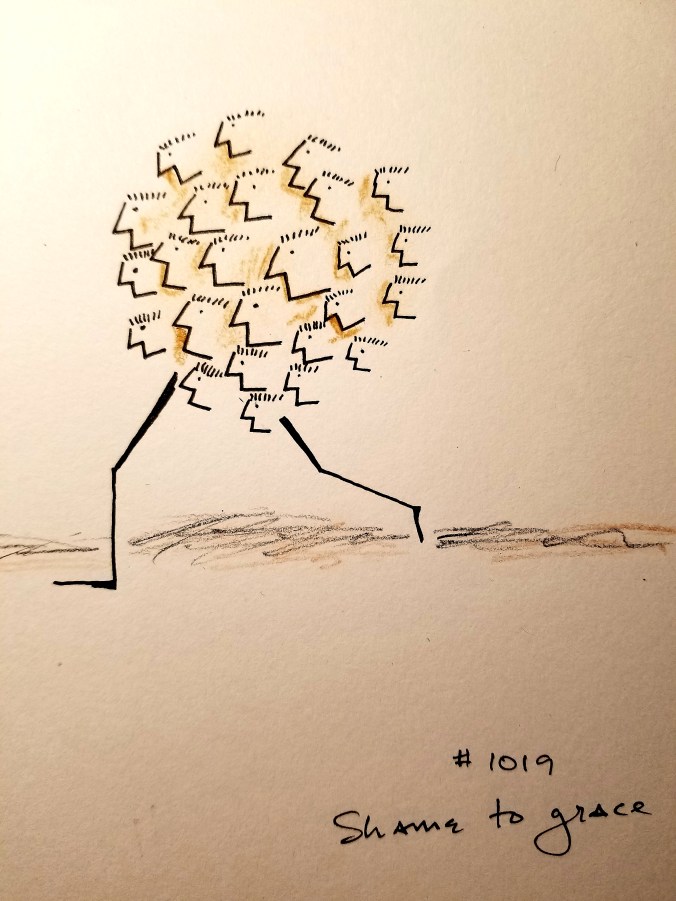
 …by and by.
– traditional spiritual, “By and by”
Henceforth, from the mind,
For your whole joy, must spring
Such joy as you may find
In any earthly thing,
And every time and place
Will take your thought for grace.
Henceforth, from the tongue,
From shallow speech alone,
Comes joy you thought, when young,
Would wring you to the bone,
Would pierce you to the heart
And spoil its stop and start.
Henceforward, from the shell,
Wherein you heard, and wondered
At oceans like a bell
so far from ocean sundered—
A smothered sound that sleeps
Long lost within lost deeps,
Will chime you change and hours,
The shadow of increase,
Will sound you flowers
Born under troubled peace–
Will echo sea and earth.
It just comes. That is the miracle of it.
The false self is your psychological creation of yourself in space and time. It comes from your early conditioning, family, roles, education, mind, culture, and religion. The false self is who you think you are! But thinking doesn’t make it so. The false self dies and passes away. Yet it is the raw material through which you discover your True Self in God, so you must not hate it or kill it. Just learn from it. Of itself, it does not know how to pray, because it does not understand simple presence, communion, or relationship. The false self is all about utility and “What can I get out of this?” Not bad, but very incomplete.
The True Self is not created by anything you have done right or wrong. Nor can you lose it by doing anything good or bad. The True Self is not formed by adhering to any requirements; it’s about relationship itself—the quality and capacity for connection. Only the True Self can pray. The false self will say prayers but the True Self is a prayer and looks out at reality from a different pair of eyes larger than its own. This is why in Ephesians it can say “pray always” (6:18). We pray always whenever we act in conscious and loving union with things—which eventually can be all the time. Then whatever you do is a prayer, not a recited prayer but a full-bodied, bigger-than-mind, contemplative prayer. When you are in your True Self, your prayer and your breath are the same thing.
– R. Rohr
Presently the two mares and the two colts came over to see me and to take a drink. The colts looked like children with their big grave eyes, very humble…and they were tamer than I expected. They came over and nudged me with their soft muzzles and I talked to them a bit. – Thomas Merton
A Blessing – James Wright

Photo by Tomasz Filipek on Pexels.com
1000 days sober last Friday. I thank God, who had to break my life into a million pieces and showed me the spiritual path to wholeness and freedom, relieved me of the bondage of self, and connected me to a supportive, loving community.
Today and every day, the word is: gratitude
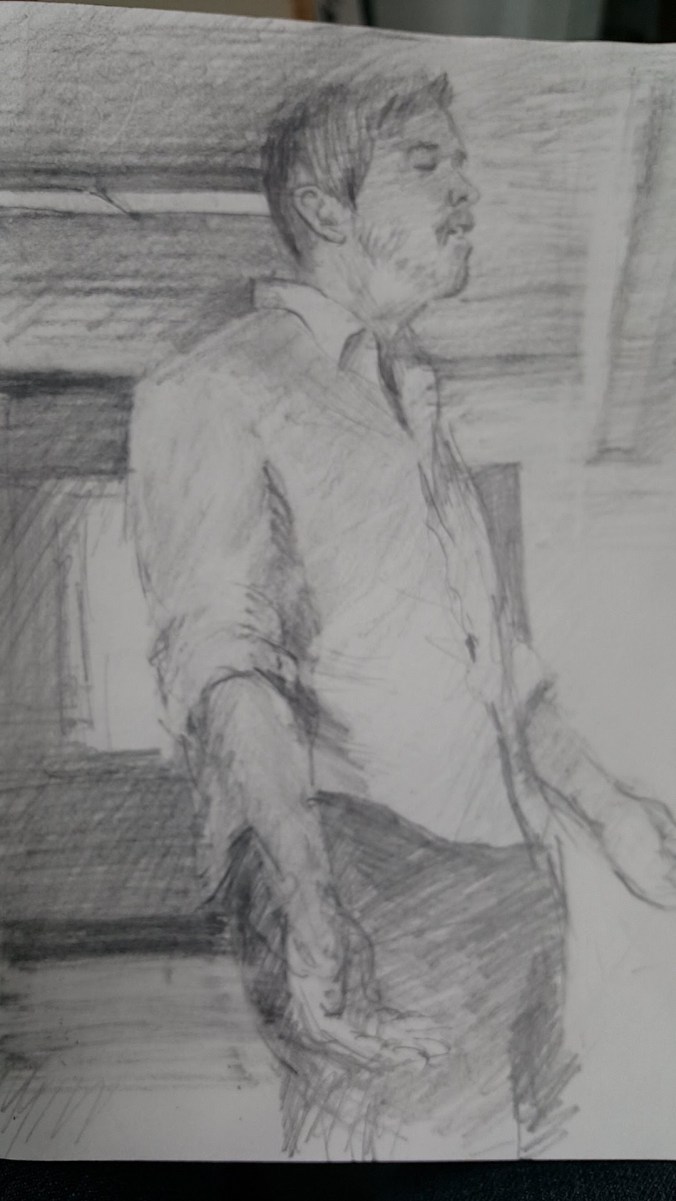
(sketch: Paul Brahms)
Respect the elders.
Embrace the new.
Encourage the impractical and improbable,
without bias.
– David Fricke
 Edge of Atlantic