I want to seek nothing at all, if this is possible. but only to be led without looking and without seeking. For thus to seek is to find. – Thomas Merton, journal entry – August 2, 1960
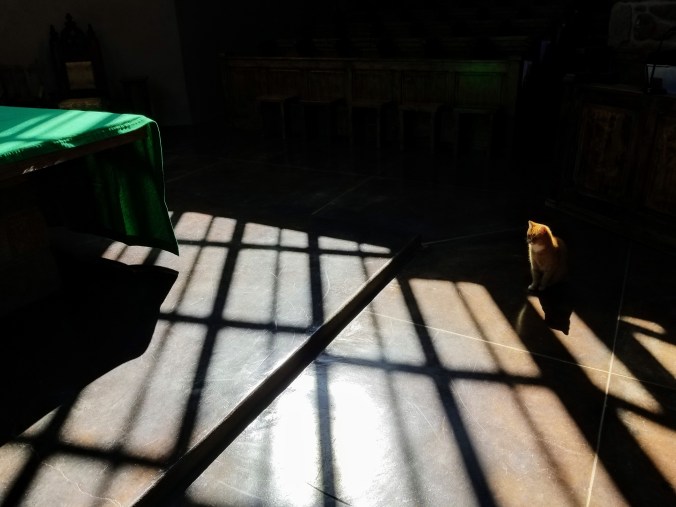
(Photo: Abiquiu, NM, September 2018
I want to seek nothing at all, if this is possible. but only to be led without looking and without seeking. For thus to seek is to find. – Thomas Merton, journal entry – August 2, 1960
(Photo: Abiquiu, NM, September 2018
It just comes. That is the miracle of it.
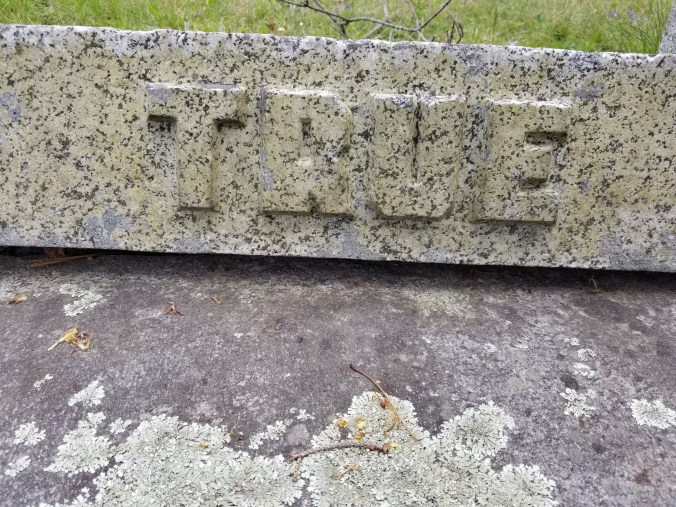
The false self is your psychological creation of yourself in space and time. It comes from your early conditioning, family, roles, education, mind, culture, and religion. The false self is who you think you are! But thinking doesn’t make it so. The false self dies and passes away. Yet it is the raw material through which you discover your True Self in God, so you must not hate it or kill it. Just learn from it. Of itself, it does not know how to pray, because it does not understand simple presence, communion, or relationship. The false self is all about utility and “What can I get out of this?” Not bad, but very incomplete.
The True Self is not created by anything you have done right or wrong. Nor can you lose it by doing anything good or bad. The True Self is not formed by adhering to any requirements; it’s about relationship itself—the quality and capacity for connection. Only the True Self can pray. The false self will say prayers but the True Self is a prayer and looks out at reality from a different pair of eyes larger than its own. This is why in Ephesians it can say “pray always” (6:18). We pray always whenever we act in conscious and loving union with things—which eventually can be all the time. Then whatever you do is a prayer, not a recited prayer but a full-bodied, bigger-than-mind, contemplative prayer. When you are in your True Self, your prayer and your breath are the same thing.
– R. Rohr
Even the purest metaphysical Taoist thinkers, the Lungman Taoists, say that people “can assist in improving the divine handiwork” – or, as the modern Taoist puts it, people may “follow the Will of the Creator in guiding the world in its evolution towards the ultimate Reality.” Even Meister Echhart said, “God needs man.” God needs man to disclose him, complete him, and fulfill him, Teilhard said. His friend, Abbe’ Paul Grenet paraphrased his thinking about God: “His name is holy, but it is up to us to sanctify it; his reign is universal, but it is up to us to make him reign; his will is done, but it is up to us to accomplish it.” “Little by little,” – the paleontologist himself said, “the work is being done.”
– Annie Dillard, For The Time Being
(Photo: Portland, Maine – August 2012)
Strangely, forgiveness never arises from the part of us that was actually wounded. The wounded self may be the part of us incapable of forgetting, and perhaps, not actually meant to forget, as if, like the foundational dynamics of the physiological immune system our psychological defenses must remember and organize against any future attacks — after all, the identity of the one who must forgive is actually founded on the very fact of having been wounded.
Stranger still, it is that wounded, branded, un-forgetting part of us that eventually makes forgiveness an act of compassion rather than one of simple forgetting. To forgive is to assume a larger identity than the person who was first hurt, to mature and bring to fruition an identity that can put its arm, not only around the afflicted one within but also around the memories seared within us by the original blow and through a kind of psychological virtuosity, extend our understanding to one who first delivered it. Forgiveness is a skill, a way of preserving clarity, sanity and generosity in an individual life, a beautiful way of shaping the mind to a future we want for ourselves; an admittance that if forgiveness comes through understanding, and if understanding is just a matter of time and application then we might as well begin forgiving right at the beginning of any drama rather than put ourselves through the full cycle of festering, incapacitation, reluctant healing and eventual blessing.
To forgive is to put oneself in a larger gravitational field of experience than the one that first seemed to hurt us. We reimagine ourselves in the light of our maturity and we reimagine the past in the light of our new identity, we allow ourselves to be gifted by a story larger than the story that first hurt us and left us bereft.
– Robert A. Johnson
1000 days sober last Friday. I thank God, who had to break my life into a million pieces and showed me the spiritual path to wholeness and freedom, relieved me of the bondage of self, and connected me to a supportive, loving community.
Today and every day, the word is: gratitude
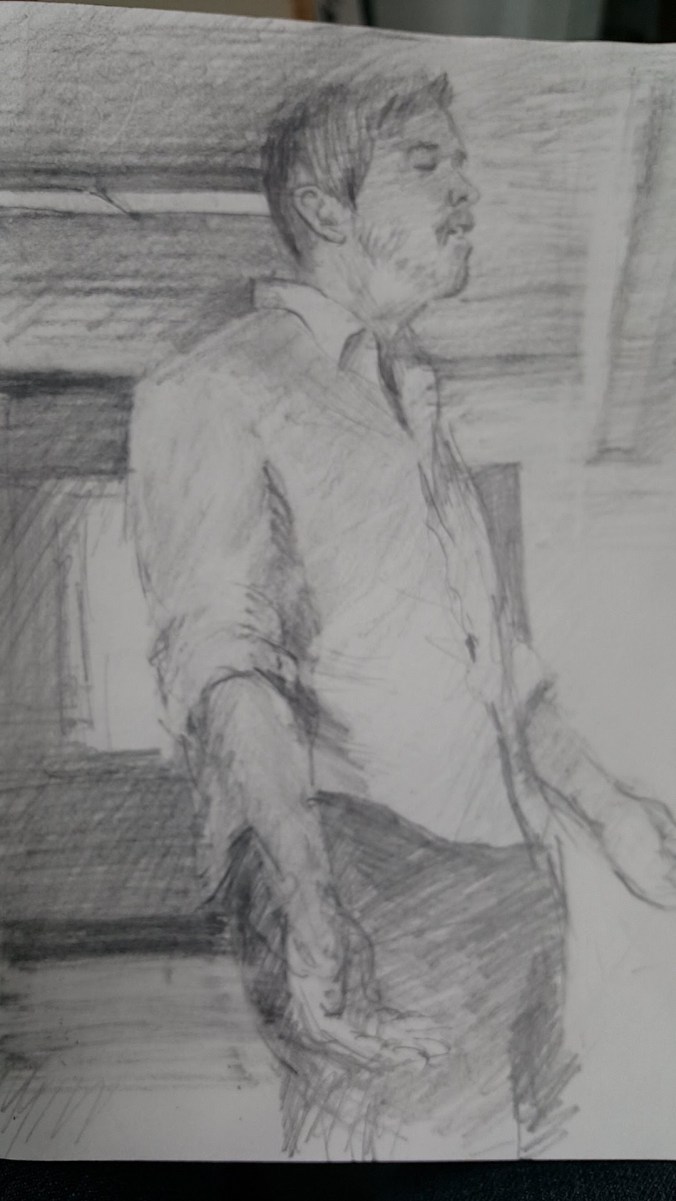
(sketch: Paul Brahms)
Respect the elders.
Embrace the new.
Encourage the impractical and improbable,
without bias.
– David Fricke
Richard Rohr –
Pain teaches a most counterintuitive thing—that we must go down before we even know what up is. It is first an ordinary wound before it can become a sacred wound. Suffering of some sort seems to be the only thing strong enough to destabilize our arrogance and our ignorance. I would define suffering very simply as “whenever you are not in control.”
All healthy religion shows you what to do with your pain. If we do not transform our pain, we will most assuredly transmit it. If your religion is not showing you how to transform your pain, it is junk religion. It is no surprise that a crucified man became the central symbol of Christianity.
If we cannot find a way to make our wounds into sacred wounds, we invariably become negative or bitter—because we will be wounded. That is a given. All suffering is potentially redemptive, all wounds are potentially sacred wounds. It depends on what you do with them. Can you find God in them or not?
If there isn’t some way to find some deeper meaning to our suffering, to find that God is somehow in it, and can even use it for good, we will normally close up and close down, and the second half of our lives will, quite frankly, be small and silly.

It is a question in marriage, to my feeling, not of creating a quick community of spirit by tearing down and destroying all boundaries, but rather a good marriage is that in which each appoints the other guardian of his solitude, and shows him this confidence, the greatest in his power to bestow. A togetherness between two people is an impossibility, and where it seems, nevertheless, to exist, it is a narrowing, a reciprocal agreement which robs either one party or both of his fullest freedom and development. But, once the realization is accepted that even between the closest human beings infinite distances continue to exist, a wonderful living side by side can grow up, if they succeed in loving the distance between them which makes it possible for each to see the other whole and against a wide sky!
Therefore this too must be the standard for rejection or choice: whether one is willing to stand guard over the solitude of a person and whether one is inclined to set this same person at the gate of one’s own solitude, of which he learns only through that which steps, festively clothed, out of the great darkness.
– Rainer Maria Rilke

 Edge of Atlantic