“First there is the fall, and then we recover from the fall. Both are the mercy of God!” – Lady Julian of Norwich
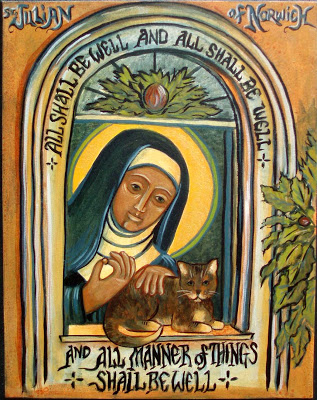
“First there is the fall, and then we recover from the fall. Both are the mercy of God!” – Lady Julian of Norwich
Living a spiritual life requires a change of heart, a conversion. Such a conversion may be marked by a sudden inner change, or it can take place through a long, quiet process of transformation. But it always involves an inner experience of oneness. We realize that we are in the center, and that from there all that is and all that takes place can be seen and understood as part of the mystery of God’s life with us. Our conflicts and pains, our tasks and promises, our families and friends, our activities and projects, our hopes and aspirations, no longer appear to us a fatiguing variety of things that we can barely keep together, but rather as affirmations and revelations of the new life of the Spirit in us. “All these other things,” which so occupied and preoccupied us, now come as gifts or challenges that strengthen and deepen the new life that we have discovered. This does not mean that the spiritual life makes things easier or takes our struggles and pains away. The lives of Jesus’ disciples clearly show that suffering does not diminish because of conversion. Sometimes it even becomes more intense. But our attention is no longer directed to the “more or less.” What matters is to listen attentively to the Spirit and to go obediently where we are being led, whether to a joyful or a painful place.

or coming back toward you.

(thank you, Deena)
One day the Buddha was passing through a village and he sat down with his large monastic following to rest. He began to teach and as soon as the Buddha started talking many people gathered around to hear him. One grumpy man was on the outskirts. Maybe he was mad about the Buddha blocking local traffic or was just sick of seeing spiritual teachers coming through his small town. He began to yell at the Buddha, accusing him of being a charlatan. The Buddha wasn’t fazed by this attack though. He remained ever-loving and calm. Finally, when the guy wouldn’t shut up, he asked a simple question of the grumpy man. “If you purchased a gift for someone,” the Buddha inquired, “but that person did not accept the gift, to whom would it belong?” The man was taken by surprise by this question. “I guess it would still belong to me, because I bought it, right?” “That’s exactly right,” said the Buddha. “In the same way, if you offer me anger but I don’t accept your curses and accusations, not getting angry in return, then isn’t the anger you offer returned to you, its owner?” The grumpy man was overwhelmed and bowed to the Buddha. The Buddha continued, “As a mirror reflects an object, as a still lake reflects the sky—take care that what you speak or act is for good. For goodness will always cast back goodness.”
– from Love Hurts: Buddhist Advice for The Heartbroken
Will you engage this moment with kindness or with cruelty, with love or with fear, with generosity or scarcity, with a joyous heart or an embittered one? This is your choice and no one can make it for you. If you choose kindness, love, generosity, and joy, then you will discover in that choice the Kingdom of God, heaven, nirvana, this-worldly salvation. If you choose cruelty, fear, scarcity, and bitterness, then you will discover in that choice the hellish states of which so many religions speak. These are not ontological realities tucked away somewhere in space—these are existential realities playing out in your own mind. Heaven and hell are both inside of you. It is your choice that determines just where you will reside.

