The immense simplicity of things

Pierre Teilhard de Chardin – I thank you, my God, for having in a thousand different ways led my eyes to discover the immense simplicity of things. Little by little, through the irresistible development of those yearnings you implanted in me as a child, through the influence of gifted friends who entered my life at certain moments to bring light and strength to my mind, and through the awakenings of spirit I owe to the successive initiations, gentle and terrible, which you caused me to undergo: through all these I have been brought to the point where I can no longer see anything, nor any longer breathe, outside that milieu in which all is made one.

20180917_185953

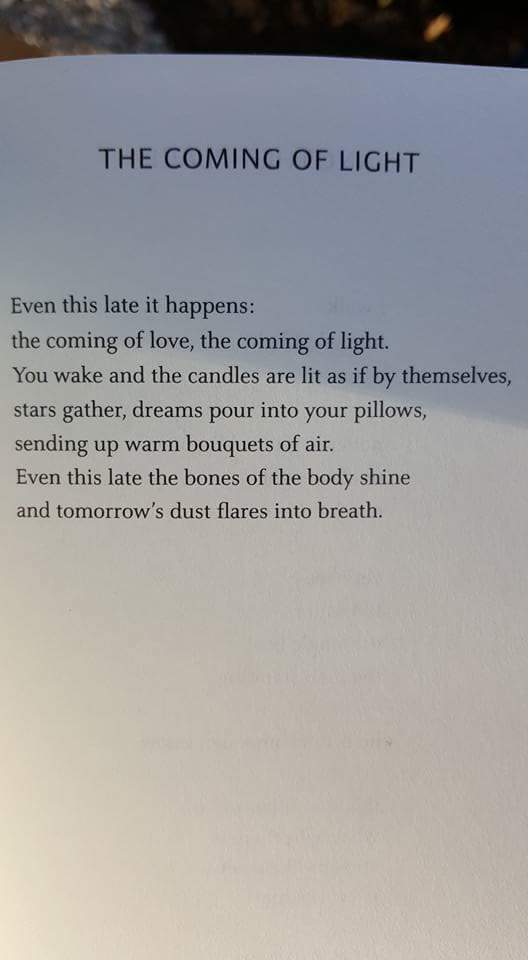
Love – Czeslaw Milosz

Love means to learn to look at yourself
The way one looks at distant things
For you are only one thing among many.
And whoever sees that way heals his heart,
Without knowing it, from various ills—
A bird and a tree say to him: Friend.

Then he wants to use himself and things
So that they stand in the glow of ripeness.
It doesn’t matter whether he knows what he serves:
Who serves best doesn’t always understand.

20180917_185953

The struggle

About my mother and father, Brother Leo. The two of them have been wrestling inside me for ages. This struggle has lasted my whole life.… They may take on different names—God and Satan, spirit and flesh, good and bad, light and darkness—but they always remain my mother and father. My father cries within me: “Earn money, get rich, use your gold to buy a coat of arms, become a nobleman. Only the rich and the nobility deserve to live in the world. Don’t be good; once good, you’re finished!” …And my mother, her voice trembling within me, says to me softly, fearfully, lest my father hear her: “Be good, dear Francis, and you shall have my blessing. You must love the poor, the humble, the oppressed.” —Nikos Kazantzakis, Saint Francis

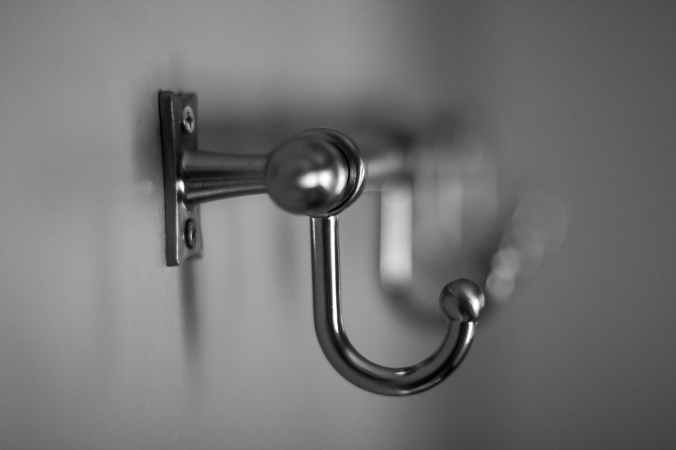
Pema Chodron on shenpa – the hook, the urge to indulge the addiction

So we could also call shenpa “the urge”—the urge to smoke that cigarette, to overeat, to have another drink, to indulge our addiction whatever it is. Sometimes shenpa is so strong that we’re willing to die getting this short-term symptomatic relief. The momentum behind the urge is so strong that we never pull out of the habitual pattern of turning to poison for comfort. It doesn’t necessarily have to involve a substance; it can be saying mean things, or approaching everything with a critical mind. That’s a major hook. Something triggers an old pattern we’d rather not feel, and we tighten up and hook into criticizing or complaining. It gives us a puffed-up satisfaction and a feeling of control that provides short-term relief from uneasiness.

Those of us with strong addictions know that working with habitual patterns begins with the willingness to fully acknowledge our urge, and then the willingness not to act on it. This business of not acting out is called refraining. Traditionally it’s called renunciation. What we renounce or refrain from isn’t food, sex, work or relationships per se. We renounce and refrain from the shenpa. When we talk about refraining from the shenpa, we’re not talking about trying to cast it out; we’re talking about trying to see the shenpa clearly and experiencing it. If we can see shenpa just as we’re starting to close down, when we feel the tightening, there’s the possibility of catching the urge to do the habitual thing, and not doing it.


selective focus of stainless steel hook

Photo by Steve Johnson on Pexels.com