No matter how far you go down a wrong road, turn back. – Turkish proverb
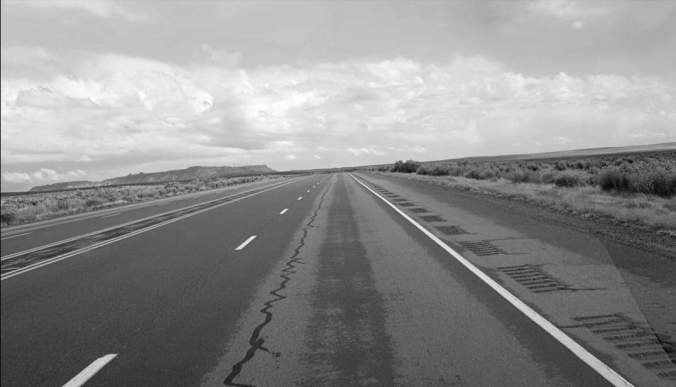 photo: New Mexico, September 2017
No matter how far you go down a wrong road, turn back. – Turkish proverb
photo: New Mexico, September 2017

Forgive us who have sinned much.

Guide us toward spiritual growth,
— fill our minds with thoughts of truth, justice and love.
A single sentence, a single word, a single awareness may turn life over, and while you may not yet be found, you are no longer lost. It is impossible to express. Your dream of the world is unmasked, creating an opening. The night, however dark, is not endless, because in that smallest opening you glimpsed light moving in the dark. It was the first real thing you have known. – Paula D’Arcy

Photo: Airline Road, Maine 2008

Today grant work to laborers, bread to the hungry, joy to the sorrowful,
— grace and redemption to all people.

Strangely, forgiveness never arises from the part of us that was actually wounded. The wounded self may be the part of us incapable of forgetting, and perhaps, not actually meant to forget, as if, like the foundational dynamics of the physiological immune system our psychological defenses must remember and organize against any future attacks — after all, the identity of the one who must forgive is actually founded on the very fact of having been wounded.
Stranger still, it is that wounded, branded, un-forgetting part of us that eventually makes forgiveness an act of compassion rather than one of simple forgetting. To forgive is to assume a larger identity than the person who was first hurt, to mature and bring to fruition an identity that can put its arm, not only around the afflicted one within but also around the memories seared within us by the original blow and through a kind of psychological virtuosity, extend our understanding to one who first delivered it. Forgiveness is a skill, a way of preserving clarity, sanity and generosity in an individual life, a beautiful way of shaping the mind to a future we want for ourselves; an admittance that if forgiveness comes through understanding, and if understanding is just a matter of time and application then we might as well begin forgiving right at the beginning of any drama rather than put ourselves through the full cycle of festering, incapacitation, reluctant healing and eventual blessing.
To forgive is to put oneself in a larger gravitational field of experience than the one that first seemed to hurt us. We reimagine ourselves in the light of our maturity and we reimagine the past in the light of our new identity, we allow ourselves to be gifted by a story larger than the story that first hurt us and left us bereft.
– David Whyte – Consolations: The Solace, Nourishment and Underlying Meaning of Everyday Words
The truth is formed in silence and work and suffering – with which we become true. But we interfere with God’s work by talking too much about ourselves – even telling God what we ought to do – advising God how to make us perfect and listening for God’s voice to answer us with approval. We soon grow impatient and turn aside from the silence that disturbs us (the silence in which God’s work can best be done), and we invent the answer and the approval which will never come. Thomas Merton, journal entry November 12, 1952