Nearing Solstice

Nearing Solstice

1.
dark dark day
the sun
a sliver of memory
slipping away

let daylight
settle slowly

islands appear
and ledges will light
handholds
we’ll follow

longing
for night

2.
what has become of the buoy
off Georges Bank
adrift and silent
since Thanksgiving

gauging the colors
of clouds winds
calm seas building
nothing to report

ducks passing overhead
give a slight whistle

3.
first light reflected
within the water
off Clapboard Island

listen
a voice says

the weather for
Chebeague and Matinicus
Monhegan Muscongus

each morning
the same
each morning
changed

high tide
just before
sunrise

Image may contain: ocean, sky, outdoor, nature and water


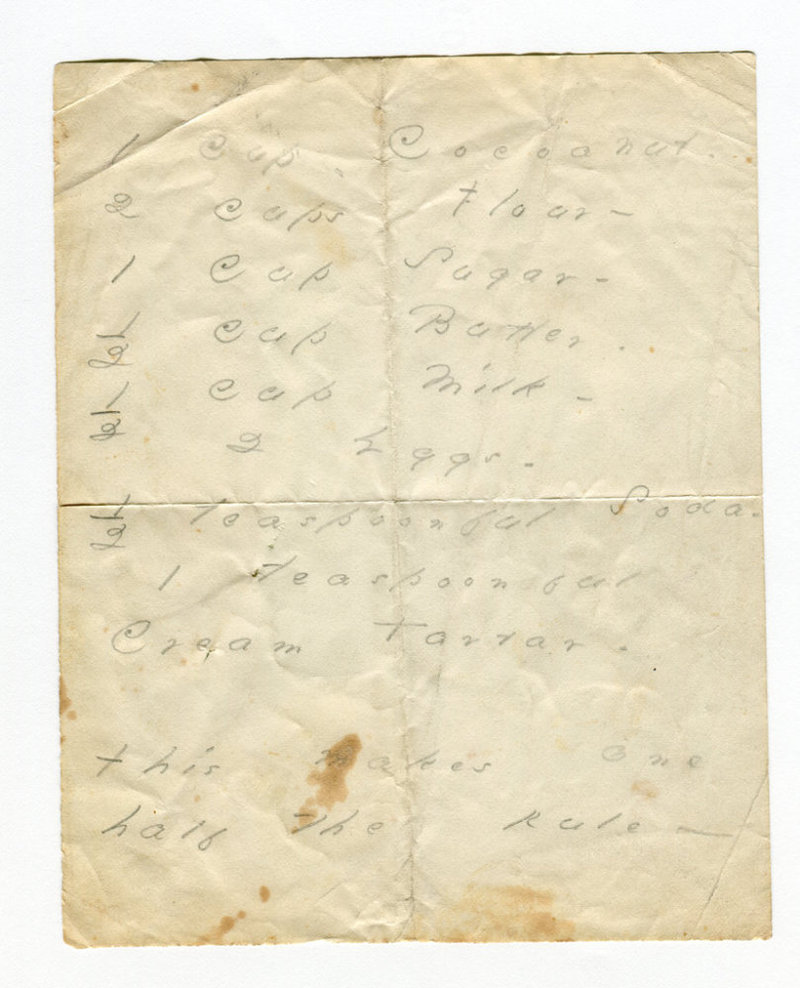
Happy Birthday, Emily

Emily Dickinson was born this day in 1830. Celebrate with her handwritten recipe for coconut cake:

Fame is A Fickle Food

Fame is a fickle food
Upon a shifting plate
Whose table once a
Guest but not
The second time is set
Whose crumbs the crows inspect
And with ironic caw
Flap past it to the
Farmer’s corn
Men eat of it and die

Lines for Winter – Mark Strand

Tell yourself
as it gets cold and gray falls from the air
that you will go on
walking, hearing
the same tune no matter where
you find yourself—
inside the dome of dark
or under the cracking white
of the moon’s gaze in a valley of snow.
Tonight as it gets cold
tell yourself
what you know which is nothing
but the tune your bones play
as you keep going. And you will be able
for once to lie down under the small fire
of winter stars.
And if it happens that you cannot
go on or turn back
and you find yourself
where you will be at the end,
tell yourself
in that final flowing of cold through your limbs
that you love what you are.

(Photo: South Portland, Maine – December 2018)

poetry & prayer

I have never separated the writing of poetry from prayer. I have grown up believing it is a vocation, a religious vocation. What I described in Another Life—about being on the hill and feeling the sort of dissolution that happened—is a frequent experience in a younger writer. I felt this sweetness of melancholy, of a sense of mortality, or rather of immortality, a sense of gratitude both for what you feel is a gift and for the beauty of the earth, the beauty of life around us. When that’s forceful in a young writer, it can make you cry. It’s just clear tears; it’s not grimacing or being contorted, it’s just a flow that happens. The body feels it is melting into what it has seen. This continues in the poet. It may be repressed in some way, but I think we continue in all our lives to have that sense of melting, of the ‘I’ not being important. That is the ecstasy. It doesn’t happen as much when you get older.
There’s that wonderful passage in [Thomas] Traherne where he talks about seeing the children as moving jewels until they learn the dirty devices of the world. It’s not that mystic. Ultimately, it’s what Yeats says: ‘Such a sweetness flows into the breast that we laugh at everything and everything we look upon is blessed.’ That’s always there. It’s a benediction, a transference. It’s gratitude, really. The more of that a poet keeps, the more genuine his nature. I’ve always felt that sense of gratitude. I’ve never felt equal to it in terms of my writing, but I’ve never felt that I was ever less than that.
– Derek Walcott

20180902_151409

Willow Poem – William Carlos Williams

It is a willow when summer is over,
a willow by the river
from which no leaf has fallen nor
bitten by the sun
turned orange or crimson.
The leaves cling and grow paler,
swing and grow paler
over the swirling waters of the river
as if loath to let go,
they are so cool, so drunk with
the swirl of the wind and of the river—
oblivious to winter,
the last to let go and fall
into the water and on the ground.