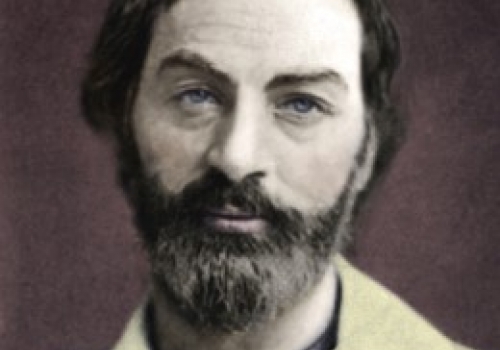
The spotted hawk swoops by and accuses me—he complains of my gab and my loitering.
I too am not a bit tamed—I too am untranslatable;
I sound my barbaric yawp over the roofs of the world.
The spotted hawk swoops by and accuses me—he complains of my gab and my loitering.
I too am not a bit tamed—I too am untranslatable;
I sound my barbaric yawp over the roofs of the world.
I heard the old, old men say,
“Everything alters,
And one by one we drop away.”
They had hands like claws, and their knees
Were twisted like the old thorn-trees
By the waters.
I heard the old, old men say,
“All that’s beautiful drifts away
Like the waters.”
Happy birthday, William Butler Yeats
Welcome, welcome, welcome.
I welcome everything that comes to me today because I know it’s for my healing.
I welcome all thoughts, feelings, emotions, persons, situations, and conditions.
I let go of my desire for power and control.
I let go of my desire for affection, esteem, approval, and pleasure.
I let go of my desire for survival and security. I let go of my desire to change any situation, condition, person, or myself.
I open to the love and presence of God and God’s action within. Amen.

If hell is the wasteland, then purgatory would be the journey where you leave the place of pain. You are still in pain, but you’re in quest with a sense of possible realization. There is no longer despair. You really do not have a sacred place, a rescue land, until you can find some little field of action, or place to be, where it’s not a wasteland, where there is a little spring of ambrosia. It’s a joy that comes from inside. It is not something that puts the joy in you, but a place that lets you so experience your own will, your own intention, and your own wish that, in small, the joy is there. The sin against the Holy Ghost, I think, is despair. The Holy Ghost is that which inspires you to realization., and despair is the feeling that nothing can come. That is absolute hell.
– Joseph Campbell

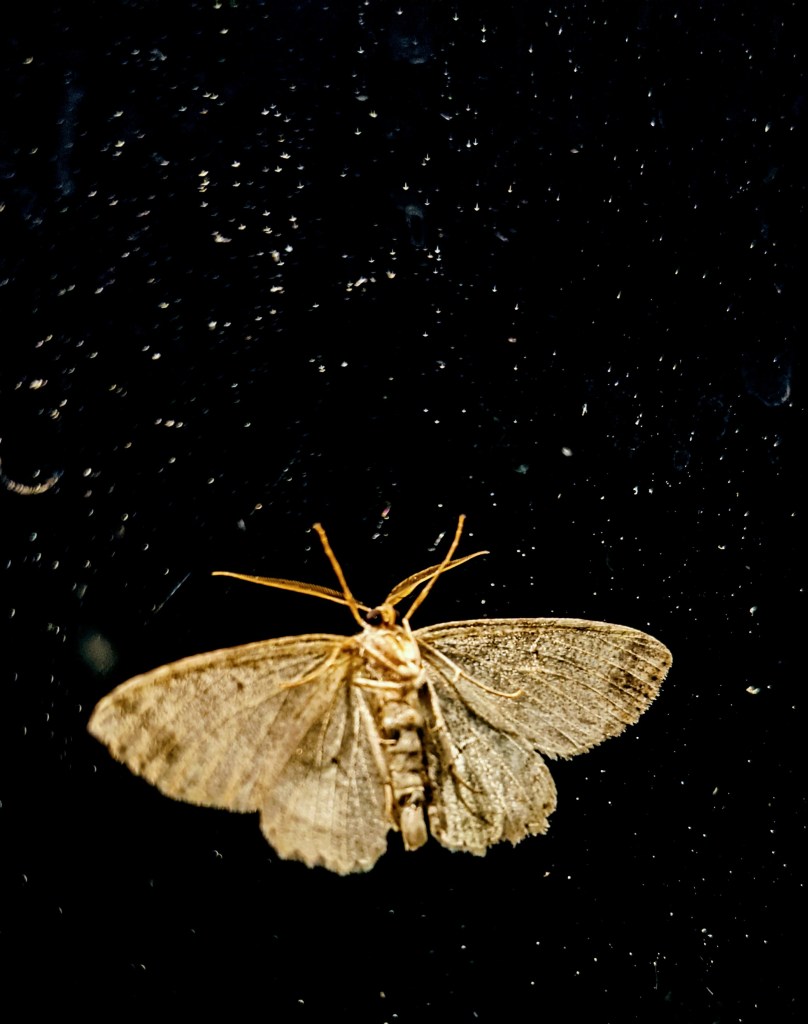
I was talking to a moth
the other evening
he was trying to break into
an electric light bulb
and fry himself on the wires
why do you fellows
pull this stunt i asked him
because it is the conventional
thing for moths or why
if that had been an uncovered
candle instead of an electric
light bulb you would
now be a small unsightly cinder
have you no sense
plenty of it he answered
but at times we get tired
of using it
we get bored with the routine
and crave beauty
and excitement
fire is beautiful
and we know that if we get
too close it will kill us
but what does that matter
it is better to be happy
for a moment
and be burned up with beauty
than to live a long time
and be bored all the while
so we wad all our life up
into one little roll
and then we shoot the roll
that is what life is for
it is better to be a part of beauty
for one instant and then cease to
exist than to exist forever
and never be a part of beauty
our attitude toward life
is come easy go easy
we are like human beings
used to be before they became
too civilized to enjoy themselves
and before i could argue him
out of his philosophy
he went and immolated himself
on a patent cigar lighter
i do not agree with him
myself i would rather have
half the happiness and twice
the longevity
but at the same time i wish
there was something i wanted
as badly as he wanted to fry himself
This after-sunset is a sight for seeing,
Cliff-heads of craggy cloud surrounding it.
—And dwell you in that glory-show?
You may; for there are strange strange things in being,
Stranger than I know.
Yet if that chasm of splendour claim your presence
Which glows between the ash cloud and the dun,
How changed must be your mortal mould!
Changed to a firmament-riding earthless essence
From what you were of old:
All too unlike the fond and fragile creature
Then known to me….Well, shall I say it plain?
I would not have you thus and there,
But still would grieve on, missing you, still feature
You as the one you were.
Totem, tribal, racial, and aggressively missionizing cults represent only partial solutions of the psychological problem of subduing hate by love: they only partially initiate. Ego is not annihilated in them; rather, it is enlarged; instead of thinking only of himself, the individual becomes dedicated to the whole of his society. The rest of the world meanwhile (that is to say, by far the greater portion of mankind) is left outside the sphere of his sympathy and protection because outside the sphere of the protection of his god. And there takes place, then, that dramatic divorce of the two principles of love and hate which the pages of history so bountifully illustrate. Instead of clearing his own heart the zealot tries to clear the world.
If you fix on yourself and your tradition, believing you alone have got “It,” you’ve removed yourself from mankind.
– Joseph Campbell
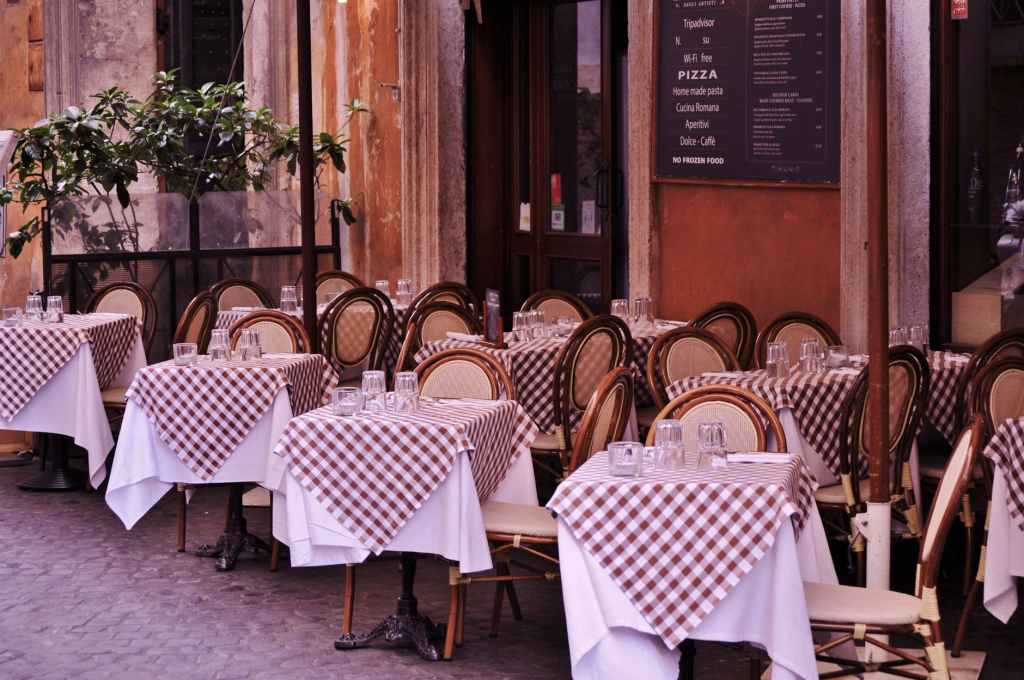
Ask for something, Per
favore, please, the answer is
Prego. Please.
Thank you, Grazie, thank you,
you say. Instead of you’re welcome?
Prego. The answer is please.
Prego, listen, here in Italy, every
time you think you’re polite, this lift
of the verbal eyebrow, this rise
and fall of the voice like a hand
on its way to your shoulder, insistent
lifeline picking you up,
letting you go
again. No problem! Prego
pulls up the covers and tucks you in.
Cape of Saint Martin. Communion
wafer on each Italian tongue. Prego.
Please, Prego, I pray to you,
Prego, don’t
worry. Let me
do something for you.
We are all addicts. Human beings are addictive by nature. Addiction is a modern name and description for what the biblical tradition calls “sin” and the medieval Christians called “passions” or “attachments.” They both recognized that serious measures, or practices, were needed to break us out of these illusions and entrapments; in fact, the New Testament calls them in some cases “exorcisms!” They knew they were dealing with non-rational evil or “demons.”
Substance addictions are merely the most visible form of addiction, but actually we are all addicted to our own habitual way of doing anything, our own defenses, and most especially our patterned way of thinking, or how we process our reality. By definition you can never see or handle what you are addicted to. It is always “hidden” and disguised as something else. As Jesus did with the demon at Gerasa, someone must say, “What is your name?” (Luke 8:30). You cannot heal what you do not first acknowledge.
– Richard Rohr

It seemed that out of battle I escaped
Down some profound dull tunnel, long since scooped
Through granites which titanic wars had groined.
Yet also there encumbered sleepers groaned,
Too fast in thought or death to be bestirred.
Then, as I probed them, one sprang up, and stared
With piteous recognition in fixed eyes,
Lifting distressful hands, as if to bless.
And by his smile, I knew that sullen hall,—
By his dead smile I knew we stood in Hell.
With a thousand fears that vision’s face was grained;
Yet no blood reached there from the upper ground,
And no guns thumped, or down the flues made moan.
“Strange friend,” I said, “here is no cause to mourn.”
“None,” said that other, “save the undone years,
The hopelessness. Whatever hope is yours,
Was my life also; I went hunting wild
After the wildest beauty in the world,
Which lies not calm in eyes, or braided hair,
But mocks the steady running of the hour,
And if it grieves, grieves richlier than here.
For by my glee might many men have laughed,
And of my weeping something had been left,
Which must die now. I mean the truth untold,
The pity of war, the pity war distilled.
Now men will go content with what we spoiled.
Or, discontent, boil bloody, and be spilled.
They will be swift with swiftness of the tigress.
None will break ranks, though nations trek from progress.
Courage was mine, and I had mystery;
Wisdom was mine, and I had mastery:
To miss the march of this retreating world
Into vain citadels that are not walled.
Then, when much blood had clogged their chariot-wheels,
I would go up and wash them from sweet wells,
Even with truths that lie too deep for taint.
I would have poured my spirit without stint
But not through wounds; not on the cess of war.
Foreheads of men have bled where no wounds were.
“I am the enemy you killed, my friend.
I knew you in this dark: for so you frowned
Yesterday through me as you jabbed and killed.
I parried; but my hands were loath and cold.
Let us sleep now. . . .”

 Edge of Atlantic