The false self is the prison from which one must escape in order to reach the true self, and God. For if I find him, I will find myself, and if I find myself, I will find him.
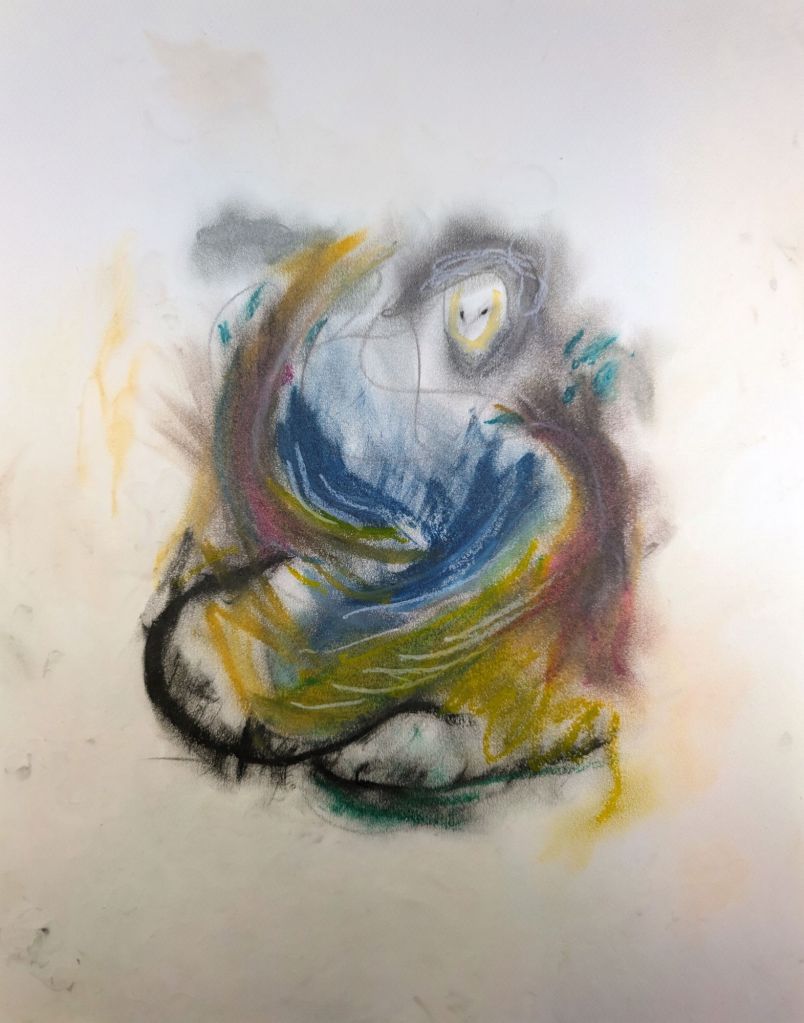
The false self is the prison from which one must escape in order to reach the true self, and God. For if I find him, I will find myself, and if I find myself, I will find him.
Thomas Merton ~
When in the soul of the serene disciple
With no more Fathers to imitate
Poverty is a success,
It is a small thing to say the roof is gone:
He has not even a house.
Stars, as well as friends,
Are angry with the noble ruin.
Saints depart in several directions.
Be still:
There is no longer any need of comment.
It was a lucky wind
That blew away his halo with his cares,
A lucky sea that drowned his reputation.
Here you will find
Neither a proverb nor a memorandum.
There are no ways,
No methods to admire
Where poverty is no achievement.
His God lives in his emptiness like an affliction.
What choice remains?
Well, to be ordinary is not a choice:
It is the usual freedom
Of men without visions.

We don’t teach meditation to the young monks. They are not ready for it until they stop slamming doors. — Thich Nhat Hanh to Thomas Merton in 1966

The rush and pressure of modern life is a form, perhaps the most common form, of its innate violence. To allow oneself…to surrender to too many demands, to commit oneself to too many projects, to want to help everyone in everything, is to succumb to violence. More than that, it is cooperation in violence.
– Thomas Merton, Conjectures of a Guilty Bystander

Some things are too clear to be understood, and what you think is your understanding of them is only a kind of charm, a kind of incantation in your mind concerning that thing.
This is not understanding: it is something you remember. So much for definition! We always have to go back and start from the beginning and make over all the definitions for ourselves again.
– Thomas Merton
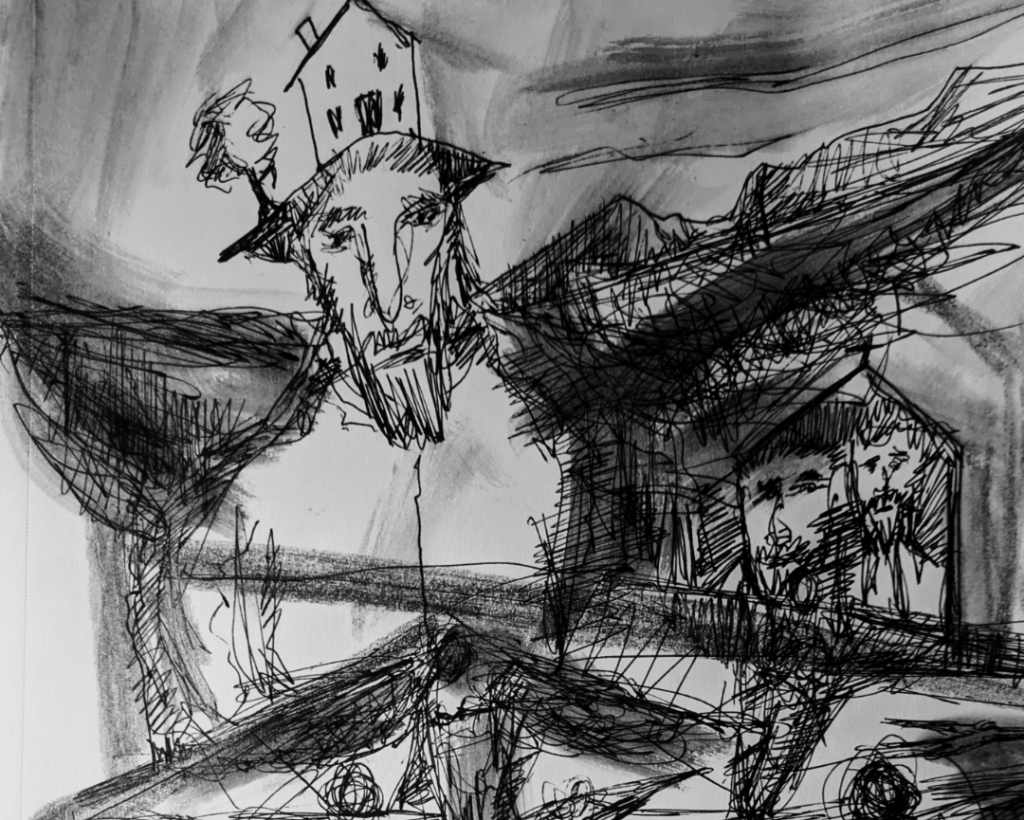
I have learned that an age in which politicians talk about peace is an age in which everybody expects war: the great men of the earth would not talk of peace so much if they did not secretly believe it possible, with one more war, to annihilate their enemies forever. Always, “after just one more war” it will dawn, the new era of love: but first everybody who is hated must be eliminated. For hate, you see, is the mother of their kind of love.
Unfortunately the love that is to be born out of hate will never be born. Hatred is sterile; it breeds nothing but the image of its own empty fury, its own nothingness. Love cannot come of emptiness. It is full of reality. Hatred destroys the real being of man in fighting the fiction which it calls “the enemy.” For man is concrete and alive, but “the enemy” is a subjective abstraction. A society that kills real men in order to deliver itself from the phantasm of a paranoid delusion is already possessed by the demon of destructiveness because it has made itself incapable of love. It refuses, a priori, to love. It is dedicated not to concrete relations of man with man, but only to abstractions about politics, economics, psychology, and even, sometimes, religion.
– Thomas Merton

Only the man who has had to face despair is really convinced that he needs mercy. Those who do not want mercy never seek it. It is better to find God on the threshold of despair than to risk our lives in a complacency that has never felt the need of forgiveness. A life that is without problems may literally be more hopeless than one that always verges on despair.
Thomas Merton, New Man 21-22
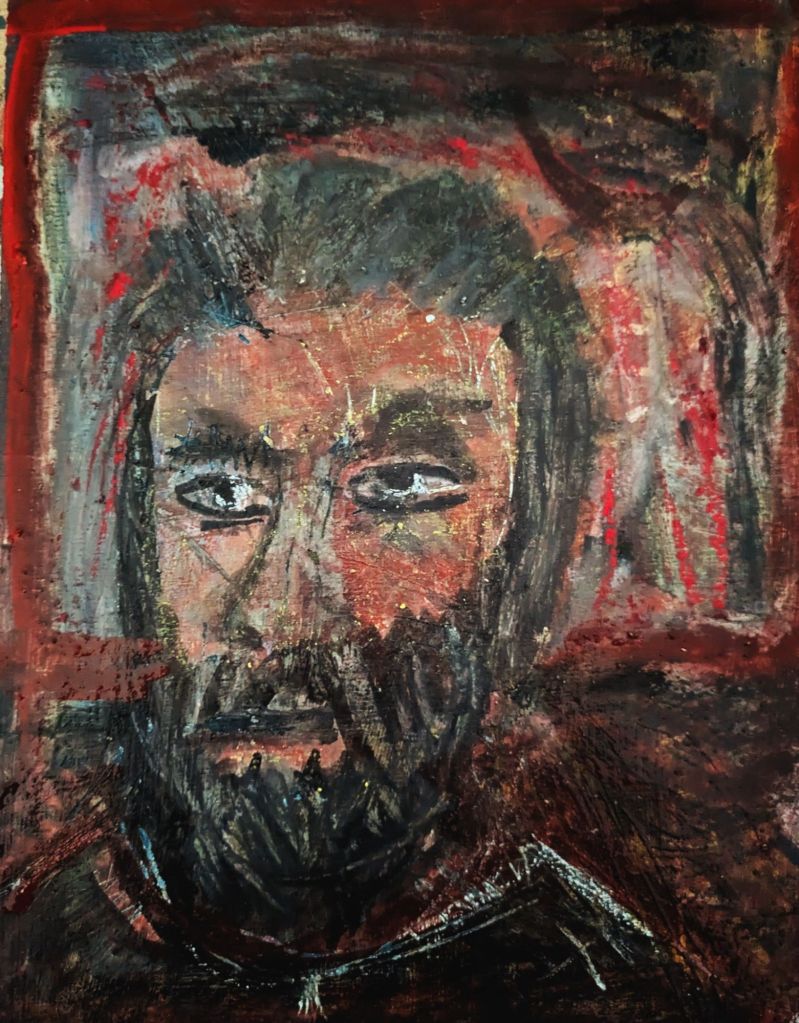
Some things are too clear to be understood, and what you think is your understanding of them is only a kind of charm, a kind of incantation in your mind concerning that thing. This is not understanding: it is something you remember. So much for definition! We always have to go back and start from the beginning and make over all the definitions for ourselves again. – Thomas Merton

Man’s intelligence, however we may misuse it, is far too keen and too sure to rest for long in error. It may embrace a lie and cling to it stubbornly, believing it to be true: but it cannot find true rest in falsehood. The mind that is in love with error wears itself out with anxiety, lest its error be discovered for what it is. But the man who loves truth can already find rest in the acknowledgment of his mistakes, for that is the beginning of truth.
The first step toward finding God, Who is Truth, is to discover the truth about myself: and if I have been in error, this first step to truth is the discovery of my error. A false and illusory “experience” of what appears to be God’s action in the soul may bring with it, for a moment, a kind of interior silence: the silence of a soul that rests in an illusion. But this silence is quickly disturbed by a deep under- current of unrest and noise. The tension of a soul trying to hold itself in silence, when it has no truth to appease it with a superior silence, is louder than the noise of big cities and more disturbing than the movement of an army.
– Thomas Merton

Here is a statement of Gandhi that sums up clearly and concisely the whole doctrine of nonviolence: “The way of peace is the way of truth.” “Truthfulness is even more important than peacefulness. Indeed, lying is the mother of violence. A truthful man cannot long remain violent. He will perceive in the course of his research that he has no need to be violent, and he will further discover that so long as there is the slightest trace of violence in him, he will fail to find the truth he is searching.” Why can we not believe this immediately? Why do we doubt it? Why does it seem impossible? Simply because we are all, to some extent, liars.

We are living under a tyranny of untruth which confirms itself in power and establishes a more and more total control over men in proportion as they convince themselves they are resisting error.
Our submission to plausible and useful lies involves us in greater and more obvious contradictions, and to hide these from ourselves we need greater and ever less plausible lies. The basic falsehood is the lie that we are totally dedicated to truth, and that we can remain dedicated to truth in a manner that is at the same time honest and exclusive: that we have the monopoly of all truth, just as our adversary of the moment has the monopoly of all error.
We then convince ourselves that we cannot preserve our purity of vision and our inner sincerity if we enter into dialogue with the enemy, for he will corrupt us with his error. We believe, finally, that truth cannot be preserved except by the destruction of the enemy- for, since we have identified him with error, to destroy him is to destroy error. The adversary, of course, has exactly the same thoughts about us and exactly the same basic policy by which he defends the “truth.” He has identified us with dishoneity, and untruth. He believes that, if we are destroyed, nothing will be left but truth.
– Thomas Merton
 Edge of Atlantic