Only the man who has had to face despair is really convinced that he needs mercy. Those who do not want mercy never seek it. It is better to find God on the threshold of despair than to risk our lives in a complacency that has never felt the need of forgiveness. A life that is without problems may literally be more hopeless than one that always verges on despair.
Some things are too clear to be understood, and what you think is your understanding of them is only a kind of charm, a kind of incantation in your mind concerning that thing. This is not understanding: it is something you remember. So much for definition! We always have to go back and start from the beginning and make over all the definitions for ourselves again. – Thomas Merton
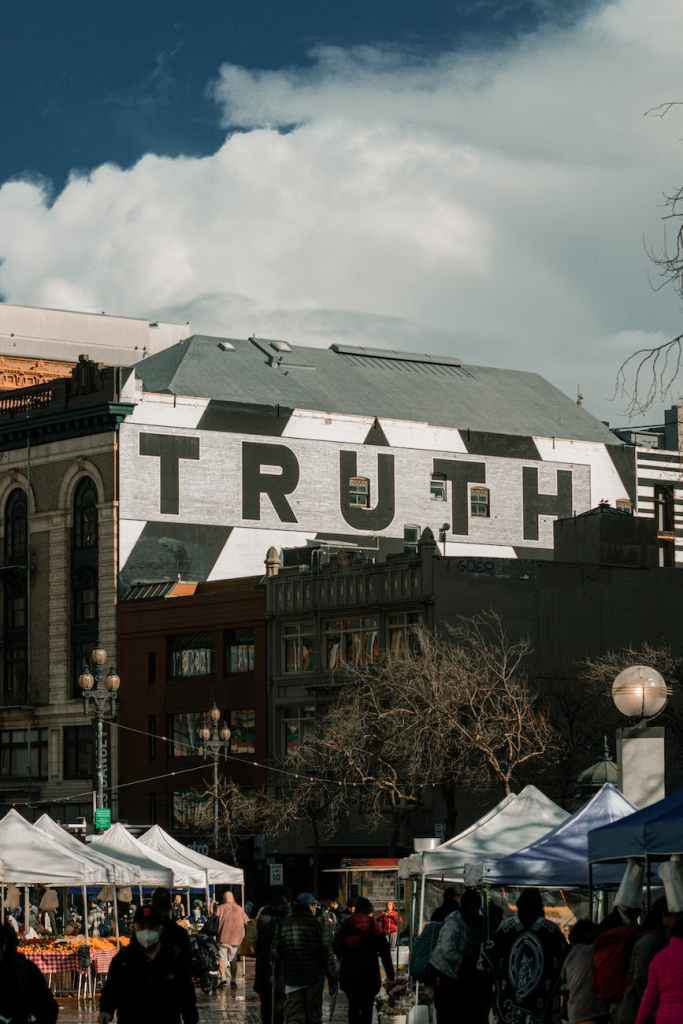
Man’s intelligence, however we may misuse it, is far too keen and too sure to rest for long in error. It may embrace a lie and cling to it stubbornly, believing it to be true: but it cannot find true rest in falsehood. The mind that is in love with error wears itself out with anxiety, lest its error be discovered for what it is. But the man who loves truth can already find rest in the acknowledgment of his mistakes, for that is the beginning of truth.
The first step toward finding God, Who is Truth, is to discover the truth about myself: and if I have been in error, this first step to truth is the discovery of my error. A false and illusory “experience” of what appears to be God’s action in the soul may bring with it, for a moment, a kind of interior silence: the silence of a soul that rests in an illusion. But this silence is quickly disturbed by a deep under- current of unrest and noise. The tension of a soul trying to hold itself in silence, when it has no truth to appease it with a superior silence, is louder than the noise of big cities and more disturbing than the movement of an army.
Here is a statement of Gandhi that sums up clearly and concisely the whole doctrine of nonviolence: “The way of peace is the way of truth.” “Truthfulness is even more important than peacefulness. Indeed, lying is the mother of violence. A truthful man cannot long remain violent. He will perceive in the course of his research that he has no need to be violent, and he will further discover that so long as there is the slightest trace of violence in him, he will fail to find the truth he is searching.” Why can we not believe this immediately? Why do we doubt it? Why does it seem impossible? Simply because we are all, to some extent, liars.
We are living under a tyranny of untruth which confirms itself in power and establishes a more and more total control over men in proportion as they convince themselves they are resisting error.
Our submission to plausible and useful lies involves us in greater and more obvious contradictions, and to hide these from ourselves we need greater and ever less plausible lies. The basic falsehood is the lie that we are totally dedicated to truth, and that we can remain dedicated to truth in a manner that is at the same time honest and exclusive: that we have the monopoly of all truth, just as our adversary of the moment has the monopoly of all error.
We then convince ourselves that we cannot preserve our purity of vision and our inner sincerity if we enter into dialogue with the enemy, for he will corrupt us with his error. We believe, finally, that truth cannot be preserved except by the destruction of the enemy- for, since we have identified him with error, to destroy him is to destroy error. The adversary, of course, has exactly the same thoughts about us and exactly the same basic policy by which he defends the “truth.” He has identified us with dishoneity, and untruth. He believes that, if we are destroyed, nothing will be left but truth.
I have learned that an age in which politicians talk about peace is an age in which everybody expects war: the great men of the earth would not talk of peace so much if they did not secretly believe it possible, with one more war, to annihilate their enemies forever. Always, “after just one more war” it will dawn, the new era of love: but first everybody who is hated must be eliminated. For hate, you see, is the mother of their kind of love.
Unfortunately the love that is to be born out of hate will never be born. Hatred is sterile; it breeds nothing but the image of its own empty fury, its own nothingness. Love cannot come of emptiness. It is full of reality. Hatred destroys the real being of man in fighting the fiction which it calls “the enemy.” For man is concrete and alive, but “the enemy” is a subjective abstraction. A society that kills real men in order to deliver itself from the phantasm of a paranoid delusion is already possessed by the demon of destructiveness because it has made itself incapable of love. It refuses, a priori, to love. It is dedicated not to concrete relations of man with man, but only to abstractions about politics, economics, psychology, and even, sometimes, religion.
It is not complicated to lead the spiritual life. But it is difficult. We are blind and subject to a thousand illusions. We must expect to be making mistakes almost all the time. We must be content to fall repeatedly and to begin again to try to deny ourselves, for the love of God.
It is when we are angry at our own If that is all our self-denial amounts to, our mistakes will never help us. that we tend most of all to deny ourselves for love of ourselves. We want to shake off the hateful thing that has humbled us. In our rush to escape the humiliation of our own mistakes, we run head first into the opposite error, seeking comfort and compensation. And so we spend our lives running back and forth from one attachment to another.
If that is all our self-denial amounts to, our mistakes will never help us.
The thing to do when you have made a mistake is not to give up doing what you were doing and start something altogether new, but to start over again with the thing you began badly and try, for the love of God, to do it well.
– Thomas Merton, from The Sign of Jonas
Our being is not to be enriched merely by activity and experience as such. Everything depends on the quality of our acts and our experiences. A multitude of badly performed actions and of experiences only half-lived exhausts and depletes our being. By doing things badly we make ourselves less real. This growing unreality cannot help but make us unhappy and fill us with a sense of guilt. But the purity of our conscience has a natural proportion with the depth of our being and the quality of our acts: and when our activity is habitually disordered, our malformed conscience can think of nothing better to tell us than to multiply the quantity of our acts, without perfecting their quality. And so we go from bad to worse, exhaust ourselves, empty our whole life of all content, and fall into despair.
There are times, then, when in order to keep ourselves in existence at all we simply have to sit back for a while and do nothing. And for a man who has let himself be drawn completely out of himself by his activity, nothing is more difficult than to sit still and rest, doing nothing at all. The very act of resting is the hardest and most courageous act he can perform: and often it is quite beyond his power.
We must first recover the possession of our own being.
If I dare, in these few words, to ask you some direct and personal questions, it is because I address them as much to myself as to you. It is because I am still able to hope that a civil exchange of ideas can take place between two persons-that we have not yet reached the stage where we are all hermetically sealed, each one in the collective arrogance and despair of his own herd. If I seem to be in a hurry to take advantage of the situation that still exists, it is, frankly, because I sometimes feel it may not continue to exist much longer. In any case, I believe that we are still sufficiently “persons” to realize we have a common difficulty, and to try to solve it together.
Brilliant and gorgeous day, bright sun, breeze making all the leaves and high brown grass shine. Singing of the wind in the cedars Exultant day, in which a puddle in the pig lot shines like precious silver.
Finally I am coming to the conclusion that my highest ambition is to be what I already am. That I will never fulfill my obliga tion to surpass myself unless I first accept myself—and, if I accept myself fully in the right way, I will already have surpassed myself. For it is the unaccepted self that stands in my way—and will con tinue to do so as long as it is not accepted. When it has been accepted, it is my own stepping-stone to what is above me. Because this is the way man was made by God—and original sin was the effort to surpass oneself by being “like God,” i.e., unlike oneself. But our Godlikeness begins at home. We must become like ourselves, and stop living “beside ourselves.”
Out here in the woods I can think of nothing except God, and it is not so much that I think of Him either. I am as aware of Him as of the sun and the clouds and the blue sky and the thin cedar trees.
Engulfed in the simple lucid actuality which is the afternoon: I mean God’s afternoon, this sacramental moment of time when the shadows will get longer and longer, and one small bird sings quietly in the cedars, and one car goes by in the remote distance and the oak leaves move in the wind.
High up in the summer sky I watch the silent flight of a vulture, and the day goes by in prayer. This solitude confirms my call to solitude. The more I am in it, the more I love it. One day it will possess me entirely and no man will ever see me again.




 Edge of Atlantic