Don’t surrender your grief so quickly.
Let it cut more deep.
Let it ferment and season you
as few human or even divine ingredients can.
Something missing in my heart tonight
has made my eyes so soft
my voice so tender
my need of god
absolutely clear.
–Hafiz
suicide
got real real fast

From the Book of Isaiah the Prophet
But Zion said, “The Lord has forsaken me,
my Lord has forgotten me.”
Can a woman forget her nursing child,
or show no compassion for the child of her womb?
Even these may forget,
yet I will not forget you.
See, I have inscribed you on the palms of my hands;
your walls are continually before me.
Your builders outdo your destroyers,
and those who laid you waste go away from you.
Lift up your eyes all around and see;
they all gather, they come to you.
As I live, says the Lord,
you shall put all of them on like an ornament,
and like a bride you shall bind them on.
Surely your waste and your desolate places
and your devastated land—
surely now you will be too crowded for your inhabitants,
and those who swallowed you up will be far away.
The children born in the time of your bereavement
will yet say in your hearing:
“The place is too crowded for me;
make room for me to settle.”
Then you will say in your heart,
“Who has borne me these?
I was bereaved and barren,
exiled and put away—
so who has reared these?
I was left all alone—
where then have these come from?”
Isaiah 49:14-21

Photo: Siena, IT – January 2005 (yet I will not forget you./See, I have inscribed you on the palms of my hands.)
#732 – seasick
If you don’t become the ocean, you’ll be seasick every day. – Leonard Cohen
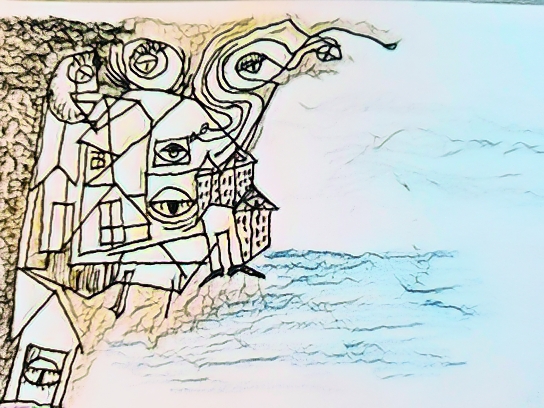
No matter how far you go down a wrong road, turn back. – Turkish proverb
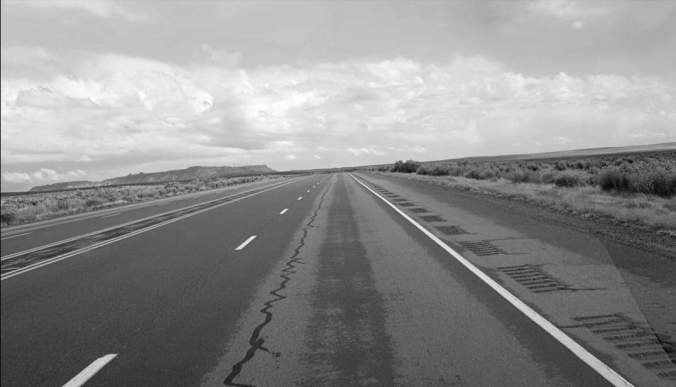 photo: New Mexico, September 2017
Wait – Galway Kinnell
A world without suicide
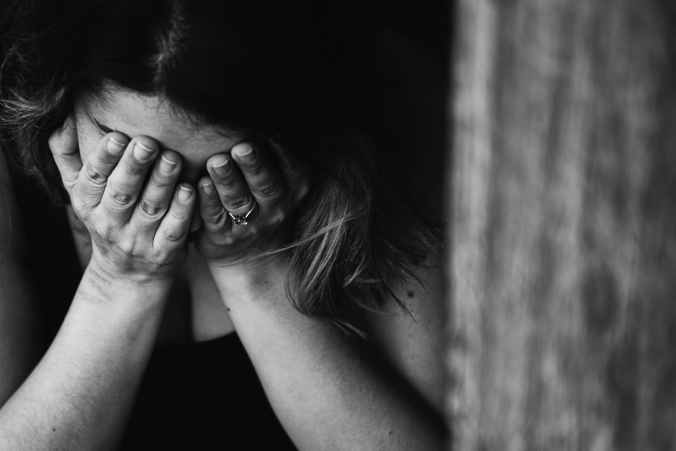 He recognized the myriad pressures on a suicidal mind—substance abuse, genetic predisposition to mental illness, poverty—but identified three factors present in all of those most at risk: a genuine belief, however irrational, that they have become a burden to those around them; a sense of isolation; and the ability, which goes against our hard-wired instincts of self-preservation, to hurt oneself (this combines access to a means of suicide with what Joiner describes as a “learned fearlessness”; Covington calls it an “acquired capability”).
https://www.theatlantic.com/health/archive/2017/08/zero-suicide-strategy/535587/
Too bruised to touch…
The Oblate priest and theologian, Ronald Rolheiser, writes about suicide once a year. He explains it this way – “So each year I write a column on suicide, hoping it might help produce more understanding around the issue and, in a small way perhaps, offer some consolation to those who have lost a loved one in this way. Essentially, I say the same things each year because they need to be said. As Margaret Atwood once put it, some things need to be said and said and said again, until they don’t need to be said any more. Some things need still to be said about suicide.”
Talk about suicide does not come easy – particularly if you are someone who has lived and has seen the darkness lifted. Best, we may think, to ponder those dark moments alone. But this morning I will be on my knees giving thanks to God for another chance to breathe deeply, to laugh, to cry, to feel pain and heartbreak, to feel remorse and sorrow, to love. This afternoon I will give thanks for all who have held me up when I couldn’t stand. This evening I will close my eyes and pray for all those who suffer alone, even when in a crowd, may they – like me – find refuge in the shadow of God’s wings.
Rolheiser writes:
What things? What needs to be said, and said again and again about suicide? For the sake of clarity, let me number the points:
- First, in most cases, suicide is the result of a disease, a sickness, an illness, a tragic breakdown within the emotional immune system or simply a mortal biochemical illness.
- For most suicides, the person dies, as the does the victim of any terminal illness or fatal accident, not by his or her own choice. When people die from heart attacks, strokes, cancer, and accidents, they die against their will. The same is true in suicide.
- We should not worry unduly about the eternal salvation of a suicide victim, believing (as we used to) that suicide is the ultimate act of despair. God’s hands are infinitely more understanding and gentler than our own. We need not worry about the fate of anyone, no matter the cause of death, who leaves this world honest, over-sensitive, over-wrought, too bruised to touch, and emotionally-crushed, as is the case with most suicides. God’s understanding and compassion exceed our own. God isn’t stupid.
- We should not unduly second-guess ourselves when we lose a loved one to suicide: What might I have done? Where did I let this person down? What if? If only I’d been there at the right time!Rarely would this have made a difference. Most of the time, we weren’t there for the very reason that the person who fell victim to this disease did not want us to be there. He or she picked the moment, the spot, and the means precisely so we wouldn’t be there. Suicide seems to be a disease that picks its victim precisely in such a way so as to exclude others and their attentiveness. This is not an excuse for insensitivity, but is a healthy check against false guilt and fruitless second-guessing. Suicide is a result of sickness and there are some sicknesses which all the love and care in the world cannot cure.
- Finally, it’s incumbent upon us, the loved ones who remain here, to redeem the memory of those who die in this way so at to not let the particular manner of their deaths become a false prism through which their lives are now seen. A good person is a good person and a sad death does not change that. Nor should a misunderstanding.
 Edge of Atlantic