Only the man who has had to face despair is really convinced that he needs mercy. Those who do not want mercy never seek it. It is better to find God on the threshold of despair than to risk our lives in a complacency that has never felt the need of forgiveness. A life that is without problems may literally be more hopeless than one that always verges on despair.
…anyone who is struggling with depression, addiction; anyone who may be giving up, suicidal or self-harming.
I know you. I think I know what you are going through. I’ve been there.
Nine years ago on December 22, 2016, a cold, icy day, with freezing rain pouring down, I pulled into my garage thinking it would be a good time for me to die there. I was so turned around and struggling to recover from addictions, the darkness of the winter solstice seemed to have found a home within me.
After what felt like hours, I realized that my plan was selfish and would only serve to hurt the people–family, friends–who had been caring for me, carrying me until I could get back on my feet. I reached out to people, wise friends and family, who gave me good orderly direction. They told me to listen to the professionals who, without hesitation, were there to guide me.
I spent Christmas and several days after in a mental hospital, a place where I found rest and a sense of peace that I hadn’t felt for several years. I’m not saying that the path was easy, far from it. But I was on a different path in a different direction.
Kenosis is a theological term. In short, it means that we empty our own will and become entirely receptive to God’s will for us. The God that I came to know and hear was not a Catholic or Christian God, not Allah, not Yahweh, not Buddha but an internal light that shone on my place in the unified field of existence.
Over time I learned to listen to the wisdom of others who had lived through similar experiences, no longer trying to control the direction of my life.
So today I bless you and pray you can make the turn to life, the life you are meant to live.
If you are interested in a completely anonymous chat, please contact me.
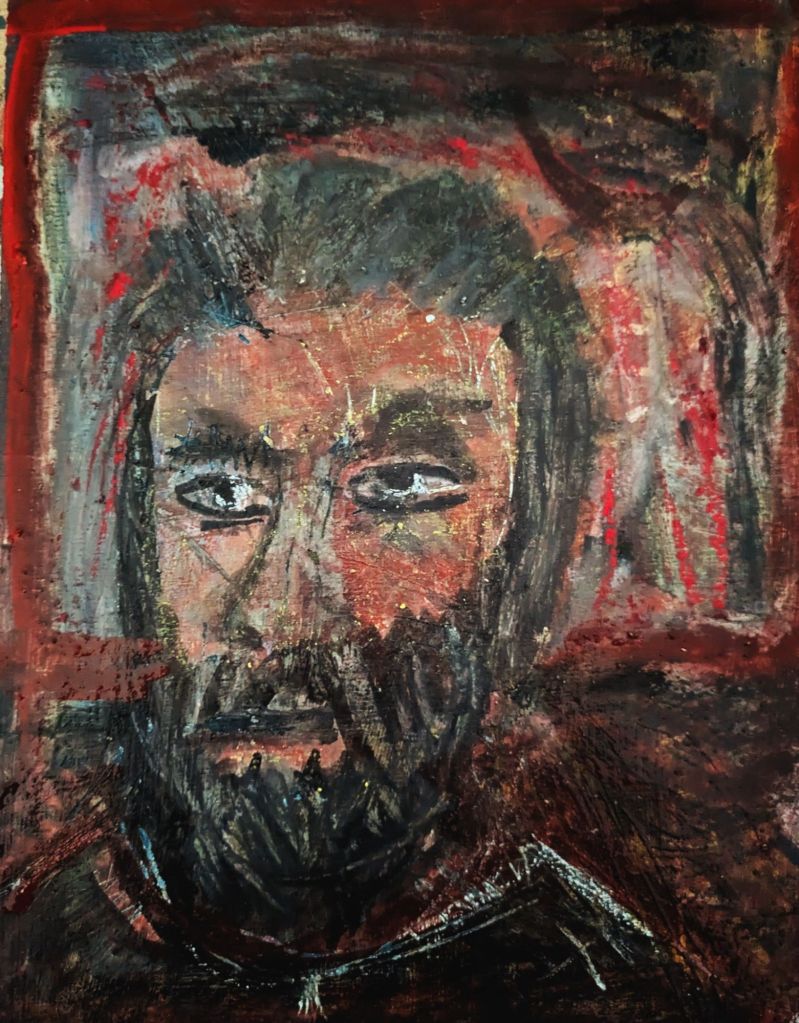
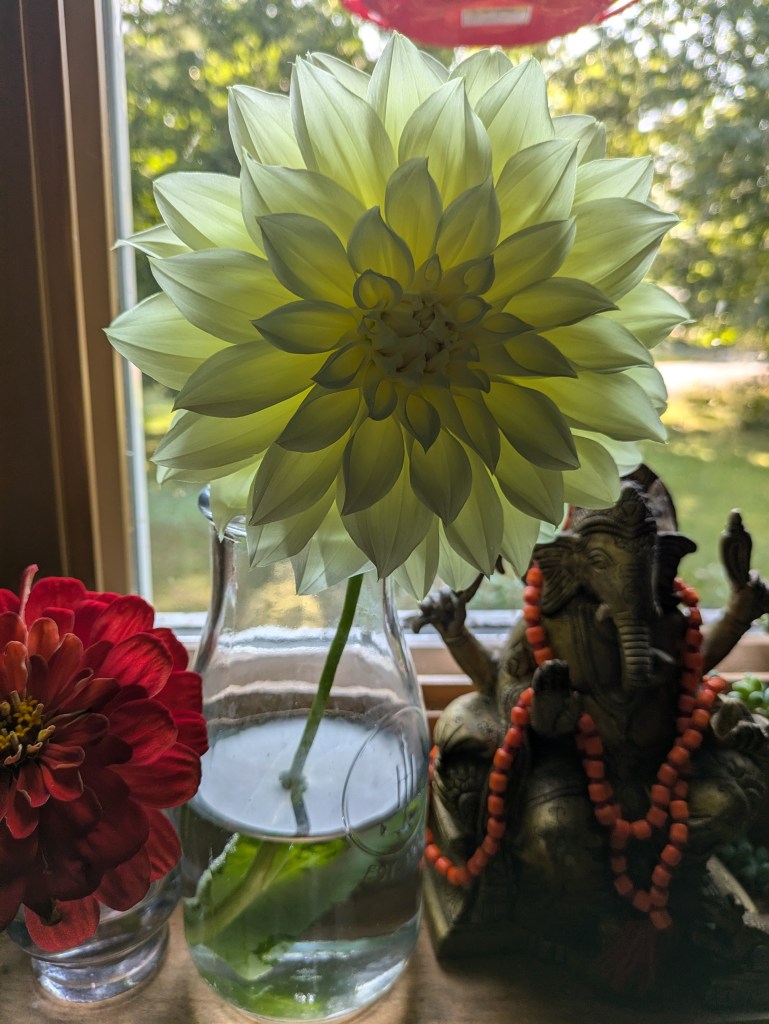
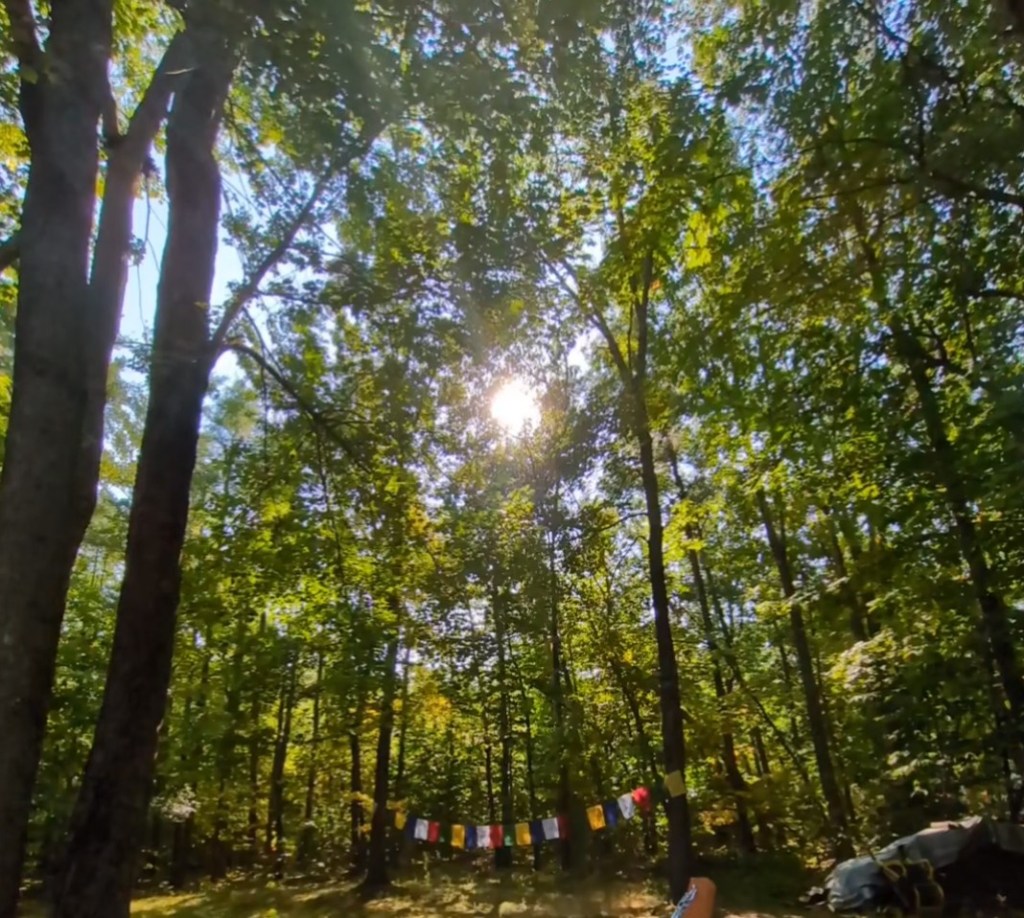
My world in December 2016:
My world today
On this day when the earth begins to turn towards the light, I wish you peace and all good things.
Richard Rohr – Great love has the potential to open the heart space and then the mind space. Great suffering has the potential to open the mind space and then the heart space. Eventually both spaces need to be opened, and for such people, non-dual thinking can be the easiest.
People who have never loved or never suffered will normally try to control everything with an either-or attitude or all-or-nothing thinking. This closed system is all they are prepared for. The mentality that divides the world into “deserving and undeserving” has not yet experienced the absolute gratuity of grace or the undeserved character of mercy. This lack of in-depth God-experience leaves all of us judgmental, demanding, unforgiving, and weak in empathy and sympathy. Such people will remain inside the prison of “meritocracy,” where all has to be deserved. They are still counting when in reality God and grace exist outside of all accounting. Remember, however, to be patient with such people, even if you are the target of their judgment, because on some level, that is how they treat themselves as well.
Non-dual people will see things in their wholeness and call forth the same unity in others simply by being who they are. Wholeness (head, heart, and body all present, positive, and accounted for!) can see and call forth wholeness in others. This is why it is so pleasant to be around whole and holy people.
Dualistic or divided people, however, live in a split and fragmented world. They cannot accept or forgive certain parts of themselves. They cannot accept that God objectively dwells within them, as it states in so many places in Scripture, including 1 Corinthians 3:16-17. This lack of forgiveness takes the forms of a tortured mind, a closed heart, or an inability to live calmly and proudly inside ones own body. The fragmented mind sees parts, not wholes, in itself and others, and invariably it creates antagonism, reaction, fear, and resistance—“push-back” from other people—who themselves are longing for wholeness and holiness.
I shall now try to look calmly at myself and begin to act inwardly, for only in this way will I be able as the child in its first consciously undertaken act refers to itself as ‘I,’ to call myself ‘I’ in a profounder sense.
Be enough in earnest about emotional growth to make it the most important concern of your life.
Be willing to say. “No,” to anything which interferes with that continued growth.
Attempt to be objective and honest in the selection of courses which best fit your new emotional pattern.
If the deeper self does not wish to do a certain thing, that fact is justification enough for not doing it. Each of us is primarily responsible in accounting to himself.
In following such a course of action, you will be amazed to discover that decisiveness earns the admiration of acquaintances, since most of them wish that they could exercise the same kind of courage.
In the process of growing up emotionally we will often be startled to discover vistas of new satisfactions opening up before us. We will begin to realize that our childish fears have kept us from enjoying freedom, that our desire for universal approval has made it impossible for us to gain the approval which we most desire.
These new satisfactions will not come all at once. Neither should we expect to plunge immediately into large decisions that tax our emotional strength too greatly. The first tentative steps will be the most important and with exercise greater decisions can be undertaken.
The great mountaineers begin their training by climbing little hills. In growing up, we must all learn how to walk before we can run.
Our being is not to be enriched merely by activity and experience as such. Everything depends on the quality of our acts and our experiences. A multitude of badly performed actions and of experiences only half-lived exhausts and depletes our being. By doing things badly we make ourselves less real. This growing unreality cannot help but make us unhappy and fill us with a sense of guilt. But the purity of our conscience has a natural proportion with the depth of our being and the quality of our acts: and when our activity is habitually disordered, our malformed conscience can think of nothing better to tell us than to multiply the quantity of our acts, without perfecting their quality. And so we go from bad to worse, exhaust ourselves, empty our whole life of all content, and fall into despair.
There are times, then, when in order to keep ourselves in existence at all we simply have to sit back for a while and do nothing. And for a man who has let himself be drawn completely out of himself by his activity, nothing is more difficult than to sit still and rest, doing nothing at all. The very act of resting is the hardest and most courageous act he can perform: and often it is quite beyond his power.
We must first recover the possession of our own being.
Hell is the concretization of your life experiences, a place where you’re stuck, the wasteland. In hell, you are so bound to yourself that grace cannot enter.The problem with hell is that the fire doesn’t consume you. The fires of transformation do.
Fire is symbolic of the night sea journey, the up- coming of shadow-repressed biography, history, and traumas-and the burning out of the imps of malice. Purgatory is a place where that fire is turned into a purging fire that burns out the fear system, burns out the blockage so that it will open.
If hell is the wasteland, then purgatory would be the journey where you leave the place of pain. You are still in pain, but you’re in quest with a sense of possible realization. There is no longer despair. You really do not have a sacred place, a rescue land, until you can find some little field of action, or place to be, where it’s not a wasteland, where there is a little spring of ambrosia. It’s a joy that comes from inside. It is not something that puts the joy in you, but a place that lets you so experience your own will, your own intention, and your own wish that, in small, the joy is there. The sin against the Holy Ghost, I think, is despair. The Holy Ghost is that which inspires you to realization., and despair is the feeling that nothing can come. That is absolute hell.
Find a place where there’s joy, and the joy will burn out the pain.
Participate joyfully in the sorrows of the world.
We cannot cure the world of sorrows but we can choose to live in joy.
When we talk about settling the world’s problems, we’re barking up the wrong tree.
The world is perfect. It’s a mess. It has always been a mess.
We are not going to change it.
Our job is to straighten out our own lives.
The less aware we are of our shadow self, the more damage it will do. Church teachings on repentance, confession, and forgiveness make good sense. At some point we must say to at least one person: “My name is Joe, and I’m an alcoholic” (or a sex addict, or a workaholic, or an unloving man). Bring it out of darkness, and “everything that becomes visible is light” (Ephesians 5:14).
That’s what we mean by making friends with the shadow. The hero in the Holy Grail stories was advised not to kill the Dark Knight but to make friends with him. It took me years to comprehend this, but now I wonder if there is any other way to overcome evil except to make it work for you and get it on your side. That’s what Jesus did on the cross by making his own murder the salvation of the world. He didn’t destroy his killers, but forgave them because “they do not know what they are doing” (Luke 23:34). The shadow never knows what it is doing.

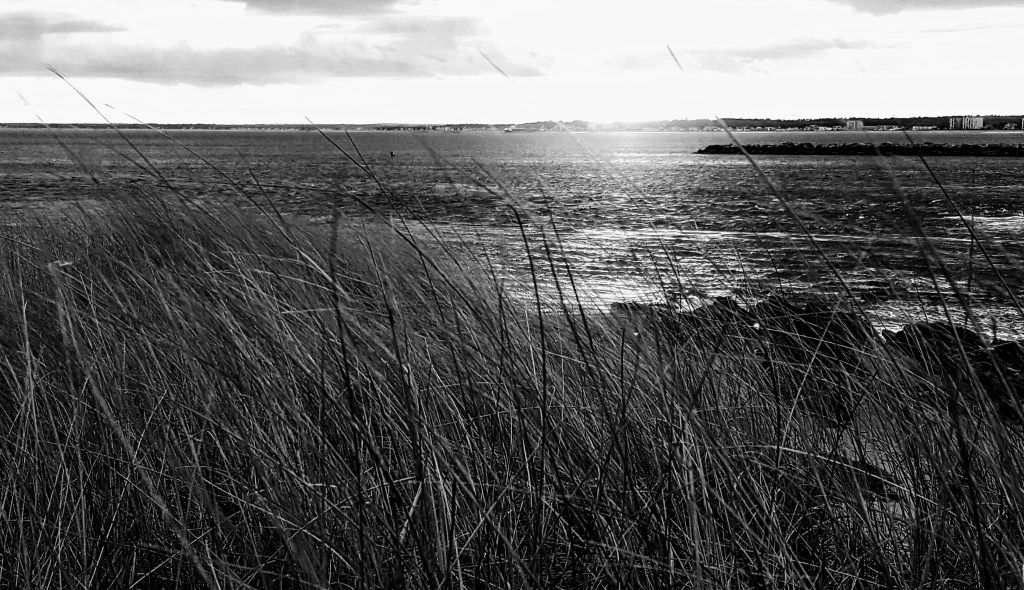








 Edge of Atlantic