One prays to pray

…it becomes very important to remember that the quality of one’s night depends on the thoughts of the day, on the sanity of the day, I bring there all the sins of the day into the light and darkness of truth to be adored without disguise – then I want to fly back to the disguises.

Tonight it is cold again and, as I came up in the dark, a few small snowflakes were flying in the beam of a flashlight. The end of an oak log was still burning with small flames in the fireplace. Came up with candles, and sugar for coffee, and a jar to urinate in so that I won’t have to go out in the snow in the middle of the night. What greater comforts could a man want?

– Thomas Merton, journal entry – 12/5/64

sitting in silence until it silences us…

St. Francis passed on many prayers of praise. He went through life finding new things for which to praise God at every turn. Francis is never trying to earn God’s love; he’s celebrating it! Mature prayer always breaks into gratitude & praise. Prayer is sitting in the silence until it silences us, choosing gratitude until we are grateful, praising God until we ourselves are a constant act of praise.
– R. Rohr OFM
Image may contain: 1 person
(image: Piero Casentini; https://www.facebook.com/Piero-Casentini-168766386634134/)

Saint or horse?

From a Ronald Rolheiser reflection:

There’s a Jewish folk-tale which runs something like this:

There once was a young man who aspired to great holiness. After some time at working to achieve it, he went to see his Rabbi.

“Rabbi,” he announced, “I think I have achieved sanctity.”

”Why do you think that?” asked the Rabbi.

”Well,” responded the young man, “I’ve been practising virtue and discipline for some time now and I have grown quite proficient at them. From the time the sun rises until it sets, I take no food or water. All day long, I do all l do all kinds of hard work for others and I never expect to be thanked.

“If I have temptations of the flesh, I roll in the snow or in thorn bushes until they go away, and then at night, before bed, I practice the ancient monastic discipline and administer lashes to my bare back. I have disciplined myself so as to become holy.”

The Rabbi was silent for a time. Then he took the young man by the arm and led him to a window and pointed to an old horse which was just being led away by its master.

“I have been observing that horse for some time,” the Rabbi said, “and I’ve noticed that it doesn’t get fed or watered from morning to night. All day long it has to do work for people and it never gets thanked. I often see it rolling around in snow or in bushes, as horses are prone to do, and frequently I see it get whipped.

“But, I ask you: Is that a saint or a horse?”

(Photo: Monastery of Christ in The Desert, Abiqui, NM)

A prayer of thanksgiving – Kathleen Norris

We praise and thank you, Lord, for the uncertain, in-between times in our lives when we can be still and know that you are God. We praise and thank you for the hidden wonders of each day. We praise and thank you for acts of kindness, great and small, that serve to bring about your kingdom. We praise and thank you for the courage to place ourselves under your protection, not allowing fear to have the upper hand. We praise and thank you for your patience with our weakness, for being willing to work in and through us in ways we do not understand. We praise and thank you for our emptiness, which will one day be filled with your love. We praise and thank you for the silent wonders you work in us, preparing us for a life that will find its completion in you. Amen.

Gelassenheit

Gelassenheit – letting go – not being encumbered by systems, words, projects. And yet being free in systems, projects. Not trying to get away from all action, all speech, but free, unencumbering Gelassen in this or that action. Error of self-conscious contemplatives: to get hung up on a certain kind of non-action which is an imprisonment, a stupor, the opposite of Gelassenheit. Actually quietism is incompatible with true inner freedom. The furden of this stupid and enforced “quiet” – the self sitting heavily on its own head.

Still thinking of K.C., who wrote from Cincinnati. From a certain point of view my letter to her was a scandal. I was in effect saying, “Don’t listen for the voice of God, God will not speak to you.” Yet this had to be said. Today, for a certain type of person, deceptive. It is the wrong kind of listening: listening for a limited message, an objective sound, a sensible meaning. Actually one decides one’s life by responding to a word that is not well defined, easily explicable, safely accounted for. One decides to love in the face of an unaccountable void, and from the void comes an unaccountable truth. By this truth one’s existence is sustained in peace – until the truth is too firmly grasped and too clearly accounted for. Then one is relying on words, i.e., on ones’ own understanding and one’s own ingenuity in interpreting existence and its “signs.” The one is lost and has to be found once again in the patient Void.

– Thomas Merton, journal entry, November 13, 1966

When I Am Among The Trees – Mary Oliver

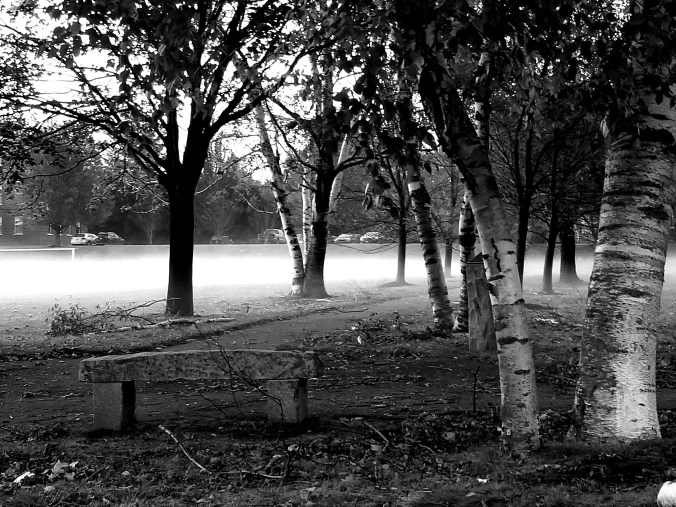
When I am among the trees,
especially the willows and the honey locust,
equally the beech, the oaks, and the pines,
they give off such hints of gladness.
I would almost say that they save me, and daily.

I am so distant from the hope of myself,
in which I have goodness, and discernment,
and never hurry through the world
but walk slowly, and bow often.

Around me the trees stir in their leaves
and call out, “Stay awhile.”
The light flows from their branches.

And they call again, “It’s simple,” they say,
“and you too have come
into the world to do this, to go easy, to be filled
with light, and to shine.

We are the workers

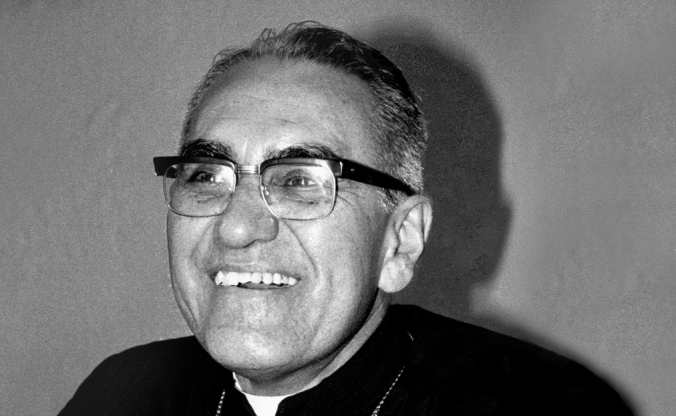
oscar_romero_slider_2_darkenedd.jpgAspire not to have more but to be more.

Defense of human rights, equality and freedom is a matter of policy rooted in the gospel.

Beautiful is the moment in which we understand that we are no more than an instrument of God; we live only as long as God wants us to live; we can only do as much as God makes us able to do; we are only as intelligent as God would have us be.

If we are worth anything, it is not because we have more money or more talent or more human qualities. Insofar as we are worth anything, it is because we are grafted on to Christ’s life, his cross and resurrection. That is a person’s measure.

We accomplish in our lifetime only a tiny fraction of the magnificent enterprise that is God’s work. Nothing we do is complete, which is a way of saying that the kingdom always lies beyond us. No statement says all that could be said. No prayer fully expresses our faith. No confession brings perfection. No pastoral visit brings wholeness. No program accomplishes the church’s mission. No set of goals and objectives includes everything.

This is what we are about. We plant the seeds that one day will grow. We water seeds already planted, knowing that they hold future promise. We lay foundations that will need further development. We provide yeast that produces far beyond our capabilities. we cannot do everything, and there is a sense of liberation in realizing that. this enables us to do something, and to do it very well. It may be incomplete, but it is a beginning, a step along the way, an opportunity for the Lord’s grace to enter and do the rest. We may never see the end results, but that is the difference between the master builder and the worker. We are the workers, not master builders; ministers, not messiahs.

– Archbishop Oscar Romero