To forgive another person from the heart is an act of liberation. We set that person free from the negative bonds that exist between us. We say, “I no longer hold your offense against you” But there is more. We also free ourselves from the burden of being the “offended one.” As long as we do not forgive those who have wounded us, we carry them with us or, worse, pull them as a heavy load. The great temptation is to cling in anger to our enemies and then define ourselves as being offended and wounded by them. Forgiveness, therefore, liberates not only the other but also ourselves. It is the way to the freedom of the children of God.
prayer
birthdays remind us of…
Today would have been Henri Nouwen’s 88th birthday. He wrote:
“Celebrating a birthday reminds us of the goodness of life, and in this spirit we really need to celebrate people’s birthdays every day, by showing gratitude, kindness, forgiveness, gentleness, and affection.”
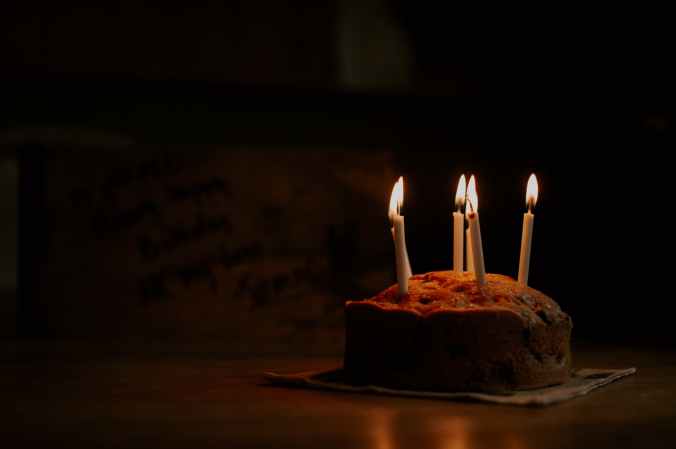
Photo by Flora Westbrook on Pexels.com
a quiet life

Photo by rawpixel.com on Pexels.com
“Make it your ambition to lead a quiet life, to mind your own business and to work with your hands, just as we told you, so that your daily life may win the respect of outsiders and so that you will not be dependent on anybody.” – I Thessalonians 4: 11-12
part of the whole world’s silence
To be alone by being part of the universe – fitting in completely to an environment of woods and silence and peace. Everything you do becomes a unity and a prayer. Unity within and without. Unity with all living things, without effort or contention. My silence is part of the whole world’s silence and builds the temple of God without the noise of hammers. – Thomas Meeting, journal entry, January 28, 1953

a book
“Anyone who truly knows creatures may be excused from listening to sermons, for every creature is full of God, and is a book.” –Meister Eckhart

set your mind at rest
I urge you earnestly not to spend time thinking about the past. If your time was well-used, then let us give God glory. If it was wasted, let us despise it and trust in the goodness of the heavenly Father. Therefore I exhort you to set your mind at rest with a consoling thought that any part of your life that was not well spent has already been forgiven by our most tender God. – Padre Pio
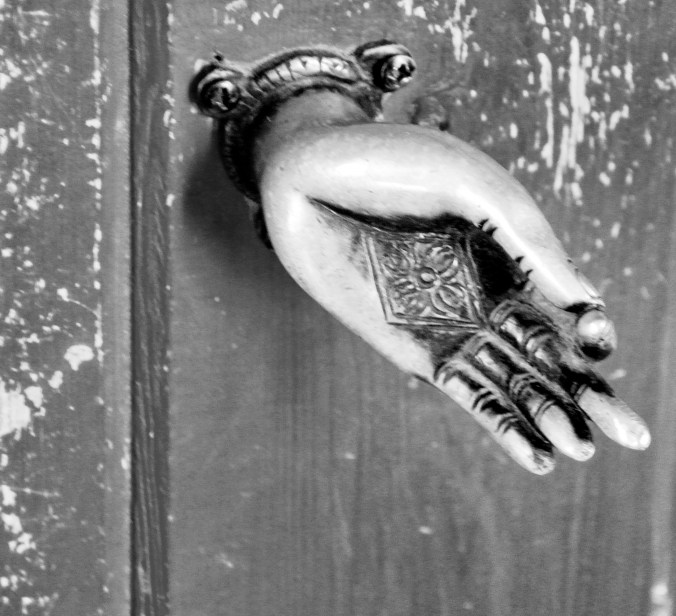
the still, small voice
Many voices ask for our attention. There is a voice that says, “Prove that you are a good person.” Another voice says, “You’d better be ashamed of yourself.” There also is a voice that says, “Nobody really cares about you,” and one that says, “Be sure to become successful, popular, and powerful.” But underneath all these often very noisy voices is a still, small voice that says, “You are my Beloved, my favor rests on you.” That’s the voice we need most of all to hear. To hear that voice, however, requires special effort; it requires solitude, silence, and a strong determination to listen.
That’s what prayer is. It is listening to the voice that calls us “my Beloved.”
– Henri Nouwen

photo: Abiquiu, NM – September 2018
a prayer of forgiveness
Still my unforgiving thoughts, the grudges I nurse from my past, from the betrayals I’ve suffered, from the negativity and abuses I’ve been subject to. Quiet in me the guilt I carry from my own betrayals. Still in me all that’s wounded, unresolved, bitter, and unforgiving. Give the quiet that comes from forgiveness. – Ronald Rolheiser

step over your wounds
Sometimes we have to “step over” our anger, our jealousy, or our feelings of rejection and move on. The temptation is to get stuck in our negative emotions, poking around in them as if we belong there. Then we become the “offended one,” “the forgotten one,” or the “discarded one.” Yes, we can get attached to these negative identities and even take morbid pleasure in them. It might be good to have a look at these dark feelings and explore where they come from, but there comes a moment to step over them, leave them behind and travel on.
– Henri Nouwen
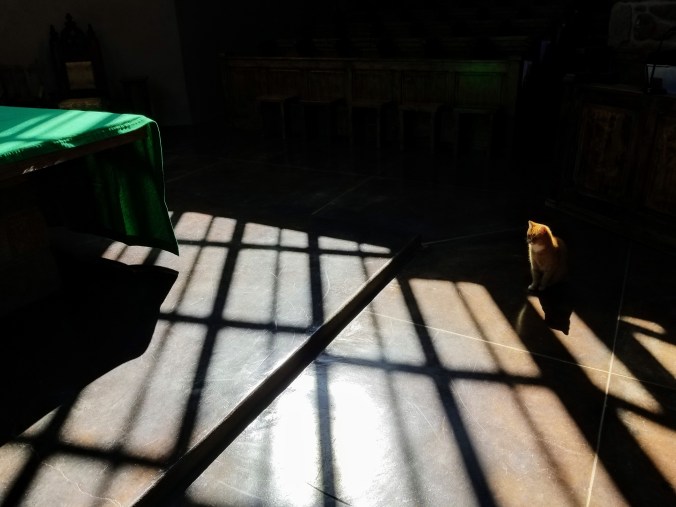
(photo: Monastery of Christ in The Desert, Abiquiu, NM – September 2018)
to be unknown of God
Every one of us is shadowed by an illusory person: a false self.
This is the man that I want to be but who cannot exist, because God does not know anything about him. And to be unknown of God is altogether too much privacy.
– Thomas Merton

 Edge of Atlantic