We praise and thank you, Lord, for the uncertain, in-between times in our lives when we can be still and know that you are God. We praise and thank you for the hidden wonders of each day. We praise and thank you for acts of kindness, great and small, that serve to bring about your kingdom. We praise and thank you for the courage to place ourselves under your protection, not allowing fear to have the upper hand. We praise and thank you for your patience with our weakness, for being willing to work in and through us in ways we do not understand. We praise and thank you for our emptiness, which will one day be filled with your love. We praise and thank you for the silent wonders you work in us, preparing us for a life that will find its completion in you. Amen.
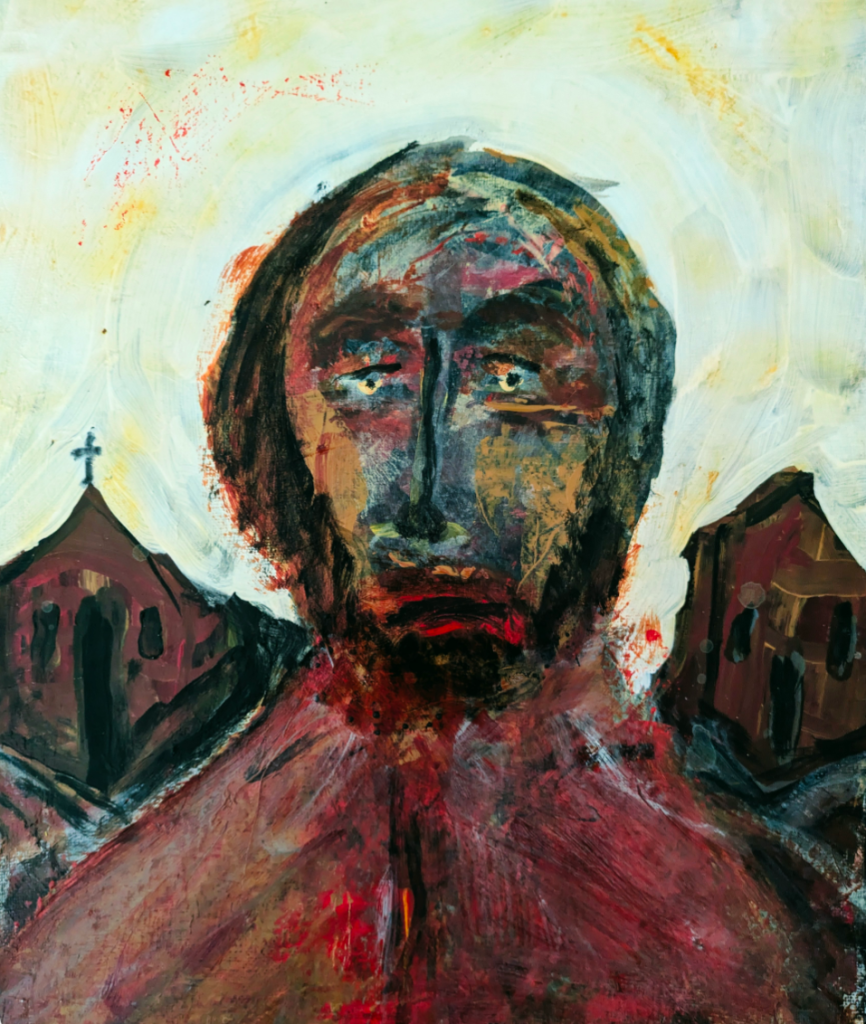
When I went out to kill myself, I caught A pack of hoodlums beating up a man. Running to spare his suffering, I forgot My name, my number, how my day began, How soldiers milled around the garden stone And sang amusing songs; how all that day Their javelins measured crowds; how I alone Bargained the proper coins, and slipped away.
Banished from heaven, I found this victim beaten, Stripped, kneed, and left to cry. Dropping my rope Aside, I ran, ignored the uniforms: Then I remembered bread my flesh had eaten, The kiss that ate my flesh. Flayed without hope, I held the man for nothing in my arms.
I arise today Through a mighty strength, the invocation of the Trinity, Through belief in the Threeness, Through confession of the Oneness of the Creator of creation.
I arise today Through the strength of Christ’s birth with His baptism, Through the strength of His crucifixion with His burial, Through the strength of His resurrection with His ascension, Through the strength of His descent for the judgment of doom.
I arise today Through the strength of the love of cherubim, In the obedience of angels, In the service of archangels, In the hope of resurrection to meet with reward, In the prayers of patriarchs, In the predictions of prophets, In the preaching of apostles, In the faith of confessors, In the innocence of holy virgins, In the deeds of righteous men.
I arise today, through The strength of heaven, The light of the sun, The radiance of the moon, The splendor of fire, The speed of lightning, The swiftness of wind, The depth of the sea, The stability of the earth, The firmness of rock.
I arise today, through God’s strength to pilot me, God’s might to uphold me, God’s wisdom to guide me, God’s eye to look before me, God’s ear to hear me, God’s word to speak for me, God’s hand to guard me, God’s shield to protect me, God’s host to save me From snares of devils, From temptation of vices, From everyone who shall wish me ill, afar and near.
I summon today All these powers between me and those evils, Against every cruel and merciless power that may oppose my body and soul, Against incantations of false prophets, Against black laws of pagandom, Against false laws of heretics, Against craft of idolatry, Against spells of witches and smiths and wizards, Against every knowledge that corrupts man’s body and soul; Christ to shield me today Against poison, against burning, Against drowning, against wounding, So that there may come to me an abundance of reward.
Christ with me, Christ before me, Christ behind me, Christ in me, Christ beneath me, Christ above me, Christ on my right, Christ on my left, Christ when I lie down, Christ when I sit down, Christ when I arise, Christ in the heart of every man who thinks of me, Christ in the mouth of everyone who speaks of me, Christ in every eye that sees me, Christ in every ear that hears me.
I arise today Through a mighty strength, the invocation of the Trinity, Through belief in the Threeness, Through confession of the Oneness of the Creator of creation.
Only the man who has had to face despair is really convinced that he needs mercy. Those who do not want mercy never seek it. It is better to find God on the threshold of despair than to risk our lives in a complacency that has never felt the need of forgiveness. A life that is without problems may literally be more hopeless than one that always verges on despair.
This is my commandment, you must love one another. – Jesus of Nazareth
My religion is kindness, only kindness. – The Dalai Lama
And the servants of the Most Merciful are those who walk upon the earth easily, and when the ignorant address them [harshly], they say [words of] peace. – The Quran
What is serious to men is often very trivial in the sight of God. What in God might appear to us as “play” is perhaps what he Himself takes most seriously. At any rate, the Lord plays and diverts Himself in the garden of His creation, and if we could let go of our own obsession with what we think is the meaning of it all, we might be able to hear His call and follow Him in His mysterious, cosmic dance. We do not have to go very far to catch echoes of that game, and of that dancing. When we are alone on a starlit night; when by chance we see the migrating birds in autumn descending on a grove of junipers to rest and eat; when we see children in a moment when they are really children; when we know love in our own hearts; or when, like the Japanese poet Bashō we hear an old frog land in a quiet pond with a solitary splash–at such times the awakening, the turning inside out of all values, the “newness,” the emptiness and the purity of vision that make themselves evident, provide a glimpse of the cosmic dance.
For the world and time are the dance of the Lord in emptiness. The silence of the spheres is the music of a wedding feast. The more we persist in misunderstanding the phenomena of life, the more we analyze them out into strange finalities and complex purposes of our own, the more we involve ourselves in sadness, absurdity and despair. But it does not matter much, because no despair of ours can alter the reality of things; or stain the joy of the cosmic dance which is always there. Indeed, we are in the midst of it, and it is in the midst of us, for it beats in our very blood, whether we want it to or not.
Yet the fact remains that we are invited to forget ourselves on purpose, cast our awful solemnity to the winds and join in the general dance.
…that “if a person were in a rapture as great as St. Paul once experienced and learned that his neighbor were in need of a cup of soup, it would be best to withdraw from the rapture and give the person the soup he needs.” – from The Solace of Fierce Landscapes, Belden Lane



 Edge of Atlantic