I can tell by the way the trees beat, after so many dull days, on my worried windowpanes that a storm is coming, and I hear the far-off fields say things I can’t bear without a friend, I can’t love without a sister.
The storm, the shifter of shapes, drives on across the woods and across time, and the world looks as if it had no age: the landscape, like a line in the psalm book, is seriousness and weight and eternity.
What we choose to fight is so tiny! What fights with us is so great. If only we would let ourselves be dominated as things do by some immense storm, we would become strong too, and not need names.
When we win it’s with small things, and the triumph itself makes us small. What is extraordinary and eternal does not want to be bent by us. I mean the Angel who appeared to the wrestlers of the Old Testament: when the wrestlers’ sinews grew long like metal strings, he felt them under his fingers like chords of deep music.
Whoever was beaten by this Angel (who often simply declined the fight) went away proud and strengthened and great from that harsh hand, that kneaded him as if to change his shape. Winning does not tempt that man. This is how he grows: by being defeated, decisively, by constantly greater beings.
A lion took a wolf and a fox with him on a hunting excursion, and succeeded in catching a wild ox, an ibex, and a hare. He then directed the wolf to divide the prey. The wolf proposed to award the ox to the lion, the ibex to himself, and the hare to the fox. The lion was enraged with the wolf because he had presumed to talk of “I” and “Thou” and “My share” and “Thy share,” when it all belonged of right to the lion, and he slew the wolf with one blow of his paw. Then, turning to the fox, he ordered him to make the division. The fox, rendered wary by the fate of the wolf, replied that the whole should be the portion of the lion. The lion, pleased with his self-abnegation, gave it all up to him, saying, “Thou art no longer a fox, but myself.”
“Till man destroys ‘self’ he is no true friend of God.”
Once a man came and knocked at the door of his friend. His friend said, “Who art thou, O faithful one?” He said, “‘Tis I.” He answered, “There is no admittance. There is no room for the ‘raw’ at my well-cooked feast. Naught but fire of separation and absence Can cook the raw one and free him from hypocrisy! Since thy ‘self’ has not yet left thee, Thou must be burned in fiery flames.” The poor man went away, and for one whole year Journeyed burning with grief for his friend’s absence. His heart burned till it was cooked; then he went again And drew near to the house of his friend. He knocked at the door in fear and trepidation Lest some careless word might fall from his lips. His friend shouted, “Who is that at the door?” He answered, “‘Tis Thou who art at the door, O Beloved!” The friend said, “Since ‘tis I, let me come in, There is not room for two ‘I’s in one house.”
      If many remedies are prescribed
      for an illness, you may be certain
      that the illness has no cure.

      A. P. CHEKHOV
      The Cherry Orchard
1 FROM THE NURSERY
When I was born, you waited
behind a pile of linen in the nursery,
and when we were alone, you lay down
on top of me, pressing
the bile of desolation into every pore.
And from that day on
everything under the sun and moon
made me sad — even the yellow
wooden beads that slid and spun
along a spindle on my crib.
You taught me to exist without gratitude.
You ruined my manners toward God:
“We’re here simply to wait for death;
the pleasures of earth are overrated.”
I only appeared to belong to my mother,
to live among blocks and cotton undershirts
with snaps; among red tin lunch boxes
and report cards in ugly brown slipcases.
I was already yours — the anti-urge,
the mutilator of souls.
2 BOTTLES
Elavil, Ludiomil, Doxepin,
Norpramin, Prozac, Lithium, Xanax,
Wellbutrin, Parnate, Nardil, Zoloft.
The coated ones smell sweet or have
no smell; the powdery ones smell
like the chemistry lab at school
that made me hold my breath.
3 SUGGESTION FROM A FRIEND
You wouldn’t be so depressed
if you really believed in God.
4 OFTEN
Often I go to bed as soon after dinner
as seems adult
(I mean I try to wait for dark)
in order to push away
from the massive pain in sleep’s
frail wicker coracle.
5 ONCE THERE WAS LIGHT
Once, in my early thirties, I saw
that I was a speck of light in the great
river of light that undulates through time.
I was floating with the whole
human family. We were all colors—those
who are living now, those who have died,
those who are not yet born. For a few
moments I floated, completely calm,
and I no longer hated having to exist.
Like a crow who smells hot blood
you came flying to pull me out
of the glowing stream.
“I’ll hold you up. I never let my dear
ones drown!” After that, I wept for days.
6 IN AND OUT
The dog searches until he finds me
upstairs, lies down with a clatter
of elbows, puts his head on my foot.
Sometimes the sound of his breathing
saves my life — in and out, in
and out; a pause, a long sigh….
7 PARDON
A piece of burned meat
wears my clothes, speaks
in my voice, dispatches obligations
haltingly, or not at all.
It is tired of trying
to be stouthearted, tired
beyond measure.
We move on to the monoamine
oxidase inhibitors. Day and night
I feel as if I had drunk six cups
of coffee, but the pain stops
abruptly. With the wonder
and bitterness of someone pardoned
for a crime she did not commit
I come back to marriage and friends,
to pink fringed hollyhocks; come back
to my desk, books, and chair.
8 CREDO
Pharmaceutical wonders are at work
but I believe only in this moment
of well-being. Unholy ghost,
you are certain to come again.
Coarse, mean, you’ll put your feet
on the coffee table, lean back,
and turn me into someone who can’t
take the trouble to speak; someone
who can’t sleep, or who does nothing
but sleep; can’t read, or call
for an appointment for help.
There is nothing I can do
against your coming.
When I awake, I am still with thee.
9 WOOD THRUSH
High on Nardil and June light
I wake at four,
waiting greedily for the first
note of the wood thrush. Easeful air
presses through the screen
with the wild, complex song
of the bird, and I am overcome
by ordinary contentment. What hurt me so terribly all my life until this moment? How I love the small, swiftly beating heart of the bird singing in the great maples; its bright, unequivocal eye.
We need some pines to assuage the darkness
when it blankets the mind,
we need a silvery stream that banks as smoothly
as a plane’s wing, and a worn bed of
needles to pad the rumble that fills the mind,
and a blur or two of a wild thing
that sees and is not seen. We need these things
between appointments, after work,
and, if we keep them, then someone someday,
lying down after a walk
and supper, with the fire hole wet down,
the whole night sky set at a particular
time, without numbers or hours, will cause
a little sound of thanks—a zipper or a snap—
to close round the moment and the thought
of whatever good we did.
To a Friend Whose Work Has Come to Nothing
BY WILLIAM BUTLER YEATS
Now all the truth is out,
Be secret and take defeat
From any brazen throat,
For how can you compete,
Being honor bred, with one
Who were it proved he lies
Were neither shamed in his own
Nor in his neighbors’ eyes;
Bred to a harder thing
Than Triumph, turn away
And like a laughing string
Whereon mad fingers play
Amid a place of stone,
Be secret and exult,
Because of all things known
That is most difficult.
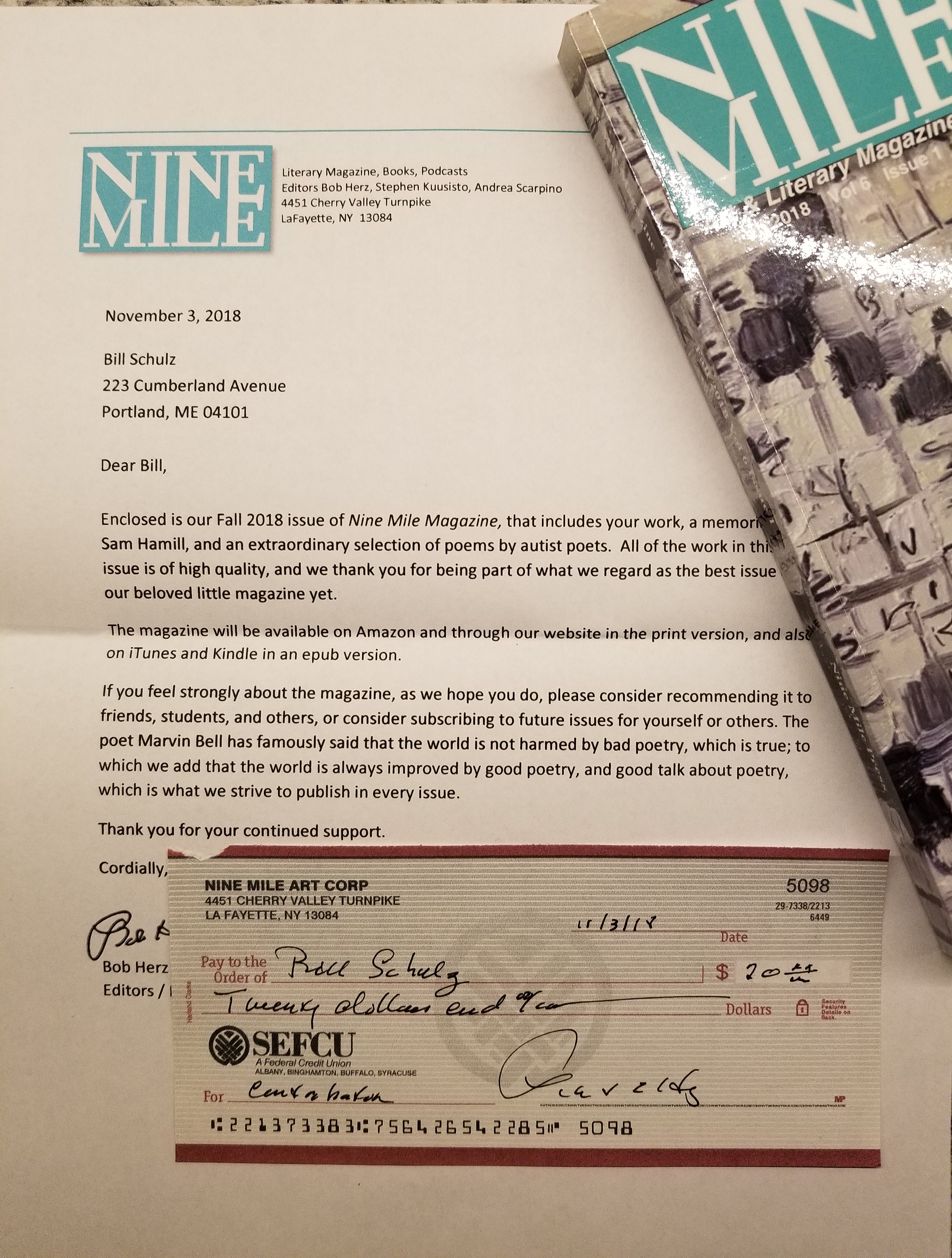
I’ve been writing seriously for 50 years and I just got paid for the first time – $20 or $.40 per year. As Guy Clark wrote, “there ain’t no money in poetry/that’s what set the poet free/I’ve had all the freedom I can stand…”
I’m so happy to be included in the Fall issue of Nine Mile Magazine (available soon on Amazon, iTunes, and in hard copy on http://www.ninemile.org.)
Now I just have to figure out how to spend my hard-earned pay.
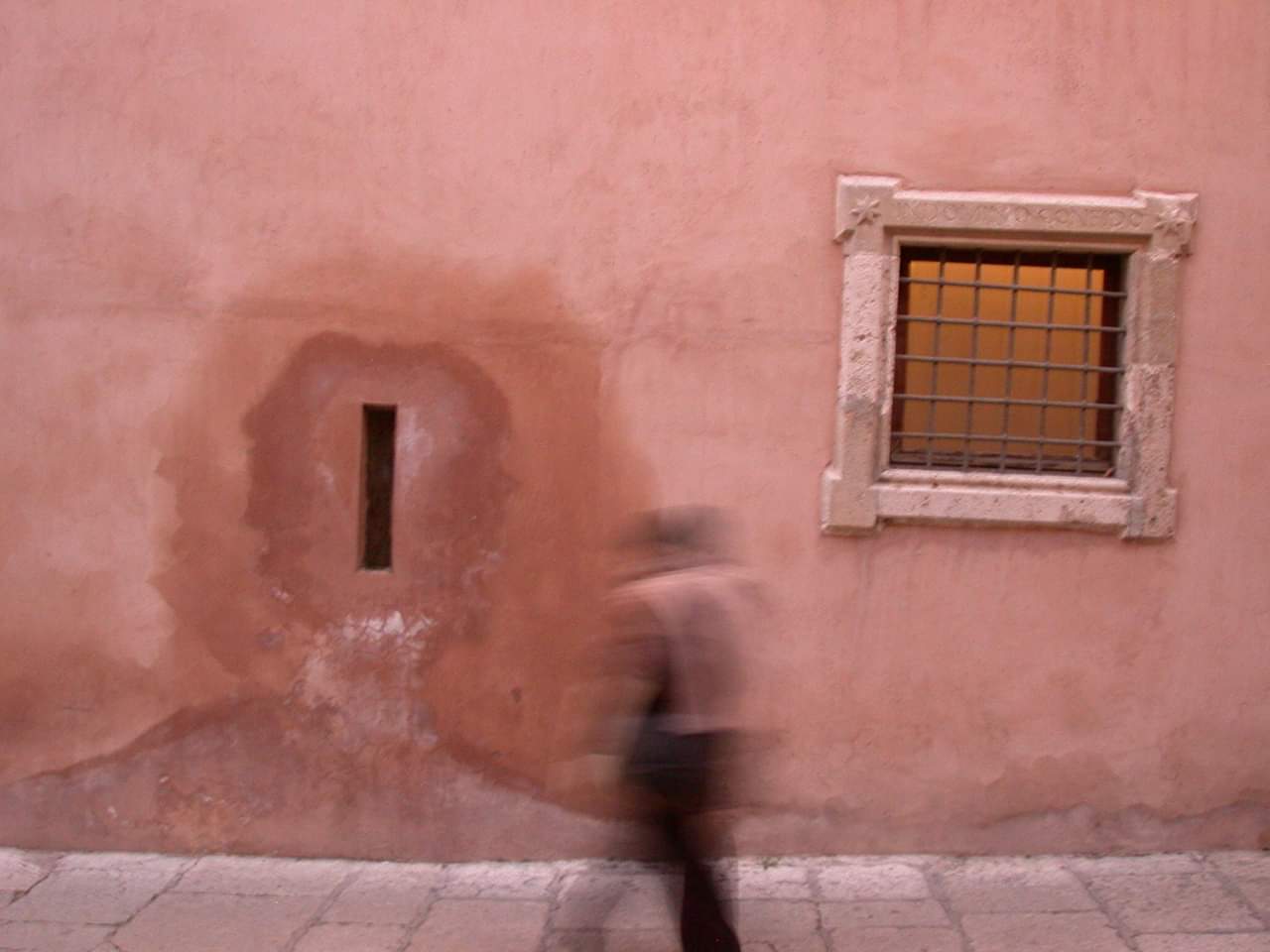
The house without a window is Hell:
to make a window is the foundation of true religion.
Don’t thrust your axe upon every thicket:
come, use your axe to cut open a window.
~ Rumi
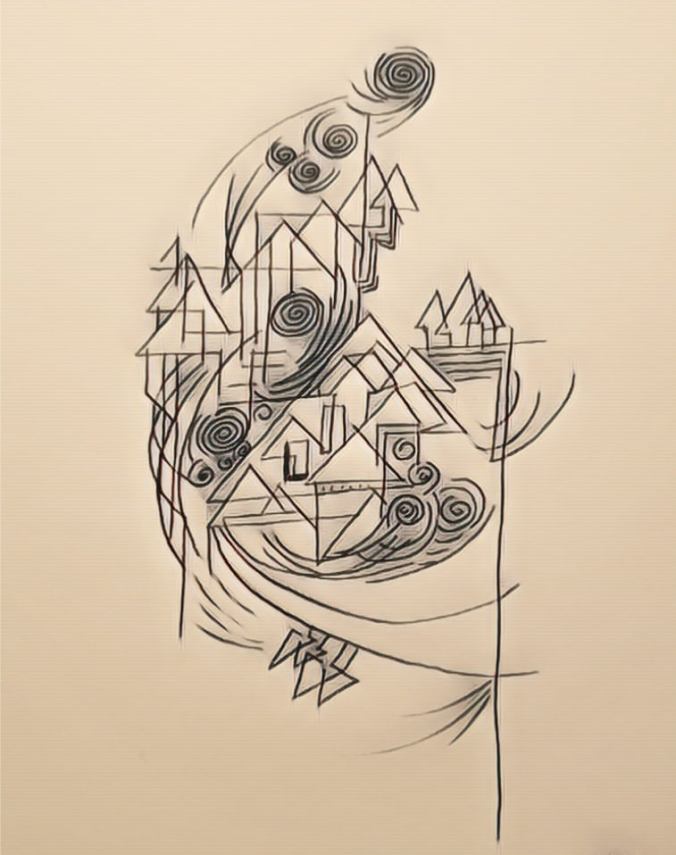

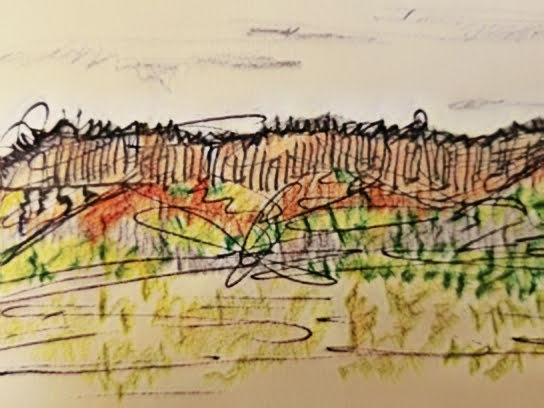 Chama Valley Daybreak – September 2018
 Edge of Atlantic