Be still and know that I am God. – Psalm 46:10
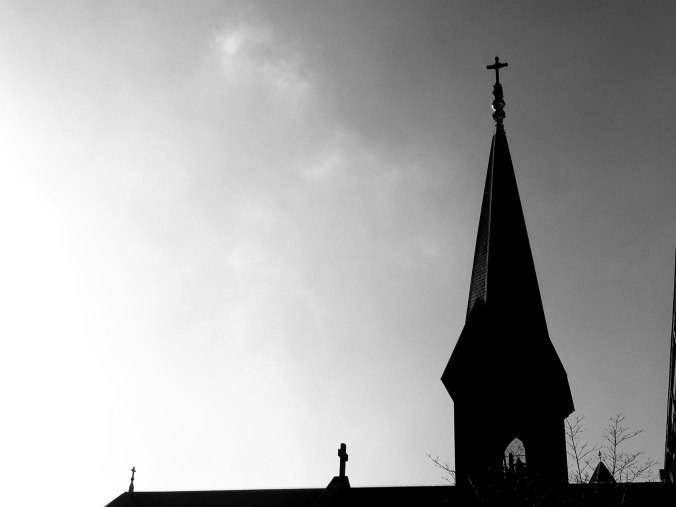
Be still and know that I am God. – Psalm 46:10

Time to catch my breath, slow my step. Stay tuned.
You will be walking some night
in the comfortable dark of your yard
and suddenly a great light will shine
round about you, and behind you
will be a wall you never saw before.
It will be clear to you suddenly
that you were about to escape,
and that you are guilty: you misread
the complex instructions, you are not
a member, you lost your card
or never had one. And you will know
that they have been there all along,
their eyes on your letters and books,
their hands in your pockets,
their ears wired to your bed.
Though you have done nothing shameful,
they will want you to be ashamed.
They will want you to kneel and weep
and say you should have been like them.
And once you say you are ashamed,
reading the page they hold out to you,
then such light as you have made
in your history will leave you.
They will no longer need to pursue you.
You will pursue them, begging forgiveness.
They will not forgive you.
There is no power against them.
It is only candor that is aloof from them,
only an inward clarity, unashamed,
that they cannot reach. Be ready.
When their light has picked you out
and their questions are asked, say to them:
“I am not ashamed.” A sure horizon
will come around you. The heron will begin
his evening flight from the hilltop.

“When you were young you put on your own belt and walked where you liked; but when you grow old you will stretch out your hands, and somebody else will put a belt round you and take you where you would rather not go” (John 21:18)

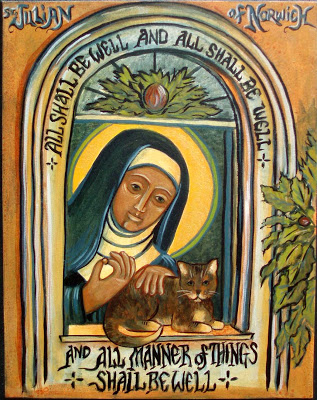
“First there is the fall, and then we recover from the fall. Both are the mercy of God!” – Lady Julian of Norwich

or coming back toward you.

(thank you, Deena)
 written by Father Ronald Rolheiser
In his memoir, Report to Greco, Nikos Kazantzakis shares this story: As a young man, he spent a summer in a monastery during which he had a series of conversations with an old monk. One day he asked the old monk: “Father, do you still do battle with the devil?” The old monk replied: “No, I used to, when I was younger, but now I have grown old and tired and the devil has grown old and tired with me. I leave him alone and he leaves me alone.” “So your life is easy then?” remarked Kazantzakis. “Oh no,” replied the monk, “it’s much worse, now I wrestle with God!”
There’s a lot contained in that remark – “I wrestle with God.” Among other things, it suggests that the struggles in later life can be very different than what we struggle with earlier on. In the normal pattern of things, we spend the first-half of our lives struggling with sensuality, greed, and sexuality, and spend the last half of our lives struggling with anger and forgiveness – and that anger is often, however unconsciously, focused on God. In the end, our real struggle is with God.
But wrestling with God has another aspect. It invites us to a certain kind of prayer. Prayer isn’t meant to be a simple acquiescence to God’s will. It’s meant to be an acquiescence, yes, but a mature acquiescence, come to at the end of a long struggle.
We see this in the prayer of the great figures in scripture: Abraham, Moses, Jesus, the apostles. Abraham argues with God and initially talks him out of destroying Sodom; Moses at first resists his call, protesting that his brother is better suited for the job; the apostles excuse themselves for a long time before finally putting their lives on the line; and Jesus gives himself over in the Garden of Gethsemane only after first begging his Father for a reprieve. As Rabbi Heschel puts it, from Abraham through Jesus we see how the great figures of our faith are not in the habit of easily saying: “Thy will be done!” but often, for a while at least, counter God’s invitation with: “Thy will be changed!”
Struggling with God’s will and offering resistance to what it calls us to can be a bad thing, but it can also be a mature form of prayer. The Book of Genesis describes an incident where Jacob wrestled with a spirit for a whole night and in the morning that spirit turned out to be God. What a perfect icon for prayer! A human being and God, wrestling in the dust of this earth! Doesn’t that accurately describe the human struggle?
We would do well to integrate this, the concept of wrestling with God, into our understanding of faith and prayer. We honor neither ourselves nor the scriptures when we make things too simple. Human will doesn’t bend easily, nor should it, and the heart has complexities that need to be respected, even as we try to rein in its more possessive longings. God, who built us, understands this and is up to the task of wrestling with us and our resistance.
The classical mystics speak of something they call “being bold with God”. This “boldness”, they suggest, comes not at the beginning of the spiritual journey, but more towards the end of it, when, after a long period of fidelity, we are intimate enough with God to precisely be “bold”, as friends who have known each other for a long time have a right to be. That’s a valuable insight: After you have been friends with someone for a long time, you can be comfortable with expressing your needs to him or her and in the context of a long, sustained relationship unquestioning reverence is not necessarily a sign of mature intimacy. Old friends, precisely because they know and trust each other, can risk a boldness in their friendship that younger, less mature, friendship cannot.
That is also true in our relationship with God. God expects that, at some point, we will kick against his will and offer some resistance. But we should lay out our hearts in honesty. Jesus did.
God expects some resistance. As Nikos Kazantzakis puts it:
The struggle between God and humans breaks out in everyone, together with the longing for reconciliation. Most often this struggle is unconscious and short-lived. A weak soul does not have the endurance to resist the flesh for very long. It grows heavy, becomes flesh itself, and the contest ends. But among responsible persons who keep their eyes riveted day and night upon the supreme duty, the conflict between flesh and spirit breaks out mercilessly and may last until death. The stronger the soul and the flesh, the more fruitful the struggle and the richer the final harmony. The spirit wants to have to wrestle with flesh which is strong and full of resistance. It is a carnivorous bird which is incessantly hungry; it eats flesh and, by assimilating it, makes it disappear.
Wait – Galway Kinnell
Wait, for now.
Distrust everything if you have to.
But trust the hours. Haven’t they
carried you everywhere, up to now?
Personal events will become interesting again.
Hair will become interesting.
Pain will become interesting.
Buds that open out of season will become interesting.
Second-hand gloves will become lovely again;
their memories are what give them
the need for other hands. The desolation
of lovers is the same: that enormous emptiness
carved out of such tiny beings as we are
asks to be filled; the need
for the new love is faithfulness to the old.
Wait.
Don’t go too early.
You’re tired. But everyone’s tired.
But no one is tired enough.
Only wait a little and listen:
music of hair,
music of pain,
music of looms weaving our loves again.
Be there to hear it, it will be the only time,
most of all to hear your whole existence,
rehearsed by the sorrows, play itself into total exhaustion.
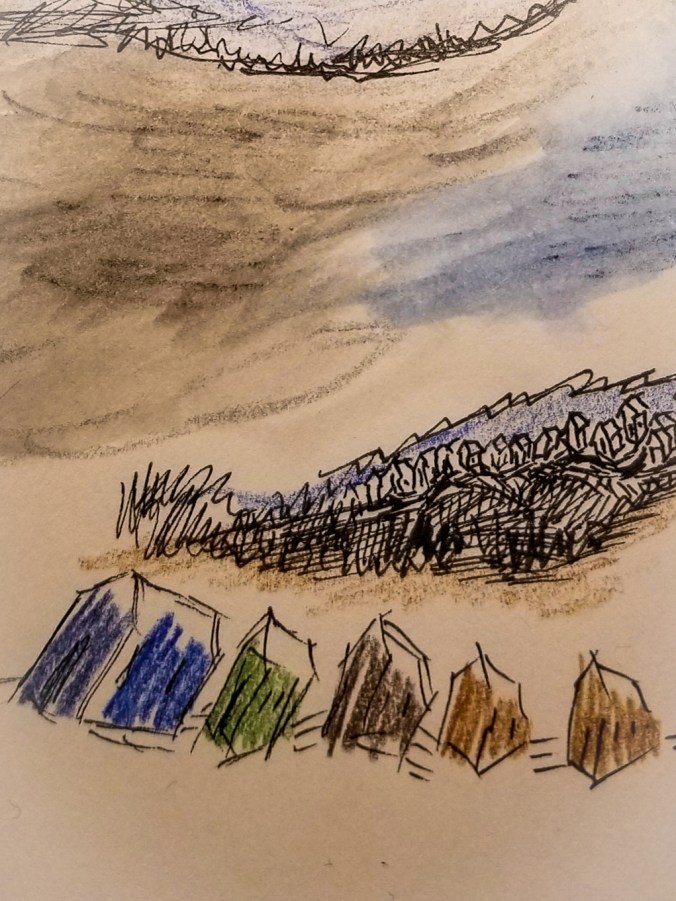
 Edge of Atlantic