I have decided to stick with love, for hate is too heavy a burden to bear.
– Martin Luther King Jr.

Photo by Jens Johnsson on Pexels.com
I have decided to stick with love, for hate is too heavy a burden to bear.
– Martin Luther King Jr.
Photo by Jens Johnsson on Pexels.com
Is not this the kind of fasting I have chosen:
to loose the chains of injustice
and untie the cords of the yoke,
to set the oppressed free
and break every yoke?
Is it not to share your food with the hungry
and to provide the poor wanderer with shelter—
when you see the naked, to clothe them,
and not to turn away from your own flesh and blood?
Then your light will break forth like the dawn,
and your healing will quickly appear;
then your righteousness will go before you,
and the glory of the Lord will be your rear guard.
Then you will call, and the Lord will answer;
you will cry for help, and he will say: Here am I.
“If you do away with the yoke of oppression,
with the pointing finger and malicious talk,
and if you spend yourselves in behalf of the hungry
and satisfy the needs of the oppressed,
then your light will rise in the darkness,
and your night will become like the noonday.
Isaiah 58:6-10
Life is tragic simply because the earth turns, and the sun inexorably rises and sets, and one day, for each of us, the sun will go down for the last, last time. Perhaps the whole root of our trouble, the human trouble, is that we will sacrifice all the beauty of our lives, will imprison ourselves in totems, taboos, crosses, blood sacrifices, steeples, mosques, races, armies, flags, nations, in order to deny the fact of death, which the only fact we have. It seems to me that one ought to rejoice in the fact of death – ought to decide, indeed, to earn one’s death by confronting with passion the conundrum of life. One is responsible to life: It is the small beacon in that terrifying darkness from which we come and to which we shall return. – James Baldwin, “Down at the Cross,” in The Fire Next Time.

(photo: Grindstone, Maine)





…it will always lead to actions of mercy; when actions of mercy are attempted at any depth, they will always drive you to prayer. – Richard Rohr
To forgive another person from the heart is an act of liberation. We set that person free from the negative bonds that exist between us. We say, “I no longer hold your offense against you” But there is more. We also free ourselves from the burden of being the “offended one.” As long as we do not forgive those who have wounded us, we carry them with us or, worse, pull them as a heavy load. The great temptation is to cling in anger to our enemies and then define ourselves as being offended and wounded by them. Forgiveness, therefore, liberates not only the other but also ourselves. It is the way to the freedom of the children of God.
Forgiveness has the power to lead you to your True Self in God. Because the hurts of life are so great, you cannot let go of the pain on your own. At that point, you need to draw from a Larger Source. What you are doing with forgiveness is changing your egoic investment in your own painful story—which too often has become your ticket to sympathy and sometimes your very identity. Forgiveness is one of the most radically free things a human being can do. When you forgive, you have to let go of your own feelings, your own ego, your own offended identity, and find your identity at a completely different level—the divine level. I even wonder if it is possible to know God at all—outside of the mystery of forgiveness (Luke 1:77).
Richard Rohr +Adapted from The Art of Letting Go: Living the Wisdom of Saint Francis (Recording).
Today would have been Henri Nouwen’s 88th birthday. He wrote:
“Celebrating a birthday reminds us of the goodness of life, and in this spirit we really need to celebrate people’s birthdays every day, by showing gratitude, kindness, forgiveness, gentleness, and affection.”
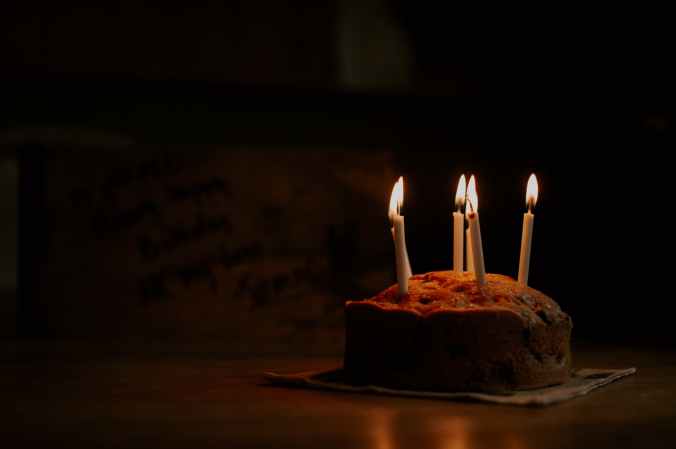
Photo by Flora Westbrook on Pexels.com
To be alone by being part of the universe – fitting in completely to an environment of woods and silence and peace. Everything you do becomes a unity and a prayer. Unity within and without. Unity with all living things, without effort or contention. My silence is part of the whole world’s silence and builds the temple of God without the noise of hammers. – Thomas Meeting, journal entry, January 28, 1953

I urge you earnestly not to spend time thinking about the past. If your time was well-used, then let us give God glory. If it was wasted, let us despise it and trust in the goodness of the heavenly Father. Therefore I exhort you to set your mind at rest with a consoling thought that any part of your life that was not well spent has already been forgiven by our most tender God. – Padre Pio
 Edge of Atlantic