To bless means to say good things. We have to bless one another constantly. Parents need to bless their children, children their parents, husbands their wives, wives their husbands, friends their friends. In our society, so full of curses, we must fill each place we enter with our blessings. We forget so quickly that we are God’s beloved children and allow the many curses of our world to darken our hearts. Therefore we have to be reminded of our belovedness and remind others of theirs. Whether the blessing is given in words or with gestures, in a solemn or an informal way, our lives need to be blessed lives.
If you hold close to nature, to what is simple in it, to the small things people hardly see and which all of a sudden can become great and immeasurable; if you have this love for what is slight, and quite unassumingly, as a servant, seek to win the confidence of what seems poor – then everything will grow easier, more unified and somehow more conciliatory, not perhaps in the intellect, which, amazed, remains a step behind, but in your deepest consciousness, watchfulness and knowledge.
Richard Rohr – Great love has the potential to open the heart space and then the mind space. Great suffering has the potential to open the mind space and then the heart space. Eventually both spaces need to be opened, and for such people, non-dual thinking can be the easiest.
People who have never loved or never suffered will normally try to control everything with an either-or attitude or all-or-nothing thinking. This closed system is all they are prepared for. The mentality that divides the world into “deserving and undeserving” has not yet experienced the absolute gratuity of grace or the undeserved character of mercy. This lack of in-depth God-experience leaves all of us judgmental, demanding, unforgiving, and weak in empathy and sympathy. Such people will remain inside the prison of “meritocracy,” where all has to be deserved. They are still counting when in reality God and grace exist outside of all accounting. Remember, however, to be patient with such people, even if you are the target of their judgment, because on some level, that is how they treat themselves as well.
Non-dual people will see things in their wholeness and call forth the same unity in others simply by being who they are. Wholeness (head, heart, and body all present, positive, and accounted for!) can see and call forth wholeness in others. This is why it is so pleasant to be around whole and holy people.
Dualistic or divided people, however, live in a split and fragmented world. They cannot accept or forgive certain parts of themselves. They cannot accept that God objectively dwells within them, as it states in so many places in Scripture, including 1 Corinthians 3:16-17. This lack of forgiveness takes the forms of a tortured mind, a closed heart, or an inability to live calmly and proudly inside ones own body. The fragmented mind sees parts, not wholes, in itself and others, and invariably it creates antagonism, reaction, fear, and resistance—“push-back” from other people—who themselves are longing for wholeness and holiness.
And he showed me a little thing, the size of a hazelnut, on the palm of my hand, round like a ball. I looked at it thoughtfully and wondered, ‘What is this?’ And the answer came, ‘It is all that is made.’ I marvelled that it continued to exist and did not suddenly disintegrate; it was so small. And again my mind supplied the answer, ‘It exists, both now and for ever, because God loves it.
Julian of Norwich, from Revelations of Divine Love, written in 1373
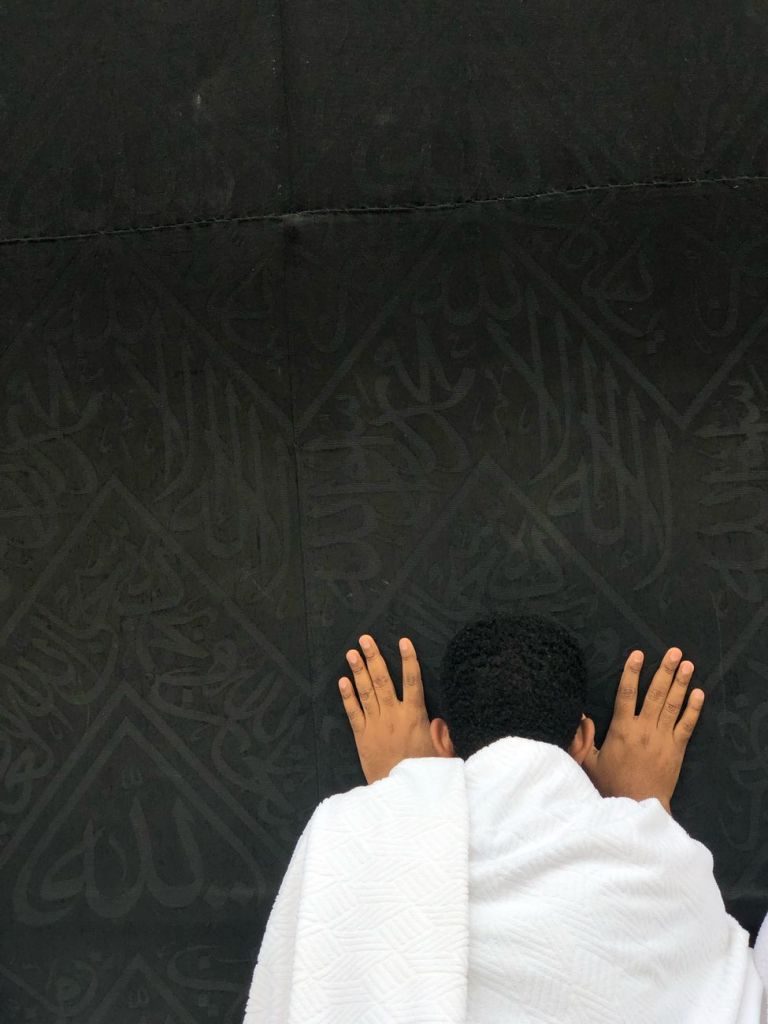
Earlier we saw that the sound code of Arabic makes al-Ghaffar repetitive and unending. Now we see that the sound code places al-Ghafur in the group that carries the meaning of “penetrating right into the essence of a thing.” It goes right into the deepest place in the heart.
Therefore al-Ghafur goes right to the worst crime we have ever committed in our lives. It goes right to the worst thing that has ever been done to us.
Whether it is a grudge of self-loathing or a grudge held against another, the depth of feeling is the same. Allah’s forgiveness reaches that deepest place. From a medical point of view we might say that al-Ghaffar is a remedy for a chronic condition and Al-Ghafur is for an acute condition.
Contemplation on al-Ghafur is a profound and healing practice for anyone.
It is even recommended for prisoners on death row. It reaches the deepest wound. It goes right to the heart of the matter. It penetrates to the essence. Divine forgiveness reaches that which we imagined was unforgiveable. That is the quality of al-Ghafur.
The very concept of forgiveness, even in English usage, is to give up the grudge, to let go of that revenge fantasy. Forgiveness comes by giving that away.
So at this first stage in the process of learning to forgive, you need to learn to give up the revenging impulse that arises many times a day. And you also need to give up the grudge you hold about the inner wound you believe to be unforgiveable.
At this beginning stage in the process, you notice the fault either in other people or in your own self.
Again and again you are asked to give up the grudge you are holding, and to invite in al-Ghaffar and al-Ghafur. You can then awaken to a kind of compassion that actually reaches the wound and covers over the fault in a soothing way.
Both al-Ghaffar and al-Ghafur have this same root meaning of covering over in a healing kind of way.
from Physicians of The Heart, a Sufi view of the 99 names of Allah
Al-Ghaffar is inexhaustible forgiveness. It is repetitive. Even though you may repeat the same error over and over again, you never come to the end of God’s forgiveness, which is inexhaustible. A form of the root of al-Ghaffar means a substance bees make that the Arabs used to fill in the cracks of a dried- out, old leather water skin, so that it no longer leaks. Divine forgiveness repairs human dryness and brittleness in a similar way
Invocation of Ya Ghaffar offers a healing salve that is an antidote for self-loathing, guilt, and blame. It is especially useful to bring this emanation of divine forgiveness into the places where you have been marked by impressions of self-deficiency that have been reinforced time and again. Al-Ghaffar brings moisture back into the system. An even more complete realization of the nature of divine forgiveness may occur when this Name is paired in repetition with Ya Ghafur, which shares the same root.
From Physicians of the Heart: A Sufi View of the Ninety-Nine Names of Allah







 Edge of Atlantic