Those who think – and their name is legion – that they know how the universe could have been better than it is, how it would have been had they created it, without pain, without sorrow, without time, without life, are unfit for illumination. Or those who think as do many “Let me first correct society, then get around to myself” are barred from even the outer gate of the mansion of God’s peace. All societies are evil, sorrowful, inequitable; and so they will always be. So if you really want to help this world, what you will have to teach is how to live in it. And that no one can do who has not himself learned how to live in it in the joyful sorrow and sorrowful joy of the knowledge of life as it is. – Joseph Campbell
Strangely, forgiveness never arises from the part of us that was actually wounded. The wounded self may be the part of us incapable of forgetting, and perhaps, not actually meant to forget, as if, like the foundational dynamics of the physiological immune system our psychological defenses must remember and organize against any future attacks — after all, the identity of the one who must forgive is actually founded on the very fact of having been wounded.
Stranger still, it is that wounded, branded, un-forgetting part of us that eventually makes forgiveness an act of compassion rather than one of simple forgetting. To forgive is to assume a larger identity than the person who was first hurt, to mature and bring to fruition an identity that can put its arm, not only around the afflicted one within but also around the memories seared within us by the original blow and through a kind of psychological virtuosity, extend our understanding to one who first delivered it. Forgiveness is a skill, a way of preserving clarity, sanity and generosity in an individual life, a beautiful way of shaping the mind to a future we want for ourselves; an admittance that if forgiveness comes through understanding, and if understanding is just a matter of time and application then we might as well begin forgiving right at the beginning of any drama rather than put ourselves through the full cycle of festering, incapacitation, reluctant healing and eventual blessing.
To forgive is to put oneself in a larger gravitational field of experience than the one that first seemed to hurt us. We reimagine ourselves in the light of our maturity and we reimagine the past in the light of our new identity, we allow ourselves to be gifted by a story larger than the story that first hurt us and left us bereft.
A big, tough samurai once went to see a little monk. “Monk,” he said, in a voice accustomed to instant obedience, “teach me about heaven and hell!”
The monk looked up at this mighty warrior and replied with utter disdain, “Teach you about heaven and hell! I couldn’t teach you about any thing. You’re dirty. You smell. Your blade is rusty. You’re a disgrace, an em- barrassment to the samurai class. Get out of my sight. I can’t stand you.”
The samurai was furious. He shook, got all red in the face, was speechless with rage. He pulled out his sword and raised it above him, preparing to slay the monk.
“That’s hell,” said the monk softly.
The samurai was overwhelmed. The compassion and surrender of this little man who had offered his life to give this teaching to show him hell! He slowly put down his sword, filled with gratitude, and suddenly peaceful. “And that’s heaven,” said the monk softly.
There is a blindness into which we are all led by our own stupidity, selfishness, or by just living out of our false self. I guess that is what most of us call “sin,” which is often an opening to grace and mercy. There is also a blindness through which God leads us for our own enlightenment and deepening. In either case, we have to walk through these obscure periods by simple honesty, apology of some sort, surrender, letting go, forgiveness, and often by some neces sary restitution or healing ritual. (I still hear of Vietnam-, Afghan-, or Iraq-War vets who feel they must go back and help some children in those countries for themselves to be healed.) Eastern religions might call it “karmic restitution.”
Others might call these deeds acts of repentance, making amends, doing penance, or stripping of the ego. By any account, it is often major surgery and surely feels like dying (although it feels like immense liberation too). We need help, companioning, and comfort during these times. We must let ourselves be led by God and also by others. How can we know and value the light if we’ve never walked through some blindness first? To hope, we first have to feel hopeless.
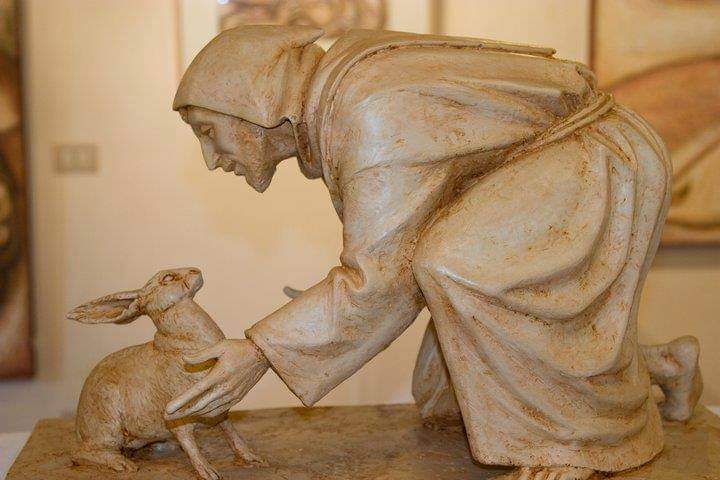
This evening, followers of St. Francis of Assisi will keep a memorial of his passing on October 3, 1226. I pray that his spirit of reconciliation and love for all creation bless each one of us.
Blessing of St. Francis – May God bless you and keep you, smiling graciously on you, granting mercy and peace, granting mercy and peace. May God bless you and keep you, May you see the face of God, granting mercy and peace, granting mercy and peace. Amen. Amen. Amen





 Edge of Atlantic