Happy New Year





…you can cut the rope and be free.” – Zorba

Auguri!
Photo: Assisi, Italy – December 2005
Emily Dickinson was born this day in 1830. Celebrate with her handwritten recipe for coconut cake:
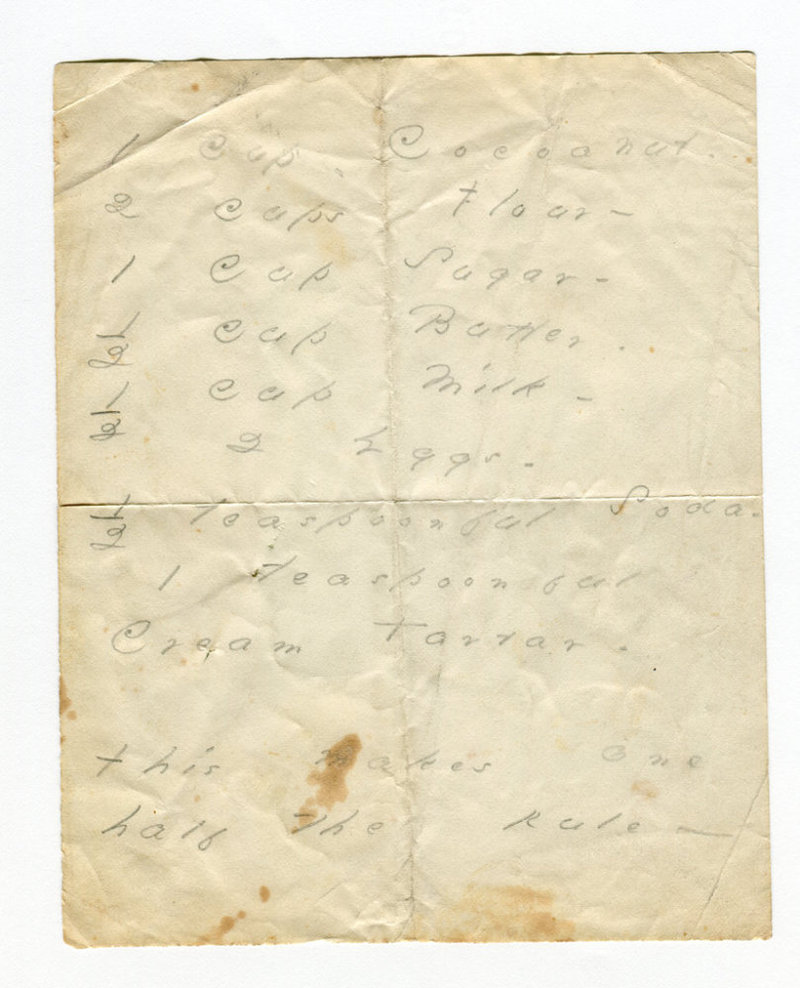
Fame is A Fickle Food
I have never separated the writing of poetry from prayer. I have grown up believing it is a vocation, a religious vocation. What I described in Another Life—about being on the hill and feeling the sort of dissolution that happened—is a frequent experience in a younger writer. I felt this sweetness of melancholy, of a sense of mortality, or rather of immortality, a sense of gratitude both for what you feel is a gift and for the beauty of the earth, the beauty of life around us. When that’s forceful in a young writer, it can make you cry. It’s just clear tears; it’s not grimacing or being contorted, it’s just a flow that happens. The body feels it is melting into what it has seen. This continues in the poet. It may be repressed in some way, but I think we continue in all our lives to have that sense of melting, of the ‘I’ not being important. That is the ecstasy. It doesn’t happen as much when you get older.
There’s that wonderful passage in [Thomas] Traherne where he talks about seeing the children as moving jewels until they learn the dirty devices of the world. It’s not that mystic. Ultimately, it’s what Yeats says: ‘Such a sweetness flows into the breast that we laugh at everything and everything we look upon is blessed.’ That’s always there. It’s a benediction, a transference. It’s gratitude, really. The more of that a poet keeps, the more genuine his nature. I’ve always felt that sense of gratitude. I’ve never felt equal to it in terms of my writing, but I’ve never felt that I was ever less than that.
– Derek Walcott
The deep parts of my life pour onward,
as if the river shores were opening out.
It seems that things are more like me now,
that I can see farther into paintings.
I feel closer to what language can’t reach.
With my senses, as with birds, I climb
into the windy heaven, out of the oak,
and in the ponds broken off from the sky
my feeling sinks, as if standing on fishes.
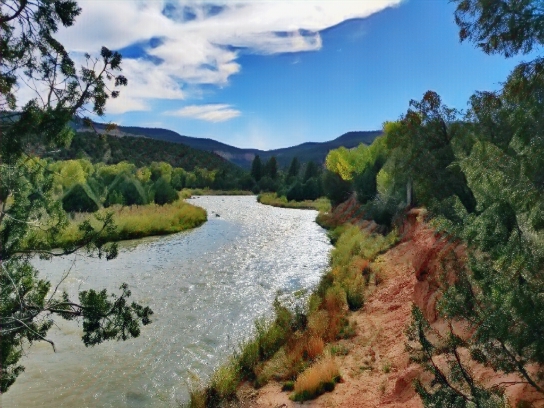
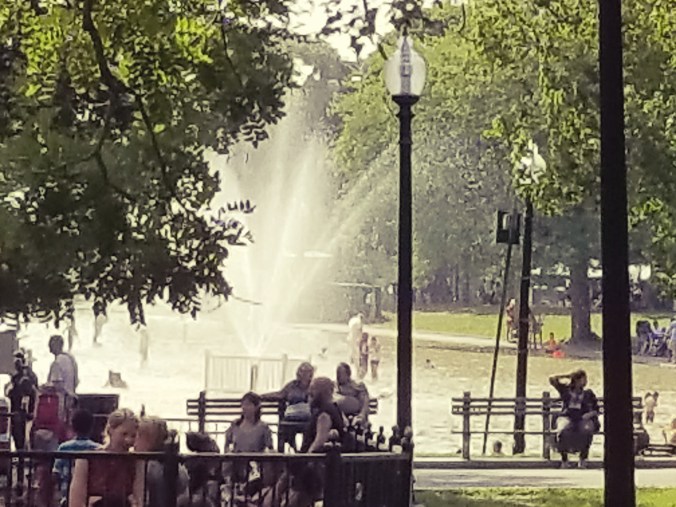
(photo: Chama River, NM – September 2018)
Ask for something, Per
favore, please, the answer is
Prego. Please.
Thank you, Grazie, thank you,
you say. Instead of you’re welcome?
Prego. The answer is please.
Prego, listen, here in Italy, every
time you think you’re polite, this lift
of the verbal eyebrow, this rise
and fall of the voice like a hand
on its way to your shoulder, insistent
lifeline picking you up,
letting you go
again. No problem! Prego
pulls up the covers and tucks you in.
Cape of Saint Martin. Communion
wafer on each Italian tongue. Prego.
Please, Prego, I pray to you,
Prego, don’t
worry. Let me
do something for you.
(Photo: Assisi, 2002)

hole in the head review is up and awaiting your submission – poetry, art & photography.
For guidelines and more info, go to http://www.holeintheheadreview.com

We need some pines to assuage the darkness
when it blankets the mind,
we need a silvery stream that banks as smoothly
as a plane’s wing, and a worn bed of
needles to pad the rumble that fills the mind,
and a blur or two of a wild thing
that sees and is not seen. We need these things
between appointments, after work,
and, if we keep them, then someone someday,
lying down after a walk
and supper, with the fire hole wet down,
the whole night sky set at a particular
time, without numbers or hours, will cause
a little sound of thanks–a zipper or a snap–
to close round the moment and the thought
of whatever good we did.

 Edge of Atlantic