
-calligraphy by Franklin Fong, ofm
-calligraphy by Franklin Fong, ofm

Thunder and Wine
“I answered you in the secret place of thunder.”
Psalm 81:7
thick fog clearing
as thunder echoes
across Casco Bay
on Cushing Island
lights go dark
then Cliff and here
in this dim sanctuary
the cathedral bells
won’t stop ringing
no one sees
the stained-glass smeared
by the blood moon light
once again wine
turns to water bread
back to grain
Of God
Can you lift up your voice to the clouds,
so that a flood of waters may cover you?
– Job 38:34
what are my chances
when your words
linger and scratch
like wool uniforms
quietly removed
when the orphan
and widow flinch
at your whispered
good night
I’ll promise to lie still
if your light but touches
the water’s edge
there an egret
white as the moon
hunts in the reeds
Creating Myth
Notes on Jack Spicer – 1978
A really perfect poem has an infinitely small vocabulary.
– Jack Spicer
make myth by
destroying myth
then explain
what came before
one final embrace
before departing
into meaning
or a hell of meanings
everything slipping
or sliding
haunted by the poetic
and the laughter
the duplicity
of words
and how they replace
the historical
with an empty
vessel
and though we struggle
to pull them back
our hushed shadows
will not be closed
simply by stating
their closure
My Final Thought of You
It happens often now, forgetting
the words but not the thing
itself.
This week alone the words cilantro,
Curtis Mayfield, actuary seemed
lost, erased.
You, too, are there in a slight daydream,
a glimpse of a waning moon
on a sunny day.
A thunderstorm rises from Mount Blue
not 20 miles away. The birds and I
find shelter.
The stream is silent, hopeful. My breathing
slows as I count to measure the first
strike of lightning.
Three Halves
(in which the seeker discovers
he is that which is sought)
I am on a motorcycle
say a Triumph yes
a Triumph tearing
out of town on a moonlit
night Friday or early
Saturday morning and say
I am passed by a truck
an electrician’s truck
that has no business
passing a man like me
all in black leather
you’d understand
when I pass again
looking back to threaten
the driver flipping
the bird say or sneer
my surprise
that the driver is me
and all those cables
spooled on poles
by the breakdown lane
are mine to connect
or repair or destroy in this
the third half of my life
Ronald Rolheiser – In his last book, The Living Flame of Love, John (St. John of the Cross) proposes a theory of, and a process for, healing. In essence, it runs this way: For John, we heal of our wounds, moral flaws, addictions, and bad habits by growing our virtues to the point where we become mature enough in our humanity so that there’s no more room left in our lives for the old behaviors that used to drag us down. In short, we get rid of the coldness, bitterness, and pettiness in our hearts by lighting inside our hearts enough warm fires to burn out the coldness and bitterness.
The algebra works this way: The more we grow in maturity, generativity, and generosity, the more our old wounds, bad habits, temperamental flaws, and addictions will disappear because our deeper maturity will no longer leave room for them in our lives. Positive growth of our hearts, like a vigorous plant, eventually chokes-out the weeds. If you went to John of the Cross and asked him to help you deal with a certain bad habit in your life, his focus wouldn’t be on how to weed-out that habit. Instead the focus would be on growing your virtues: What are you doing well? What are your best qualities? What goodness in you needs to be fanned fan into fuller flame?
By growing what’s positive in us, we eventually become big-hearted enough so that there’s no room left for our former bad habits. The path to healing is to water our virtues so that these virtues themselves will be the fire that burns out the festering wounds, addictions, bad habits, and temperamental flaws that have, for far too long, plagued our lives and kept us wallowing in weakness and pettiness rather than walking in maturity, generosity, and generativity.
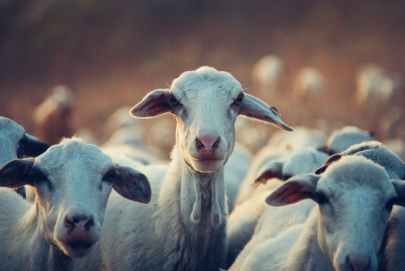
Photo by Snapwire on Pexels.com
The Lame Goat – Rumi
You’ve seen a herd of goats
going down to the water.
The lame and dreamy goat
brings up the rear.
There are worried faces about that one,
but now they’re laughing,
because look, as they return,
that goat is leading!
There are many different kinds of knowing.
The lame goat’s kind is a branch
that traces back to the roots of presence.
Learn from the lame goat,
and lead the herd home.


The Voice of God is heard in Paradise:
“What was vile has become precious. What is now precious was never vile. I have always known the vile as precious: for what is vile I know not at all.
“What was cruel has become merciful. What is now merciful was never cruel. I have always overshadowed Jonas with my mercy, and cruelty I know not at all. Have you had sight of Me, Jonas, my child? Mercy within mercy within mercy. I have forgiven the universe without end, because I have never known sin.
“What was poor has become infinite. What is infinite was never poor. I have always known poverty as infinite: riches I love not at all. Prisons within prisons within prisons. Do not lay up for yourself ecstasies upon earth, where time and space corrupt, where minutes break in and steal. No more lay hold on time, Jonas, my son, lest the rivers bear you away.
“What was fragile has become powerful. I loved what was most frail. I looked upon what was nothing. I touched what was without substance, and within what was not, I am.”
There are drops of dew that show like sapphires in the grass as soon as the morning sun appears, and leaves stir behind the hushed flight of an escaping dove.
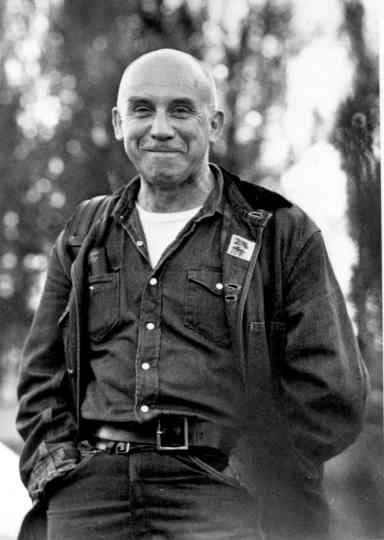
– Thomas Merton, Journal, July 4, 1952
 Edge of Atlantic