the true self

The false self is your psychological creation of yourself in space and time. It comes from your early conditioning, family, roles, education, mind, culture, and religion. The false self is who you think you are! But thinking doesn’t make it so. The false self dies and passes away. Yet it is the raw material through which you discover your True Self in God, so you must not hate it or kill it. Just learn from it. Of itself, it does not know how to pray, because it does not understand simple presence, communion, or relationship. The false self is all about utility and “What can I get out of this?” Not bad, but very incomplete.

The True Self is not created by anything you have done right or wrong. Nor can you lose it by doing anything good or bad. The True Self is not formed by adhering to any requirements; it’s about relationship itself—the quality and capacity for connection. Only the True Self can pray. The false self will say prayers but the True Self is a prayer and looks out at reality from a different pair of eyes larger than its own. This is why in Ephesians it can say “pray always” (6:18). We pray always whenever we act in conscious and loving union with things—which eventually can be all the time. Then whatever you do is a prayer, not a recited prayer but a full-bodied, bigger-than-mind, contemplative prayer. When you are in your True Self, your prayer and your breath are the same thing.
– R. Rohr

To forgive

Strangely, forgiveness never arises from the part of us that was actually wounded. The wounded self may be the part of us incapable of forgetting, and perhaps, not actually meant to forget, as if, like the foundational dynamics of the physiological immune system our psychological defenses must remember and organize against any future attacks — after all, the identity of the one who must forgive is actually founded on the very fact of having been wounded.

Stranger still, it is that wounded, branded, un-forgetting part of us that eventually makes forgiveness an act of compassion rather than one of simple forgetting. To forgive is to assume a larger identity than the person who was first hurt, to mature and bring to fruition an identity that can put its arm, not only around the afflicted one within but also around the memories seared within us by the original blow and through a kind of psychological virtuosity, extend our understanding to one who first delivered it. Forgiveness is a skill, a way of preserving clarity, sanity and generosity in an individual life, a beautiful way of shaping the mind to a future we want for ourselves; an admittance that if forgiveness comes through understanding, and if understanding is just a matter of time and application then we might as well begin forgiving right at the beginning of any drama rather than put ourselves through the full cycle of festering, incapacitation, reluctant healing and eventual blessing.

To forgive is to put oneself in a larger gravitational field of experience than the one that first seemed to hurt us. We reimagine ourselves in the light of our maturity and we reimagine the past in the light of our new identity, we allow ourselves to be gifted by a story larger than the story that first hurt us and left us bereft.

Robert A. Johnson

Wounds & sacred wounds

Richard Rohr –
Pain teaches a most counterintuitive thing—that we must go down before we even know what up is. It is first an ordinary wound before it can become a sacred wound. Suffering of some sort seems to be the only thing strong enough to destabilize our arrogance and our ignorance. I would define suffering very simply as “whenever you are not in control.”

All healthy religion shows you what to do with your pain. If we do not transform our pain, we will most assuredly transmit it. If your religion is not showing you how to transform your pain, it is junk religion. It is no surprise that a crucified man became the central symbol of Christianity.

If we cannot find a way to make our wounds into sacred wounds, we invariably become negative or bitter—because we will be wounded. That is a given. All suffering is potentially redemptive, all wounds are potentially sacred wounds. It depends on what you do with them. Can you find God in them or not?

If there isn’t some way to find some deeper meaning to our suffering, to find that God is somehow in it, and can even use it for good, we will normally close up and close down, and the second half of our lives will, quite frankly, be small and silly.

Prayer by Eric Doyle, OFM

Lord of my origin
     Draw me closer to you
Lord of my existence
     Direct all my ways
Lord of my calling
     Give me strength to go on
Lord of my faith
     Preserve me from doubt
Lord of my hope
     Keep me from despair
Lord of my love
     Let me never grow cold
Lord of my past
     May I never forget you
Lord of my present
     Be near me always
Lord of my future
     Keep me faithful to the end
Lord of my life
     Let me live in your presence
Lord of my death
     Receive me at last
Lord of my eternity
     Bless me forever. Amen

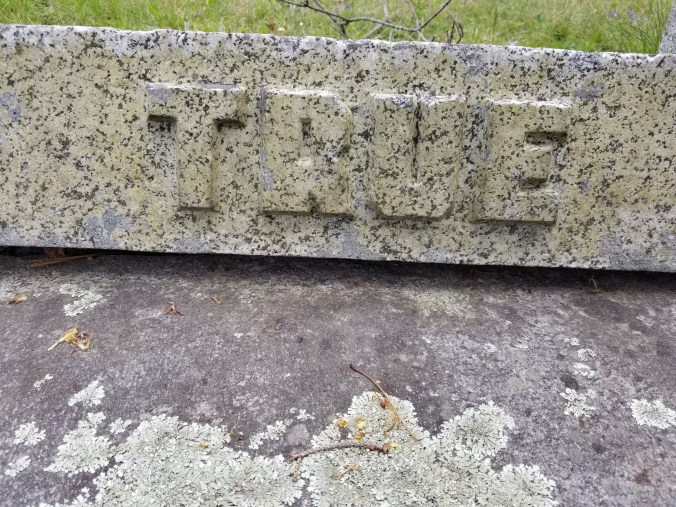
(Photo: Evergreen Cemetery – Portland, Maine, August 2019)

August Prayer

IMG_1007
This morning I give thanks
for breath
for breathing
I give thanks for
open windows and
French doors half-opened
and half-shut

This morning I give thanks
for clear glass tumblers
of cold Sebago water
and the crickets
of course and the crows
thanks for the cool
wash cloth

the comfort of hands
thanks for the taste of lemon
and the hair brush
this morning
I give thanks
for the shadow
that lingers a moment

then leaves the world

(photo: Portland, Maine – August 2014)

The Welcoming Prayer (by Father Thomas Keating)

Welcome, welcome, welcome.
I welcome everything that comes to me today
because I know it’s for my healing.
I welcome all thoughts, feelings, emotions, persons,
situations, and conditions.
I let go of my desire for power and control.
I let go of my desire for affection, esteem,
approval and pleasure.
I let go of my desire for survival and security.
I let go of my desire to change any situation,
condition, person or myself.
I open to the love and presence of God and
God’s action within. Amen.