sheep or shepherd?

20190106_200226
(photo: Greene, ME – January 2019)

Then Jesus told them this parable:  “Suppose one of you has a hundred sheep and loses one of them. Doesn’t he leave the ninety-nine in the open country and go after the lost sheep until he finds it?  And when he finds it, he joyfully puts it on his shoulders  and goes home. Then he calls his friends and neighbors together and says, ‘Rejoice with me; I have found my lost sheep.’  I tell you that in the same way there will be more rejoicing in heaven over one sinner who repents than over ninety-nine righteous persons who do not need to repent.
– Luke 15:3-7

clothe yourselves with love

As God’s chosen ones, holy and beloved, clothe yourselves with compassion, kindness, humility, meekness, and patience. Bear with one another and, if anyone has a complaint against another, forgive each other; just as the Lord has forgiven you, so you also must forgive. Above all, clothe yourselves with love, which binds everything together in perfect harmony.
– Col 3:12-14


bless your persecutors

Bless your persecutors; never curse them, bless them. … Never pay back evil with evil. … Never try to get revenge. … If your enemy is hungry, give him something to eat; if thirsty, something to drink. … Do not be mastered by evil, but master evil with good. (Romans 12:14-21)

(Photo: Monastery of Christ in The Desert, Abiquiu, NM – September 2018)

We are more than our anger

You have to believe this. We are more than our anger; we are more than our suffering. We must recognize that we do have within us the capacity to love, to understand, to be compassionate. If you know this, then when it rains you won’t be desperate. You know that the rain is there, but the sunshine is still there somewhere. Soon the rain will stop, and the sun will shine again. Have hope. If you can remind yourself that the positive elements are still present within you and the other person, you will know that it is possible to break through, so that the best things in both of you can come up and manifest again.

– Thich Nhat Hanh

(photo: Abiquiu, NM – September 2018)

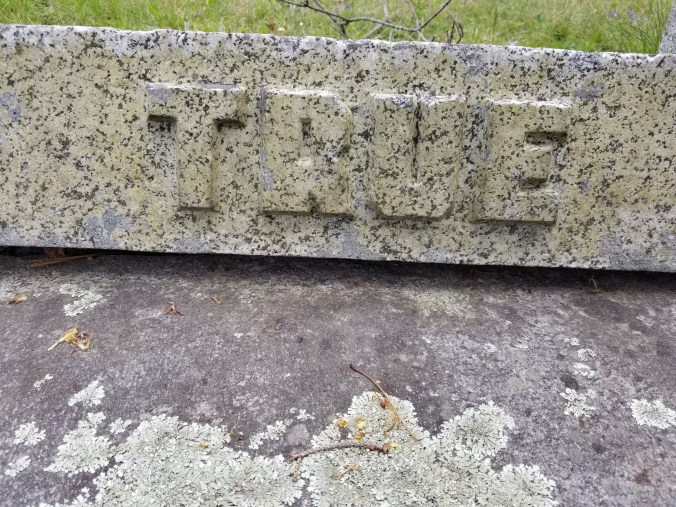
the true self

The false self is your psychological creation of yourself in space and time. It comes from your early conditioning, family, roles, education, mind, culture, and religion. The false self is who you think you are! But thinking doesn’t make it so. The false self dies and passes away. Yet it is the raw material through which you discover your True Self in God, so you must not hate it or kill it. Just learn from it. Of itself, it does not know how to pray, because it does not understand simple presence, communion, or relationship. The false self is all about utility and “What can I get out of this?” Not bad, but very incomplete.

The True Self is not created by anything you have done right or wrong. Nor can you lose it by doing anything good or bad. The True Self is not formed by adhering to any requirements; it’s about relationship itself—the quality and capacity for connection. Only the True Self can pray. The false self will say prayers but the True Self is a prayer and looks out at reality from a different pair of eyes larger than its own. This is why in Ephesians it can say “pray always” (6:18). We pray always whenever we act in conscious and loving union with things—which eventually can be all the time. Then whatever you do is a prayer, not a recited prayer but a full-bodied, bigger-than-mind, contemplative prayer. When you are in your True Self, your prayer and your breath are the same thing.
– R. Rohr

To forgive

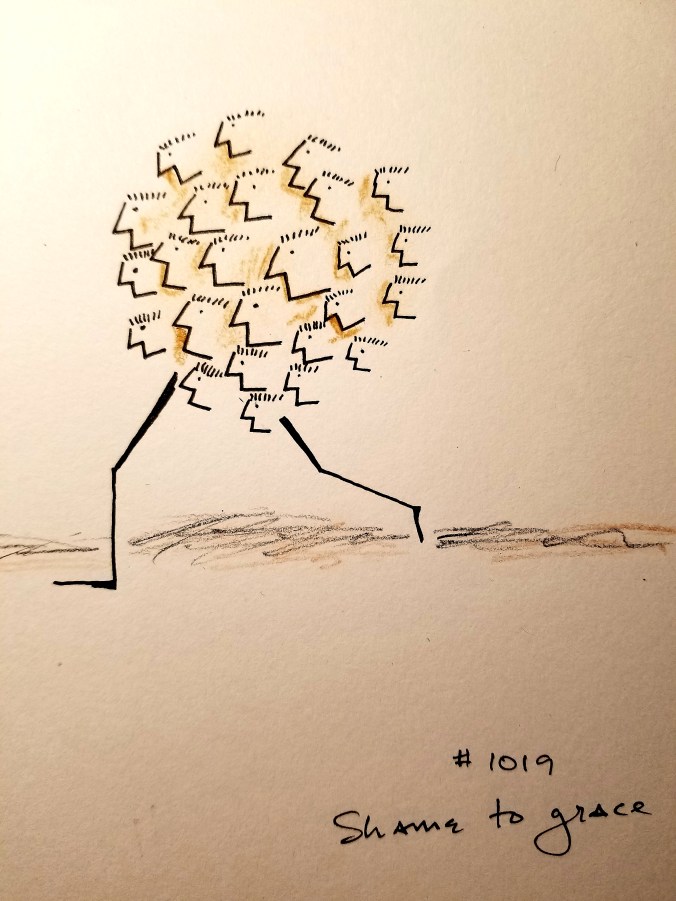
Strangely, forgiveness never arises from the part of us that was actually wounded. The wounded self may be the part of us incapable of forgetting, and perhaps, not actually meant to forget, as if, like the foundational dynamics of the physiological immune system our psychological defenses must remember and organize against any future attacks — after all, the identity of the one who must forgive is actually founded on the very fact of having been wounded.

Stranger still, it is that wounded, branded, un-forgetting part of us that eventually makes forgiveness an act of compassion rather than one of simple forgetting. To forgive is to assume a larger identity than the person who was first hurt, to mature and bring to fruition an identity that can put its arm, not only around the afflicted one within but also around the memories seared within us by the original blow and through a kind of psychological virtuosity, extend our understanding to one who first delivered it. Forgiveness is a skill, a way of preserving clarity, sanity and generosity in an individual life, a beautiful way of shaping the mind to a future we want for ourselves; an admittance that if forgiveness comes through understanding, and if understanding is just a matter of time and application then we might as well begin forgiving right at the beginning of any drama rather than put ourselves through the full cycle of festering, incapacitation, reluctant healing and eventual blessing.

To forgive is to put oneself in a larger gravitational field of experience than the one that first seemed to hurt us. We reimagine ourselves in the light of our maturity and we reimagine the past in the light of our new identity, we allow ourselves to be gifted by a story larger than the story that first hurt us and left us bereft.

Robert A. Johnson