The strength of the cold

The strength of the cold, the austerity and power of the landscape, redeems the snow colors and delicate shadows from anything of pastel shading. I can think of no art that has rendered with such things adequately – the nineteenth-century realists were so realistic as to be totally unlike what they painted. There is such a thing as too close a resemblance. In a way, nothing resembles reality less than the average photograph. Nothing resembles substance less than its shadow. To convey the meaning of something substantial, you have to use a sign, which is itself substantial and exists in its own right.
Man is the image of God and not the shadow of God.   – Thomas Merton, Journal entry, February 17, 1958 

2019_02_05_16_33_55_353_pic.png

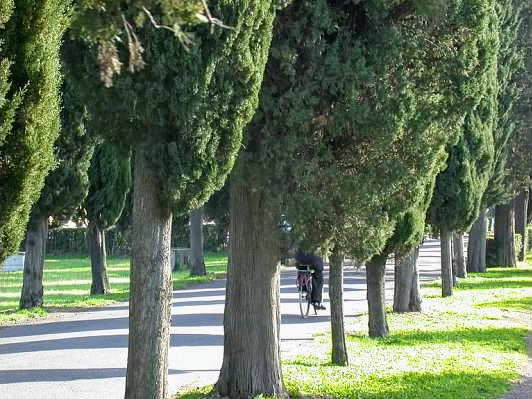
Photo: Portland, Maine – February 5, 2019

And when I saw a holy Grail…

perceval.jpg (500×500)

“Sir,” said Perceval, “for five
Full years I haven’t known
Where I was, or believed in God,
Or loved Him. All I have done
Was evil.” “Good friend,” said the hermit,
“Tell me why this happened,
And pray God to have mercy
On your sinful soul.” “Sir,
Once I was at the Fisher King’s
Castle, and I saw – the bleeding lance,
And seeing that drop of blood
On the bright white of its point,
I never asked what or why.
There are no amends I can make.
And when I saw a holy
Grail, I had no idea
For whom it was meant, and said nothing.
And ever since I’ve felt
Such sadness that I wished to die;
I forgot about God and never
Prayed for his grace and mercy
Or did what I should to deserve it.”
“Ah,” said the hermit. “Good friend,
Now you must tell me your name.”
And he answered, “Perceval, sir.”
And hearing this, the hermit
Sighed, for he knew that name,
And said, “Brother, this comes
From a sin of which you know nothing…”
– Perceval, Chretien de Troyes (6365 – 6394)

on Merton’s birthday

2018_12_19_21_59_21_234_pic

But life is a gift I am glad of, and I do not curse the day when I was born. On the contrary, if I had never been born I would never have had friends to love and be loved by, never have made mistakes to learn from, never have seen new countries, and, as for what I may have suffered, it is inconsequential and indeed part of the great good which life has been and will, I hope, continue to be. – Thomas Merton journal entry, January 31, 1960

To say that the world is not worth anything ..

“To say that the world is not worth anything, that this life is of no value and to give evil as the proof is absurd, for if these things are worthless what does evil take from us?

Thus the better we are able to conceive of the fullness of joy, the purer and more intense will be our suffering in affliction and our compassion for others. What does suffering take from him who is without joy?

And if we conceive the fullness of joy, suffering is still to joy what hunger is to food.

It is necessary to have had a revelation of reality through joy in order to find reality through suffering. Otherwise life is nothing but a more or less evil dream,” – Simone Weil, Gravity and Grace.

Looking for the key to the room of celebration

Christ came and declared a wedding feast, a celebration, at the very center of life. They crucified him not for being too ascetical, but because he told us that we might enjoy life. He told us that life will give us more goodness and enjoyment than we can stand, if we can learn to receive it without fear. But we are still in exile, without wedding garments, looking for the key to the room of celebration. Perhaps we need to be just a bit more earnest and sincere when we say the words, “your kingdom come!” – Ronald Rolheiser, Prayer: Our Deepest Longing


unity and a prayer

To be alone by being part of the universe – fitting in completely to an environment of woods and silence and peace. Everything you do becomes a unity and a prayer. Unity within and without. Unity with all living things – without effort or contention. My silence is a part of the whole world’s silence and builds the temple of God without the noise of hammers. – Thomas Merton, Journal January 28, 1953

Roma winter

Photo: Rome, January 2005

Epiphany on Mount La Verna – the spiritual touchstone of St. Francis of Assisi

January 6, 2005 – The Feast of The Epiphany – The wind had blown around our barn for two or three hours before dawn. But as the sun appeared above the mountains to the east the winds stopped and wood smoke settled into the valley. Occasionally, the crack of a shotgun from bird hunters would echo through the hills. Soon, even the hunters and their dogs would be still.
It is the morning of the Feast of The Epiphany. Quiet prevails.
We are driving to Mount La Verna to celebrate Mass. It is not much more than eight or nine miles from our door to the road leading to the sanctuary – if we could drive in a straight line. But there are no straight roads in these hills so that eight or nine mile drive will take us 45 minutes. The residents of Caprese Michelangelo, Lama, Fragaiolo, Monte Foresto, and Assunzione, some no more than four or five dwellings and a small church, are still watching their children, grandchildren, nieces, and nephews opening gifts, for Epiphany is the day for gift-giving in this part of Italy.
We climb out of the valley, switchback after switchback. Halfway to La Verna and we are on the spine of a ridge and can look down into the valleys on either side of the road. We are now above the clouds, mist, and wood smoke that we had occasionally driven through. Back towards San Giustino, Citta’ di Castello, Perugia, and Assisi the mist and smoke is streaming through the valley like a great river. It tumbles into deeper valleys in vast cascades.
I stop the car. We need to take this in – this blessing – this grace-filled landscape we move through.
The parking lot at The Sanctuary of La Verna is nearly full when we arrive. Children with their parents and grandparents, all in their best holiday clothes, walk through the groves of beech trees to the cluster of old buildings that make up the Sanctuary. The January sun stays low on the horizon. The shadows from the tree branches are sharp and focused. The air is cold and pure.
In the Basilica for Mass, we are all cold but happy to huddle shoulder to shoulder. I think I can see my breath as I whisper my responses in english. There are joyful faces, joyful beings gathered in line to receive the Eucharist. I eat the bread and drink the wine and my body is filled with the familiar, indescribable warmth.
When Mass has ended, we all go into the paizzalle. People are laughing. A boy is playing guitar. People gather around the great cross that seems to be rooted in the very heart of the world, singing and chattering like a flock of birds.

530886_2633073285264_601039757_n

Rumi – Imagine a man selling his donkey

Imagine a man selling his donkey
to be with Jesus.
Now imagine him selling Jesus
to get a ride on a donkey.
This does happen.

Jesus can transform a drunk into gold.
If the drunk is already golden,
he can be changed to pure diamond.
If already that, he can become the circling
planets, Jupiter, Venus, the moon.

Never think that you are worthless.
God has paid an enormous amount for you,
and the gifts keep arriving.

If we are painstaking about this phase of our development, we will be amazed before we are half way through . . .

We are going to know a new freedom and a new happiness.
We will not regret the past nor wish to shut the door on it.
We will comprehend the word serenity.
We will know peace.
No matter how far down the scale we have gone, we will see how our experience can benefit others.
That feeling of uselessness and self-pity will disappear.
We will lose interest in selfish things and gain interest in our fellows.
Self-seeking will slip away.
Our whole attitude and outlook upon life will change.
Fear of people and of economic insecurity will leave us.
We will intuitively know how to handle situations which used to baffle us.
We will suddenly realize that God is doing for us what we could not do for ourselves.