These Exhaling Sounds

     Is the sweetness of the cane sweeter
than the one who made the canefield?

Behind the beauty of the moon is the moonmaker.
There is intelligence inside the ocean’s intelligence
feeding our love like an invisible waterwheel.

There is a skill to making cooking oil from animal fat.
Consider now the knack that makes eyesight
from the shining jelly of your eyes.

Dawn comes up like a beautiful meal being served.
We are hungry and distracted, so in love with the cook.

Don’t just be proud of your mustache
as you drive three donkeys down the road.

Instead of gemstones, love the jeweler.
Enough of these exhaling sounds.

Let the darling finish this
who turns listening into seeing.

– Rumi (translated by Coleman Barks)

DSC_7766

Photo: Runaround Pond, Maine – June 2019

quiet and human

How high the corn is this year, and what joy there is in seeing it! The tall crests nodding twelve to fifteen feet above the ground and all the silk-bearded ears. You come down out of the novitiate, through the door in the wall, over the trestle, and down into this green paradise of stalks and silence. I know the joy and worship the Indians must have felt, and the Eucharistic rightness of it! How can one not feel such things – so that I love the Mayas and the Incas as perhaps the most human of peoples, as the ones who did most honor to our continents.

photo of corn field

Photo by Gustavo Rodrigues on Pexels.com

The irreligious mind is simply the unreal mind, the zombie, abstracted mind, that does not see things that grow in the earth and feel glad about them, but only knows prices and figures and statistics. In a world of numbers you can be irreligious, unless the numbers themselves are incarnate in astronomy and music. But, for that, they must have something to do with seasons and with harvests, with the joy of the Neolithic peoples, who for millennia were quiet and human.
– Thomas Merton, journal entry – July 26, 1963

Should God expect any less of us…

The desire we must possess, according to Bonaventure, is essentially the desire of the heart for the good. What would Bonaventure say to a contemporary world that upholds money, wealth, power, and prestige as the principal desires? His answer would probably be that given to the Poor Clare Nun: desire God alone. Pure desire is what Bonaventure teaches and his advice on how to strive for this is simple: one must turn one’s entire heart, mind, and soul to God. Since that which brings happiness and peace rests in God, only the desire for God can lead to happiness and peace. In the incarnation, God has turned his entire being, all that he has and all that he is, to us. Should God expect any less of us than what God has given and continues to give to us?
– —from the book Crucified Love: Bonaventure’s Mysticism of the Crucified Christ by Ilia Delio, OSF

Image result for bonaventure

Slowly in prayer – Matthew Lippman

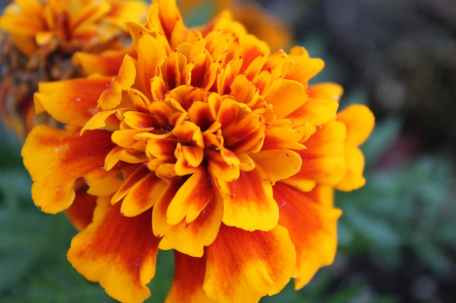
close up photography of marigold flower

Photo by Silvia Corradin on Pexels.com

To be thankful for the Starbucks lady, Lucy,
who is pissed at me for asking too many questions
about my damn phone app
is one thing.
To be thankful for my wife plastering my face to the bathroom floor
with pancake batter
for missing the bus
is another thing.
I tried to be thankful for my eyes this morning
even though one of them is filled with puss
and the other with marigold juice.
Marigold juice is the stuff that comes from the flower
when you put it between your palms and rub, slowly in prayer,
even though nothing comes out.
It’s the imagined juice of God,
the thing you can’t see when you are not being thankful.
I try to be thankful for the lack of energy that is my laziness
and my lonely best friend with no wife and children
knowing I am as lonely as he
with one wife and two daughters.
Sometimes we travel five minutes to the pier in Red Hook
and it takes hours in our loneliness to know, in our thankfulness,
that if we held hands it’d be a quiet romance for the ages.
I’ll admit, I’m thankful for Justin Timberlake
because he’s better than Beethoven
and my friend Aaron
who lived in the woods with an axe and never used it once.
I try hard to forget love,
to abandon love,
so that one day I will actually be able to love.
Until then, I am thankful that Lucy wanted to spit in my coffee,
or imagined that she did,
and thanked her profusely
for showing me which buttons to push
and how to do it, with just the right amount of pressure,
the whole tips of all my fingers dancing like stars
through the blackness
of a mocha latte, black.