long, deep, and lovely

For some reason, we tend to localize evil in our bodies more than in our mind, heart and spirit. We are terribly ashamed of our embodiment, and our shame is invariably located in addictive things like drinking, drugs, sex, overeating and body image. Maybe that is why God had to become a body in Jesus! God needed to tell us it was good to be a human body. That is central and pivotal to the Christmas message.

I’m surely for a proper sexual morality, but Jesus never once says this is the core issue. They tend to be sins of weakness or addiction, more than malice or power. In fact, Jesus says that the “prostitutes are getting into the kingdom of God” before some of us who have made easy bedfellows with power, prestige and possessions (Matthew 21:31). These are the attitudes that numb the heart, allow us to make very egocentric judgments and dull our general spiritual perception. For some reason, much of Christian history has chosen not to see this, and we have localized evil in other places than Jesus did. It is the sins of our mind and heart (see Matthew 5:20–48) that make the Big Picture almost impossible to see. This teaching is hidden in plain sight, but once we see it in text after text, we cannot any longer unsee it. Mary seems to have seen long, deep and lovely.

Richard Rohr, ofm

We are the workers

oscar_romero_slider_2_darkenedd.jpgAspire not to have more but to be more.

Defense of human rights, equality and freedom is a matter of policy rooted in the gospel.

Beautiful is the moment in which we understand that we are no more than an instrument of God; we live only as long as God wants us to live; we can only do as much as God makes us able to do; we are only as intelligent as God would have us be.

If we are worth anything, it is not because we have more money or more talent or more human qualities. Insofar as we are worth anything, it is because we are grafted on to Christ’s life, his cross and resurrection. That is a person’s measure.

We accomplish in our lifetime only a tiny fraction of the magnificent enterprise that is God’s work. Nothing we do is complete, which is a way of saying that the kingdom always lies beyond us. No statement says all that could be said. No prayer fully expresses our faith. No confession brings perfection. No pastoral visit brings wholeness. No program accomplishes the church’s mission. No set of goals and objectives includes everything.

This is what we are about. We plant the seeds that one day will grow. We water seeds already planted, knowing that they hold future promise. We lay foundations that will need further development. We provide yeast that produces far beyond our capabilities. we cannot do everything, and there is a sense of liberation in realizing that. this enables us to do something, and to do it very well. It may be incomplete, but it is a beginning, a step along the way, an opportunity for the Lord’s grace to enter and do the rest. We may never see the end results, but that is the difference between the master builder and the worker. We are the workers, not master builders; ministers, not messiahs.

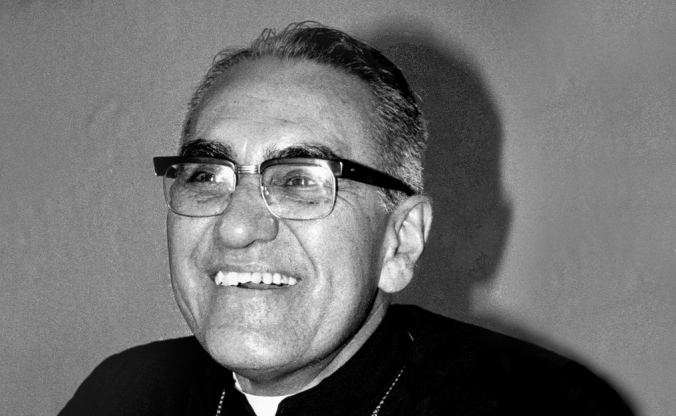
Archbishop Oscar Romero

gnats & camels

Another of Jesus’ nonnegotiables is the work of justice and generosity toward the poor and the outsider. That’s quite clear, quite absolute—page after page of the Gospels. Yet Christian history, even at the highest levels of church, has thought nothing of amassing fortunes and living grandly (while others starved), and rather totally identifying with power, war, and money (they tend to go together).

At this point in history, when most people can read Jesus’ (and the Bible’s) clear and consistent bias toward the poor, the foreigner, and the marginalized, it can only be ignored with a culpable blindness and ignorance. Most Christians have indeed been “cafeteria Christians” when it comes to this. Usually they will markedly emphasize something else (often a sexual issue) to divert attention from what Jesus did not divert attention from. As Jesus himself put it, “you strain out gnats and you swallow camels!” (Matthew 23:24). The issues never change in any age, as long as the same old ego is in charge.
– Richard Rohr, ofm
20190130_221430.png
(photo: Portland, ME – February 2019)