If it were possible for us to see further than our knowledge reaches, and a little beyond the outworks of our intuitions, perhaps we should then bear our sadnesses with greater assurance than our joys. For they are the moments when something new enters into us, something unknown to us; our feelings, shy and inhibited, fall silent, everything in us withdraws, a stillness settles on us, and at the centre of it is the new presence that nobody yet knows, making no sound.
Whenever I groan within myself and think how hard it is to keep writing about love in these times of tension and strife which may at any moment become for us all a time of terror, I think to myself, “What else is the world interested in?” What else do we all want, each one of us, except to love and be loved, in our families, in our work, in all our relationships. God is Love. Love casts out fear. Even the most ardent revolutionist, seeking to change the world, to overturn the tables of the money changers, is trying to make a world where it is easier for people to love, to stand in that relationship with each other of love. We want with all our hearts to love, to be loved. And not just in the family but to look upon all as our mothers, sisters, brothers, children. It is when we love the most intensely and most humanly, that we can recognize how tepid is our love for others. The keenness and intensity of love brings with it suffering, of course, but joy too because it is a foretaste of heaven. – Dorothy Day
Earlier we saw that the sound code of Arabic makes al-Ghaffar repetitive and unending. Now we see that the sound code places al-Ghafur in the group that carries the meaning of “penetrating right into the essence of a thing.” It goes right into the deepest place in the heart.
Therefore al-Ghafur goes right to the worst crime we have ever committed in our lives. It goes right to the worst thing that has ever been done to us.
Whether it is a grudge of self-loathing or a grudge held against another, the depth of feeling is the same. Allah’s forgiveness reaches that deepest place. From a medical point of view we might say that al-Ghaffar is a remedy for a chronic condition and Al-Ghafur is for an acute condition.
Contemplation on al-Ghafur is a profound and healing practice for anyone.
It is even recommended for prisoners on death row. It reaches the deepest wound. It goes right to the heart of the matter. It penetrates to the essence. Divine forgiveness reaches that which we imagined was unforgiveable. That is the quality of al-Ghafur.
The very concept of forgiveness, even in English usage, is to give up the grudge, to let go of that revenge fantasy. Forgiveness comes by giving that away.
So at this first stage in the process of learning to forgive, you need to learn to give up the revenging impulse that arises many times a day. And you also need to give up the grudge you hold about the inner wound you believe to be unforgiveable.
At this beginning stage in the process, you notice the fault either in other people or in your own self.
Again and again you are asked to give up the grudge you are holding, and to invite in al-Ghaffar and al-Ghafur. You can then awaken to a kind of compassion that actually reaches the wound and covers over the fault in a soothing way.
Both al-Ghaffar and al-Ghafur have this same root meaning of covering over in a healing kind of way.
from Physicians of The Heart, a Sufi view of the 99 names of Allah
Al-Ghaffar is inexhaustible forgiveness. It is repetitive. Even though you may repeat the same error over and over again, you never come to the end of God’s forgiveness, which is inexhaustible. A form of the root of al-Ghaffar means a substance bees make that the Arabs used to fill in the cracks of a dried- out, old leather water skin, so that it no longer leaks. Divine forgiveness repairs human dryness and brittleness in a similar way
Invocation of Ya Ghaffar offers a healing salve that is an antidote for self-loathing, guilt, and blame. It is especially useful to bring this emanation of divine forgiveness into the places where you have been marked by impressions of self-deficiency that have been reinforced time and again. Al-Ghaffar brings moisture back into the system. An even more complete realization of the nature of divine forgiveness may occur when this Name is paired in repetition with Ya Ghafur, which shares the same root.
From Physicians of the Heart: A Sufi View of the Ninety-Nine Names of Allah
If you remove from your midst oppression, false accusation, and malicious speech, if you bestow your bread on the hungry, and satisfy the afflicted, then light shall rise for you in the darkness,…and God will guide you always, and give you relief in desert places.
All the joy the world contains has come through wishing happiness for others. All the misery the world contains has come through wanting pleasure for oneself.
The day I first climbed Mt. St. Helens was August 13, 1945.
Spirit Lake was far from the cities of the valley and news came slow. Though the first atomic bomb was dropped on Hiroshima August 6 and the second dropped on Nagasaki August 9, photographs didn’t appear in the Portland Oregonian until August 12. Those papers must have been driven in to Spirit Lake on the 13th. Early the morning of the 14th I walked over to the lodge to check the bulletin board. There were whole pages of the paper pinned up: photos of a blasted city from the air, the estimate of 150,000 dead in Hiroshima alone, the American scientist quoted saying “nothing will grow there again for seventy years.” The morning sun on my shoulders, the fir forest smell and the big tree shadows; feet in thin moccasins feeling the ground, and my heart still one with the snowpeak mountain at my back. Horrified, blaming scientists and politicians and the governments of the world, I swore a vow to myself, something like, “By the purity and beauty and permanence of Mt. St. Helens, I will fight against this cruel destructive power and those who would seek to use it, for all my life.”
Authentic freedom and love will not be captured by attachment. Therefore, the journey homeward does not lead toward new, more sophisticated addictions. If it is truly homeward, it leads toward liberation from addiction altogether. Obviously, it is a lifelong process… There is a strange sadness in this growing freedom. Our souls may have been scarred […]
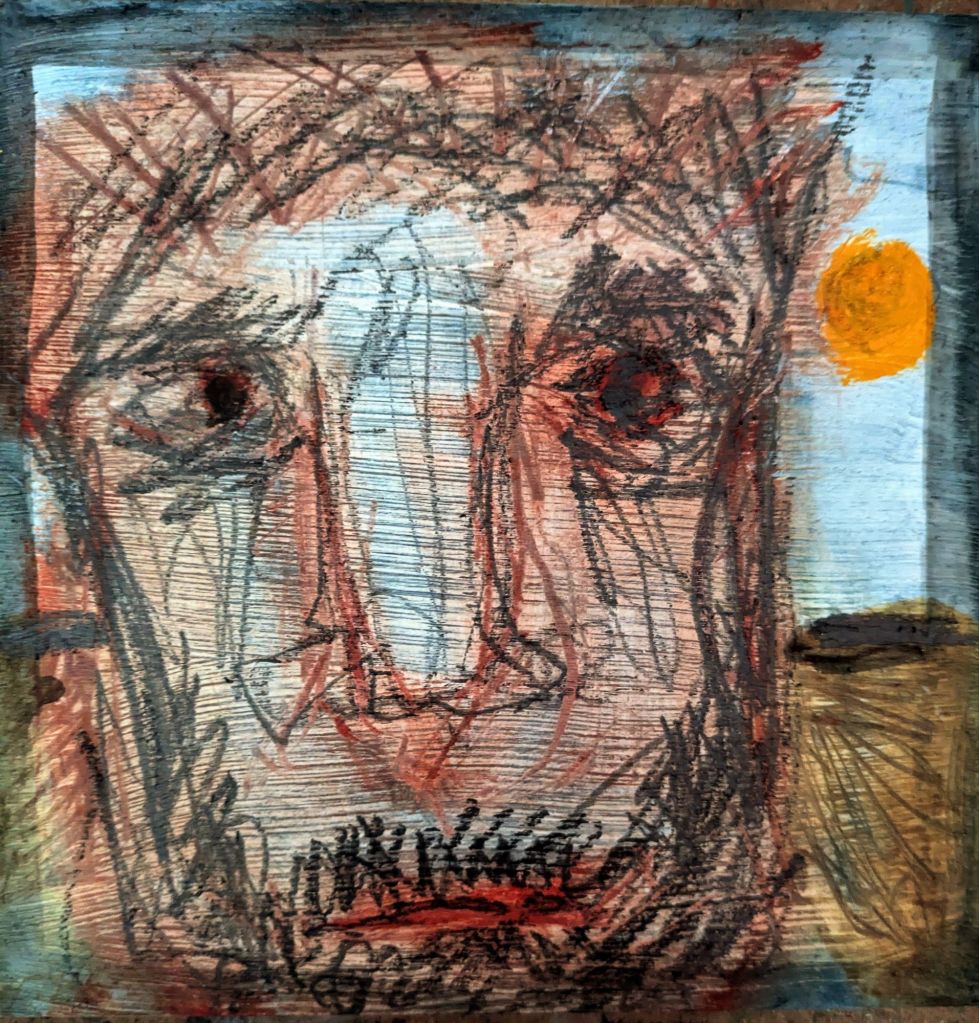
When I went out to kill myself, I caught A pack of hoodlums beating up a man. Running to spare his suffering, I forgot My name, my number, how my day began, How soldiers milled around the garden stone And sang amusing songs; how all that day Their javelins measured crowds; how I alone Bargained the proper coins, and slipped away.
Banished from heaven, I found this victim beaten, Stripped, kneed, and left to cry. Dropping my rope Aside, I ran, ignored the uniforms: Then I remembered bread my flesh had eaten, The kiss that ate my flesh. Flayed without hope, I held the man for nothing in my arms.






 Edge of Atlantic