 There’s another story that you may have read that has to do with what we call heaven and hell, life and death, good and bad. It’s a story about how those things don’t really exist except as a creation of our own minds. It goes like this: A big burly samurai comes to the wise man and says, “Tell me the nature of heaven and hell.” And the roshi looks him in the face and says: “Why should I tell a scruffy, disgusting, miserable slob like you?” The samurai starts to get purple in the face, his hair starts to stand up, but the roshi won’t stop, he keeps saying, “A miserable worm like you, do you think I should tell you anything?” Consumed by rage, the samurai draws his sword, and he’s just about to cut off the head of the roshi. Then the roshi says, “That’s hell.” The samurai, who is in fact a sensitive person, instantly gets it, that he just created his own hell; he was deep in hell. It was black and hot, filled with hatred, self-protection, anger, and resentment, so much so that he was going to kill this man. Tears fill his eyes and he starts to cry and he puts his palms together and the roshi says, “That’s heaven.”
(Pema Chodron – From her book Awakening Loving Kindness)
Buddha
if you behaved badly…
IF YOU BEHAVED badly in the past, if you have been destructive, you can do something about it. By touching the present deeply, you can transform the past. The wounds and injuries of the past are still there—they are within your reach. All you have to do is come back to the present moment, and you will recognize the wounds and injuries that you have caused in the past and those that other people have caused you.
You should be here for these wounds and injuries. You can say to them, “I am here for you,” with your mindful breathing, your deep looking, and your determination not to do the same thing again. Then transformation is possible.
– thich nhat hanh
snared rabbits
People compelled by cravings crawl like snared rabbits.
– Dhammapada 24:9
on grace in Buddhism
(photo: Sat Manav Yoga Ashram – Industry, Maine, October 2019)

The word “grace” corresponds to a whole dimension of spiritual experience; it is unthinkable that this should be absent from one of the great religions of the world.
The function of grace…is to condition one’s homecoming to the center itself…which provides the incentive to start on the Way and the energy to face and overcome its many and various obstacles. Likewise grace is the welcoming hand into the center when one finds oneself at long last on the brink of the great divide where all familiar human landmarks have disappeared.
– Marco Pallis
caravans lurching down the road
Riches make most people greedy, and so are like caravans lurching down the road to perdition. Any possession that increases the sin of selfishness or does nothing to confirm one’s wish to renounce what one has is nothing but a drawback in disguise.
– Jatakamala 5.5 & 15
like birds in the sky
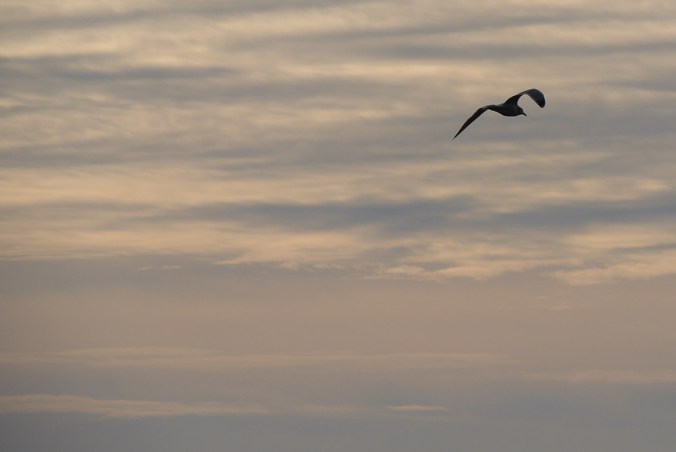
Those who have no accumulation, who eat with with perfect knowledge, whose sphere is emptiness, signlessness, and liberation, are hard to track, like birds in the sky. Those whose compulsions are gone, who are not attached to food, whose sphere is emptiness, signlessness, and liberation, are hard to track, like birds in the sky.
– Dhammapada 7.3-4
the past

THE BUDDHA SAID that we should not be afraid of the past; but he did warn us not to lose ourselves in it, either. We should not feed our regret or pain over the past, and we should not get carried away by the past. We do need to study and understand the past, however, because by looking deeply into the past we learn a lot of things that can benefit the present and the future. The past is an object of our study, of our meditation, but the way to study it or meditate on it is by remaining anchored in the present moment.
– Thich Nhat Hanh
Buddha’s birthday

Buddhist devotees release lanterns into the air as a symbol of peace to honor Buddha’s birthday at Borobudur Temple in Magelang, Central Java, on May 19, 2019.
[from: https://www.theatlantic.com/photo/2019/05/buddha-day-celebrations-photos/589843%5D
 Edge of Atlantic