fear is an addiction

Fear is an addiction for a lot of people. They don’t know how to motivate themselves without being afraid of something. They don’t know how not to worry. When you’re living an inauthentic life, you’re going to worry because your subconscious, your spirit, knows your life has no truth. That is why we are creating so many fearful people.
The more illusory stuff we have to protect, the more fearful we will be. There’s almost a correlation between fears that people have and the false lives they live. Beneath all the layers of behavior, it is fear that brings more people into counseling than any other emotion. The counselor’s role is to help people identify what is behind their fear. Real lives start then. – Richard Rohr


I posted the above on Facebook a number of years ago. I knew the truth of this then – that it described my inner life, my false self – but was unable to admit to myself that fear and shame were mixed in with my other addictions – and pride, misguided pride, kept me from admitting it to myself, to another human being, or to God.
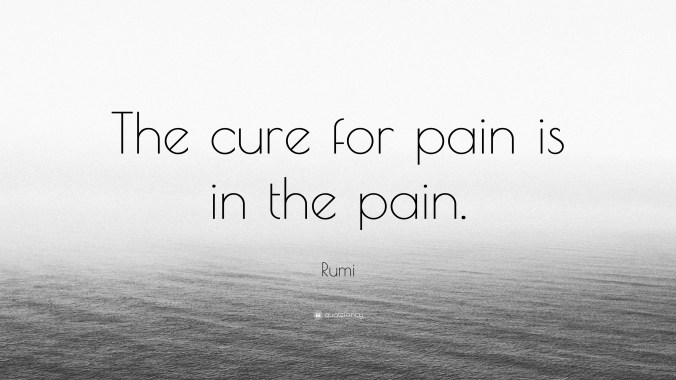
As Rumi wrote:
Sometimes the cold and dark of a cave
give the opening we most want

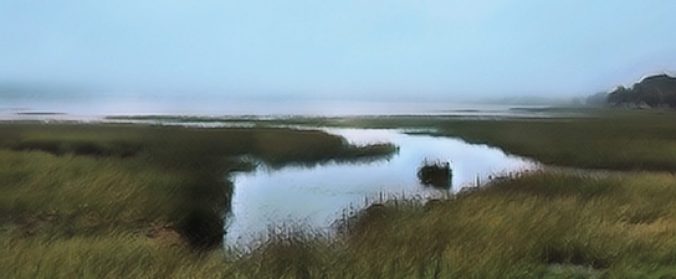
DSC_7855
photo: Grindstone, ME – September 2019

gratitude

Three years ago – a little more than 1 month sober – I was in a mental hospital after a suicide attempt. I was pretty sure I could fool the people there into thinking I was ok, get out, and do the job right the next time.

This morning at one of my favorite AA meetings, I saw a woman I met at that hospital. She caught my eye and we smiled at each other across the room. We spoke for a few moments after the meeting and hugged.

She looked healthy, happy and I could see that she thought the same about me.

I have not forgotten all that I did in the past. I did all that, yes. Today, my addictions do not define me.

Gratitude.

Thank you, Alcoholics Anonymous. Thank God.

that enormous emptiness

in recollection of 12.22.2016 and in grateful recovery 12.22.2019

Wait, for now.
Distrust everything, if you have to.
But trust the hours. Haven’t they
carried you everywhere, up to now?
Personal events will become interesting again.
Hair will become interesting.
Pain will become interesting.
Buds that open out of season will become lovely again.
Second-hand gloves will become lovely again,
their memories are what give them
the need for other hands. And the desolation
of lovers is the same: that enormous emptiness
carved out of such tiny beings as we are
asks to be filled; the need
for the new love is faithfulness to the old.

Wait.
Don’t go too early.
You’re tired. But everyone’s tired.
But no one is tired enough.
Only wait a while and listen.
Music of hair,
Music of pain,
music of looms weaving all our loves again.
Be there to hear it, it will be the only time,
most of all to hear,
the flute of your whole existence,
rehearsed by the sorrows, play itself into total exhaustion.

long, deep, and lovely

For some reason, we tend to localize evil in our bodies more than in our mind, heart and spirit. We are terribly ashamed of our embodiment, and our shame is invariably located in addictive things like drinking, drugs, sex, overeating and body image. Maybe that is why God had to become a body in Jesus! God needed to tell us it was good to be a human body. That is central and pivotal to the Christmas message.

I’m surely for a proper sexual morality, but Jesus never once says this is the core issue. They tend to be sins of weakness or addiction, more than malice or power. In fact, Jesus says that the “prostitutes are getting into the kingdom of God” before some of us who have made easy bedfellows with power, prestige and possessions (Matthew 21:31). These are the attitudes that numb the heart, allow us to make very egocentric judgments and dull our general spiritual perception. For some reason, much of Christian history has chosen not to see this, and we have localized evil in other places than Jesus did. It is the sins of our mind and heart (see Matthew 5:20–48) that make the Big Picture almost impossible to see. This teaching is hidden in plain sight, but once we see it in text after text, we cannot any longer unsee it. Mary seems to have seen long, deep and lovely.

Richard Rohr, ofm