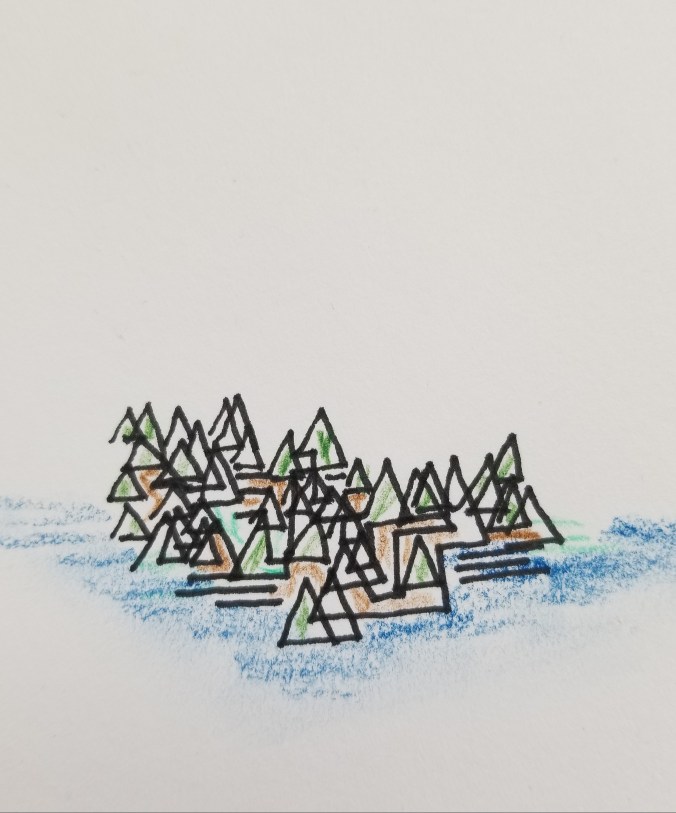
#1014
God says, “I am offering you life or death, blessing or curse. Choose life, then, so that you and your descendants may live” (Deuteronomy 30:19).
“Choose life.” That’s God’s call for us, and there is not a moment in which we do not have to make that choice. Life and death are always before us. In our imaginations, our thoughts, our words, our gestures, our actions … even in our nonactions. This choice for life starts in a deep interior place. Underneath very life-affirming behaviour I can still harbour death-thoughts and death-feelings. The most important question is not “Do I kill?” but “Do I carry a blessing in my heart or a curse?” The bullet that kills is only the final instrument of the hatred that began being nurtured in the heart long before the gun was picked up. – Henri Nouwen

(Photo: Portland, Maine – 8.30.19)
You have to believe this. We are more than our anger; we are more than our suffering. We must recognize that we do have within us the capacity to love, to understand, to be compassionate. If you know this, then when it rains you won’t be desperate. You know that the rain is there, but the sunshine is still there somewhere. Soon the rain will stop, and the sun will shine again. Have hope. If you can remind yourself that the positive elements are still present within you and the other person, you will know that it is possible to break through, so that the best things in both of you can come up and manifest again.
– Thich Nhat Hanh
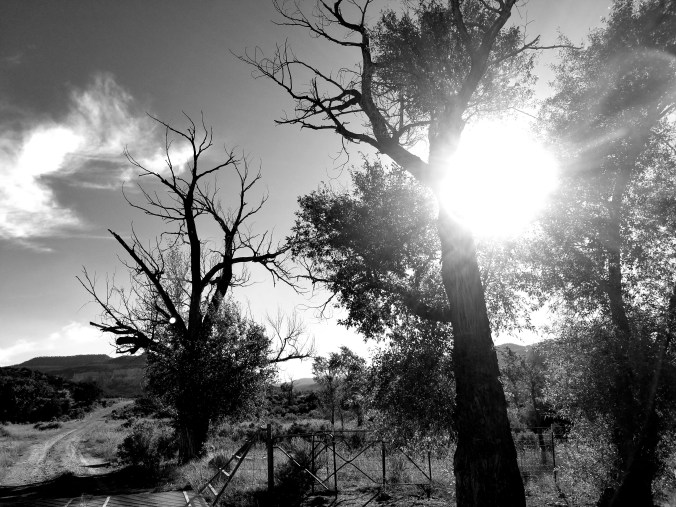
(photo: Abiquiu, NM – September 2018)
It just comes. That is the miracle of it.
The false self is your psychological creation of yourself in space and time. It comes from your early conditioning, family, roles, education, mind, culture, and religion. The false self is who you think you are! But thinking doesn’t make it so. The false self dies and passes away. Yet it is the raw material through which you discover your True Self in God, so you must not hate it or kill it. Just learn from it. Of itself, it does not know how to pray, because it does not understand simple presence, communion, or relationship. The false self is all about utility and “What can I get out of this?” Not bad, but very incomplete.
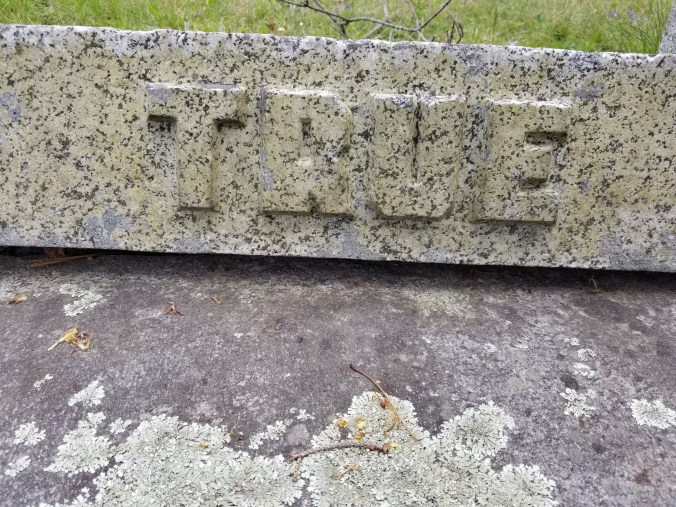
The True Self is not created by anything you have done right or wrong. Nor can you lose it by doing anything good or bad. The True Self is not formed by adhering to any requirements; it’s about relationship itself—the quality and capacity for connection. Only the True Self can pray. The false self will say prayers but the True Self is a prayer and looks out at reality from a different pair of eyes larger than its own. This is why in Ephesians it can say “pray always” (6:18). We pray always whenever we act in conscious and loving union with things—which eventually can be all the time. Then whatever you do is a prayer, not a recited prayer but a full-bodied, bigger-than-mind, contemplative prayer. When you are in your True Self, your prayer and your breath are the same thing.
– R. Rohr
The blossoming plums are a comforting sight,
they understand I am heavy with wine
– Chiang K’uei
do you recall
when I planted plum trees
to the east of our home
the scent at dusk
promised a life still
as a Chinese scroll
later in darkness
I turned away
and seemed to sleep
so many winters
my head heavy
my plum trees gone
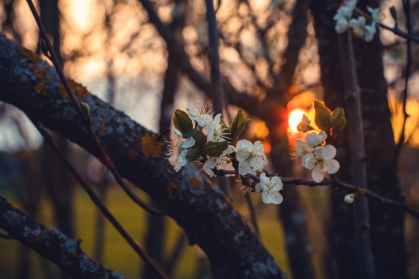
Photo by Irina Iriser on Pexels.com
1000 days sober last Friday. I thank God, who had to break my life into a million pieces and showed me the spiritual path to wholeness and freedom, relieved me of the bondage of self, and connected me to a supportive, loving community.
Today and every day, the word is: gratitude
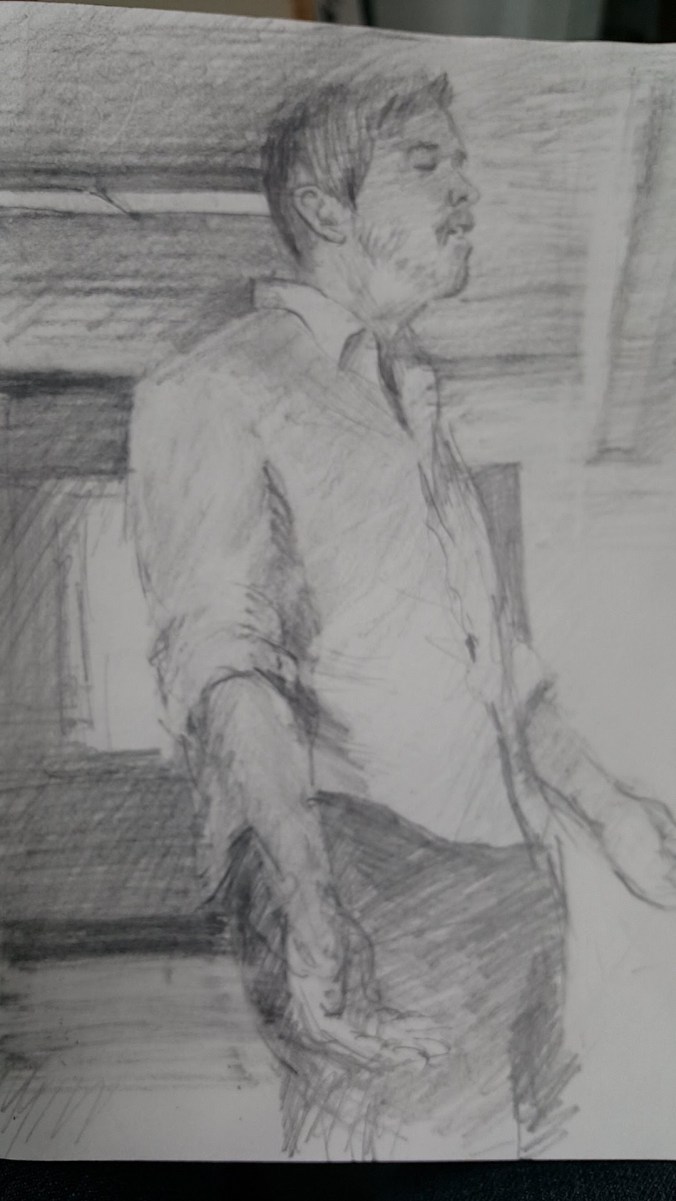
(sketch: Paul Brahms)
Respect the elders.
Embrace the new.
Encourage the impractical and improbable,
without bias.
– David Fricke
Richard Rohr –
Pain teaches a most counterintuitive thing—that we must go down before we even know what up is. It is first an ordinary wound before it can become a sacred wound. Suffering of some sort seems to be the only thing strong enough to destabilize our arrogance and our ignorance. I would define suffering very simply as “whenever you are not in control.”
All healthy religion shows you what to do with your pain. If we do not transform our pain, we will most assuredly transmit it. If your religion is not showing you how to transform your pain, it is junk religion. It is no surprise that a crucified man became the central symbol of Christianity.
If we cannot find a way to make our wounds into sacred wounds, we invariably become negative or bitter—because we will be wounded. That is a given. All suffering is potentially redemptive, all wounds are potentially sacred wounds. It depends on what you do with them. Can you find God in them or not?
If there isn’t some way to find some deeper meaning to our suffering, to find that God is somehow in it, and can even use it for good, we will normally close up and close down, and the second half of our lives will, quite frankly, be small and silly.

 Edge of Atlantic