#1099


I have been watching the crows and now it is dark
Together they led night into the creaking oaks
Under them I hear the dry leaves walking
That blind man
Gathering their feathers before winter
By the dim road that the wind will take
And the cold
And the note of the trumpet

Photo by Pixabay on Pexels.com
We need some pines to assuage the darkness
when it blankets the mind,
we need a silvery stream that banks as smoothly
as a plane’s wing, and a worn bed of
needles to pad the rumble that fills the mind,
and a blur or two of a wild thing
that sees and is not seen. We need these things
between appointments, after work,
and, if we keep them, then someone someday,
lying down after a walk
and supper, with the fire hole wet down,
the whole night sky set at a particular
time, without numbers or hours, will cause
a little sound of thanks–a zipper or a snap–
to close round the moment and the thought
of whatever good we did.
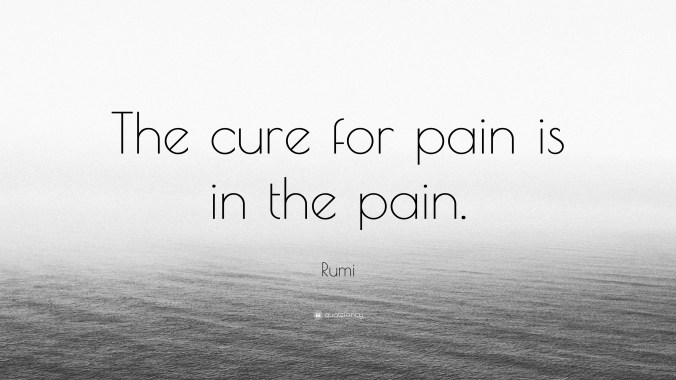
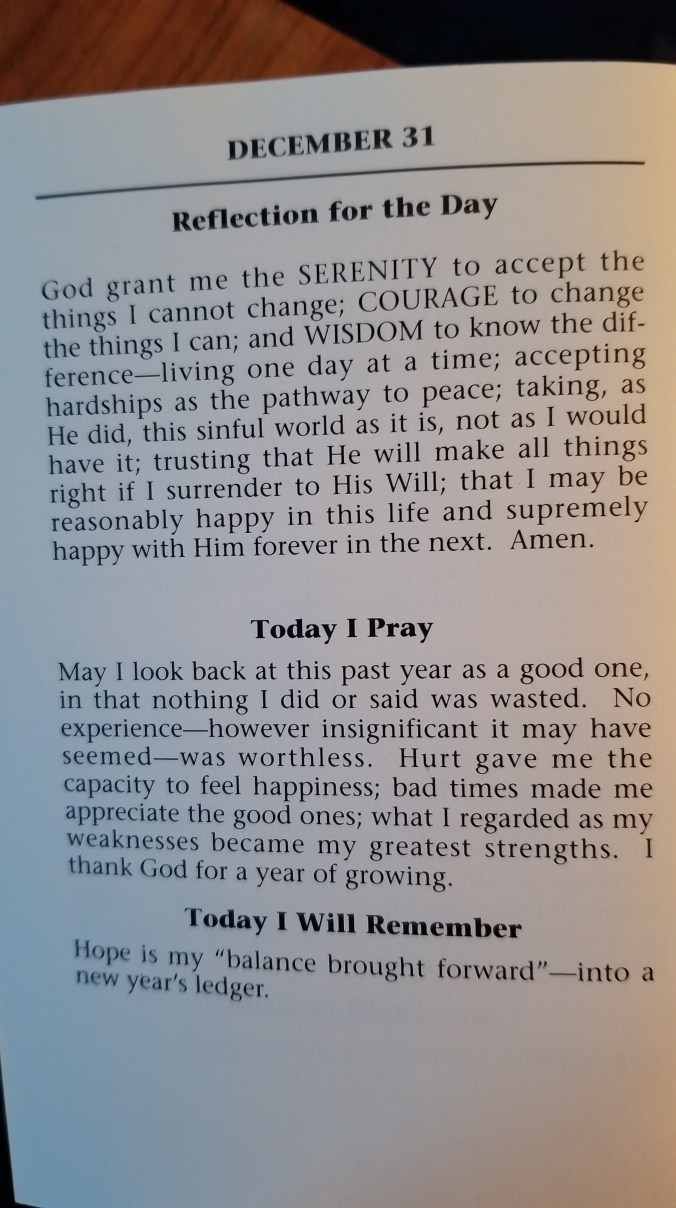
TO ME, THE definition of hell is simple: it is a place where there is no understanding and no compassion. We have all been to hell. We are acquainted with hell’s heat, and we know that hell is in need of compassion. If there is compassion, then hell ceases to be hell. You can generate this compassion yourself. If you can bring a little compassion to this place, a little bit of understanding, it ceases to be hell. You can be the bodhisattva who does this. Your practice consists in generating compassion and understanding and bringing them to hell. Hell is here, all around us. Hell is in us, like a seed. We need to cultivate the positive within us so we can generate the energy of understanding and compassion and transform hell. Hell is a matter of everyday life, like the Kingdom of God. The choice is yours. – thich nhat hang


Adversity introduces a man to himself. – Albert Einstein

There’s another story that you may have read that has to do with what we call heaven and hell, life and death, good and bad. It’s a story about how those things don’t really exist except as a creation of our own minds. It goes like this: A big burly samurai comes to the wise man and says, “Tell me the nature of heaven and hell.” And the roshi looks him in the face and says: “Why should I tell a scruffy, disgusting, miserable slob like you?” The samurai starts to get purple in the face, his hair starts to stand up, but the roshi won’t stop, he keeps saying, “A miserable worm like you, do you think I should tell you anything?” Consumed by rage, the samurai draws his sword, and he’s just about to cut off the head of the roshi. Then the roshi says, “That’s hell.” The samurai, who is in fact a sensitive person, instantly gets it, that he just created his own hell; he was deep in hell. It was black and hot, filled with hatred, self-protection, anger, and resentment, so much so that he was going to kill this man. Tears fill his eyes and he starts to cry and he puts his palms together and the roshi says, “That’s heaven.”
(Pema Chodron – From her book Awakening Loving Kindness)
Gelassenheit – letting go – not being encumbered by systems, words, projects. And yet being free in systems, projects. Not trying to get away from all action, all speech, but free, unencumbering Gelassen in this or that action. Error of self-conscious contemplatives: to get hung up on a certain kind of non-action which is an imprisonment, a stupor, the opposite of Gelassenheit. Actually quietism is incompatible with true inner freedom. The furden of this stupid and enforced “quiet” – the self sitting heavily on its own head.
Still thinking of K.C., who wrote from Cincinnati. From a certain point of view my letter to her was a scandal. I was in effect saying, “Don’t listen for the voice of God, God will not speak to you.” Yet this had to be said. Today, for a certain type of person, deceptive. It is the wrong kind of listening: listening for a limited message, an objective sound, a sensible meaning. Actually one decides one’s life by responding to a word that is not well defined, easily explicable, safely accounted for. One decides to love in the face of an unaccountable void, and from the void comes an unaccountable truth. By this truth one’s existence is sustained in peace – until the truth is too firmly grasped and too clearly accounted for. Then one is relying on words, i.e., on ones’ own understanding and one’s own ingenuity in interpreting existence and its “signs.” The one is lost and has to be found once again in the patient Void.
– Thomas Merton, journal entry, November 13, 1966
A loving heart will fill my days with gladness
make joy out of sadness
when I show this loving heart to you…