Steady, They Say – Gary Snyder

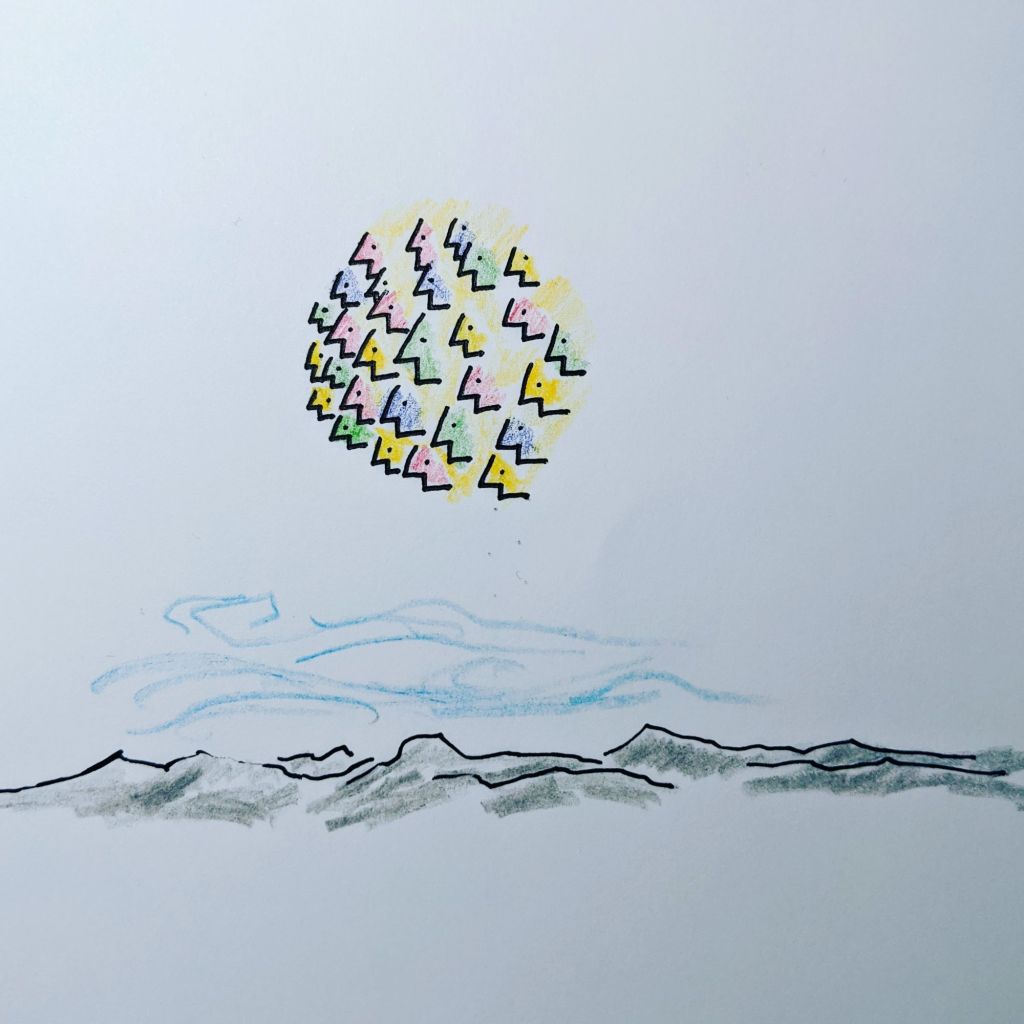
Clambering up the rocks of a dry wash gully, warped sandstone, by the San Juan River,

look north to stony mountains shifting clouds and sun – despair at how the human world goes down.

Consult my old advisers

“steady” they say

“today”

(At Slickhorn Gulch on the San Juan River, 1999)

the prison of meritocracy

Richard Rohr – Great love has the potential to open the heart space and then the mind space. Great suffering has the potential to open the mind space and then the heart space. Eventually both spaces need to be opened, and for such people, non-dual thinking can be the easiest.

People who have never loved or never suffered will normally try to control everything with an either-or attitude or all-or-nothing thinking. This closed system is all they are prepared for. The mentality that divides the world into “deserving and undeserving” has not yet experienced the absolute gratuity of grace or the undeserved character of mercy. This lack of in-depth God-experience leaves all of us judgmental, demanding, unforgiving, and weak in empathy and sympathy. Such people will remain inside the prison of “meritocracy,” where all has to be deserved. They are still counting when in reality God and grace exist outside of all accounting. Remember, however, to be patient with such people, even if you are the target of their judgment, because on some level, that is how they treat themselves as well.

Non-dual people will see things in their wholeness and call forth the same unity in others simply by being who they are. Wholeness (head, heart, and body all present, positive, and accounted for!) can see and call forth wholeness in others. This is why it is so pleasant to be around whole and holy people.

Dualistic or divided people, however, live in a split and fragmented world. They cannot accept or forgive certain parts of themselves. They cannot accept that God objectively dwells within them, as it states in so many places in Scripture, including 1 Corinthians 3:16-17. This lack of forgiveness takes the forms of a tortured mind, a closed heart, or an inability to live calmly and proudly inside ones own body. The fragmented mind sees parts, not wholes, in itself and others, and invariably it creates antagonism, reaction, fear, and resistance—“push-back” from other people—who themselves are longing for wholeness and holiness.

Ask if I forget America, Thomas Paine, from a letter to George Washington, 1789

“You touch me on a very tender part when you say my friends on your side of the water cannot be reconciled to the idea of my resigning my adopted America, even for my native England.” They are right. Though I am in as elegant style of acquaintance here as any American that ever came over, my heart and myself are three thousand miles apart; and I had rather see my horse Button in his own stable, or eating the grass of Bordentown or Morrisania, than see all the pomp and show of Europe.

A thousand years hence (for I must indulge in a few thoughts), perhaps in less, America may be what England now is! The innocence of her character that won the hearts of all nations in her favor may sound like a romance, and her inimitable virtue as if it had never been. The ruins of that liberty which thousands bled for, or suffered to obtain, may just furnish materials for a village tale or extort a sigh from rustic sensibility, while the fashionable of that day, enveloped in dissipation, shall deride the principle and deny the fact.

When we contemplate the fall of empires and the extinction of nations of the ancient world, we see but little to excite our regret than the moldering ruins of pompous palaces, magnificent monuments, lofty pyramids, and walls and towers of the most costly workmanship. But when the empire of America shall fall, the subject for contemplative sorrow will be infinitely greater than crumbling brass or marble can inspire. It will not then be said, Here stood a temple of vast antiquity; here rose a Babel of invisible height; or there a palace of sumptuous extravagance; but here, ah painful thought! the noblest work of human wisdom, the grandest scene of human glory, the fair cause of freedom rose and fell!

Read this and then ask if I forget America.

what more should I do?

“Abbot Lot went to see Abbot Joseph and said: `Father, according as I am able, I keep my little rule, and my little fast, my prayer, meditation and contemplative silence; and according as I am able I strive to cleanse my heart of bad thoughts: now what more should I do?’ The elder rose up in reply and stretched out his hands to heaven, and his fingers became like lamps of fire. He said: `Why not become all flame?’”

I find letters from God…

Song of Myself, 48 – Walt Whitman

I have said that the soul is not more than the body,
And I have said that the body is not more than the soul,
And nothing, not God, is greater to one than one’s self is,
And whoever walks a furlong without sympathy walks to his own funeral drest in his shroud,
And I or you pocketless of a dime may purchase the pick of the earth,
And to glance with an eye or show a bean in its pod confounds the learning of all times,
And there is no trade or employment but the young man following it may become a hero,
And there is no object so soft but it makes a hub for the wheel’d universe,
And I say to any man or woman, Let your soul stand cool and composed before a million universes.

And I say to mankind, Be not curious about God,
For I who am curious about each am not curious about God,
(No array of terms can say how much I am at peace about God and about death.)

I hear and behold God in every object, yet understand God not in the least,
Nor do I understand who there can be more wonderful than myself.

Why should I wish to see God better than this day?
I see something of God each hour of the twenty-four, and each moment then,
In the faces of men and women I see God, and in my own face in the glass,
I find letters from God dropt in the street, and every one is sign’d by God’s name,
And I leave them where they are, for I know that wheresoe’er I go,
Others will punctually come for ever and ever.

Natural Music by Robinson Jeffers

The old voice of the ocean, the bird-chatter of little rivers,
(Winter has given them gold for silver
To stain their water and bladed green for brown to line their banks)
From different throats intone one language.
So I believe if we were strong enough to listen without
Divisions of desire and terror
To the storm of the sick nations, the rage of the hunger smitten cities,
Those voices also would be found
Clean as a child’s; or like some girl’s breathing who dances alone
By the ocean-shore, dreaming of lovers.