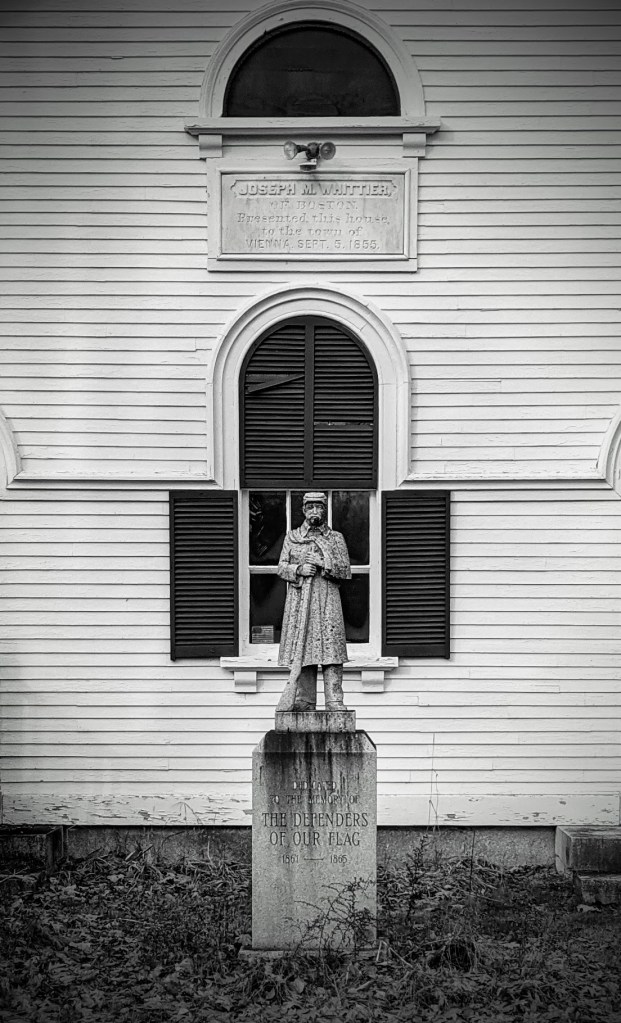
Lines for Winter – Mark Strand

Tell yourself
as it gets cold and gray falls from the air
that you will go on
walking, hearing
the same tune no matter where
you find yourself—
inside the dome of dark
or under the cracking white
of the moon’s gaze in a valley of snow.
Tonight as it gets cold
tell yourself
what you know which is nothing
but the tune your bones play
as you keep going. And you will be able
for once to lie down under the small fire
of winter stars.
And if it happens that you cannot
go on or turn back
and you find yourself
where you will be at the end,
tell yourself
in that final flowing of cold through your limbs
that you love what you are.

The vocation of poetry

“I have never separated the writing of poetry from prayer. I have grown up believing it is a vocation, a religious vocation. What I described in Another Life—about being on the hill and feeling the sort of dissolution that happened—is a frequent experience in a younger writer. I felt this sweetness of melancholy, of a sense of mortality, or rather of immortality, a sense of gratitude both for what you feel is a gift and for the beauty of the earth, the beauty of life around us. When that’s forceful in a young writer, it can make you cry. It’s just clear tears; it’s not grimacing or being contorted, it’s just a flow that happens. The body feels it is melting into what it has seen. This continues in the poet. It may be repressed in some way, but I think we continue in all our lives to have that sense of melting, of the ‘I’ not being important. That is the ecstasy. It doesn’t happen as much when you get older. There’s that wonderful passage in [Thomas] Traherne where he talks about seeing the children as moving jewels until they learn the dirty devices of the world. It’s not that mystic. Ultimately, it’s what Yeats says: ‘Such a sweetness flows into the breast that we laugh at everything and everything we look upon is blessed.’ That’s always there. It’s a benediction, a transference. It’s gratitude, really. The more of that a poet keeps, the more genuine his nature. I’ve always felt that sense of gratitude. I’ve never felt equal to it in terms of my writing, but I’ve never felt that I was ever less than that,” – Derek Walcott.

Longing

One of our deepest longings as human beings, as social beings, is to be understood even (or perhaps especially) in our most perplexing and difficult moments. We long to be loved for who we are, with the worst of our shortcomings and the best of our gifts. We want people in our lives who will rejoice with us, who will weep with us, who will simply be present to us. In these moments of deep connection with one another, we truly experience the presence of God in our midst, renewing us in (God’s) love. This is the promise of the prophets, a promise that came to fulfillment in the incarnation.
—from the book Simple Gifts: Daily Reflections for Advent by Diane M. Houdek

Killing our dreams

From Paulo Coelho:
The first symptom of the process of our killing our dreams is the lack of time. The busiest people I have known in my life always have time enough to do everything. Those who do nothing are always tired and pay no attention to the little amount of work they are required to do. They complain constantly that the day is too short. The truth is, they are afraid to fight the Good Fight.

The second symptom of the death of our dreams lies in our certainties. Because we don’t want to see life as a grand adventure, we begin to think of ourselves as wise and fair and correct in asking so little of life. We look beyond the walls of our day-to-day existence, and we hear the sound of lances breaking, we smell the dust and the sweat, and we see the great defeats and the fire in the eyes of the warriors. But we never see the delight, the immense delight in the hearts of those who are engaged in the battle. For them, neither victory nor defeat is important; what’s important is only that they are fighting the Good Fight.

And, finally, the third symptom of the passing of our dreams is peace. Life becomes a Sunday afternoon; we ask for nothing grand, and we cease to demand anything more than we are willing to give. In that state, we think of ourselves as being mature; we put aside the fantasies of our youth, and we seek personal and professional achievement. We are surprised when people our age say that they still want this or that out of life. But really, deep in our hearts, we know that what has happened is that we have renounced the battle for our dreams – we have refused to fight the Good Fight.

When we renounce our dreams and find peace, we go through a short period of tranquility. But the dead dreams begin to rot within us and to infect our entire being.
We become cruel to those around us, and then we begin to direct this cruelty against ourselves. That’s when illnesses and psychoses arise. What we sought to avoid in combat – disappointment and defeat – come upon us because of our cowardice.

And one day, the dead, spoiled dreams make it difficult to breathe, and we actually seek death. It’s death that frees us from our certainties, from our work, and from that terrible peace of our Sunday afternoons

words of Petrus, my guide during The pilgrimage to Santiago de Compostela

Christmas at Spring Harbor

late December
    locked up tight
    like a cloister door
a splinter of light
    opens the sky
    a crack before 

the nurse with red hair
    is there with your
    meds saying
for God’s sake
    close the door and
    put on your clothes

I wake to doze while
   beyond the walls
   it’s Christmas