Whoever wants to save their life will lose it. – Matthew 16:25

Photo: Pantheon, Paris – 2008
Whoever wants to save their life will lose it. – Matthew 16:25
Photo: Pantheon, Paris – 2008
Even the purest metaphysical Taoist thinkers, the Lungman Taoists, say that people “can assist in improving the divine handiwork” – or, as the modern Taoist puts it, people may “follow the Will of the Creator in guiding the world in its evolution towards the ultimate Reality.” Even Meister Echhart said, “God needs man.” God needs man to disclose him, complete him, and fulfill him, Teilhard said. His friend, Abbe’ Paul Grenet paraphrased his thinking about God: “His name is holy, but it is up to us to sanctify it; his reign is universal, but it is up to us to make him reign; his will is done, but it is up to us to accomplish it.” “Little by little,” – the paleontologist himself said, “the work is being done.”
– Annie Dillard, For The Time Being
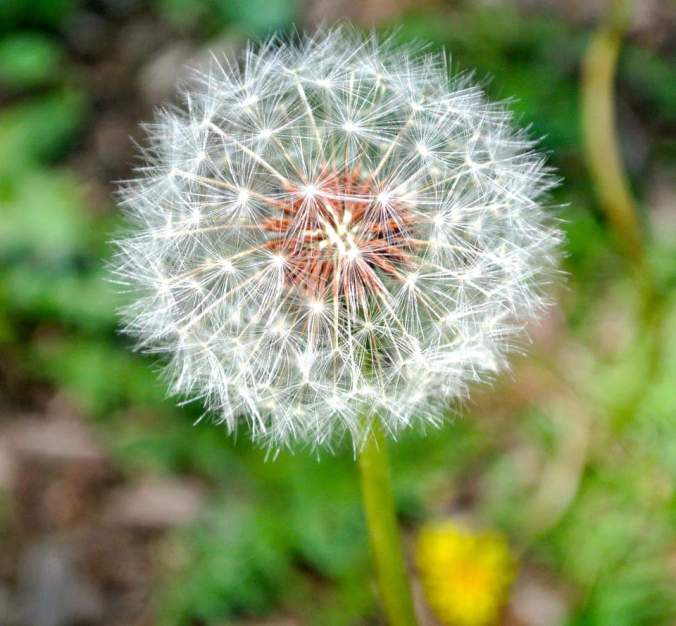
(Photo: Portland, Maine – August 2012)
Late June, walking the deer runs
to Goose Pond after supper,
summer begins. Sidestepping
stormblown poplars,
dry-wading the slash from the pulper’s camps
ten years ago, keeping the imaginary
straight line from Duck Island Light to the north side
of Goose Pond Mountain in our minds’ eyes, poking
straight-arms, trying to keep from snagging
the green fur, the purple stars in the schooldesk landscape
of the nautical chart.
Yellow, blue.
The island woods are yellow. The evening sun
sprays through from the other side of the evergreens.
Watercolors, our first grade pegs
arranging. We push for the first view
of the marsh-edged shore, spruce stumpsticks
edging deep water trout
neverminding the cold. We know where we are:
a mile straight in on the yellow.
We lose our way. My son climbs a blue spruce
to see where we’ve been: the two Sisters,
Long Island Plantation. On the left, the Baptist
church in Atlantic. We head into the sun.
Late June, walking the deer runs
to Goose Pond after supper,
summer begins suddenly. We can hear
the creeing of gulls. Beyond the trees
they are landing, taking off, landing.
Saltwhite. Freshblue. It is all
prearranged. In a minute now
we will see the pond. Nothing has changed.
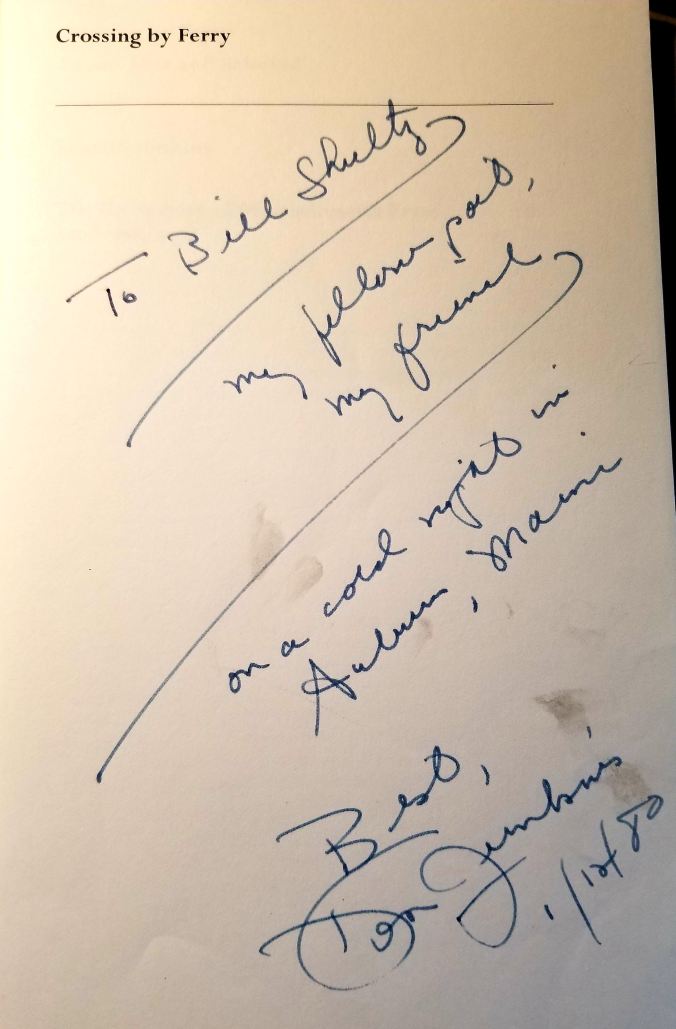
Donald Junkins, The New Yorker, June 1977
Presently the two mares and the two colts came over to see me and to take a drink. The colts looked like children with their big grave eyes, very humble…and they were tamer than I expected. They came over and nudged me with their soft muzzles and I talked to them a bit. – Thomas Merton
A Blessing – James Wright

Photo by Tomasz Filipek on Pexels.com
The blossoming plums are a comforting sight,
they understand I am heavy with wine
– Chiang K’uei
do you recall
when I planted plum trees
to the east of our home
the scent at dusk
promised a life still
as a Chinese scroll
later in darkness
I turned away
and seemed to sleep
so many winters
my head heavy
my plum trees gone
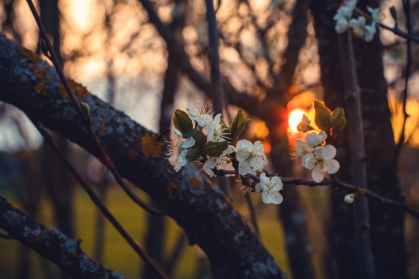
Photo by Irina Iriser on Pexels.com
Strangely, forgiveness never arises from the part of us that was actually wounded. The wounded self may be the part of us incapable of forgetting, and perhaps, not actually meant to forget, as if, like the foundational dynamics of the physiological immune system our psychological defenses must remember and organize against any future attacks — after all, the identity of the one who must forgive is actually founded on the very fact of having been wounded.
Stranger still, it is that wounded, branded, un-forgetting part of us that eventually makes forgiveness an act of compassion rather than one of simple forgetting. To forgive is to assume a larger identity than the person who was first hurt, to mature and bring to fruition an identity that can put its arm, not only around the afflicted one within but also around the memories seared within us by the original blow and through a kind of psychological virtuosity, extend our understanding to one who first delivered it. Forgiveness is a skill, a way of preserving clarity, sanity and generosity in an individual life, a beautiful way of shaping the mind to a future we want for ourselves; an admittance that if forgiveness comes through understanding, and if understanding is just a matter of time and application then we might as well begin forgiving right at the beginning of any drama rather than put ourselves through the full cycle of festering, incapacitation, reluctant healing and eventual blessing.
To forgive is to put oneself in a larger gravitational field of experience than the one that first seemed to hurt us. We reimagine ourselves in the light of our maturity and we reimagine the past in the light of our new identity, we allow ourselves to be gifted by a story larger than the story that first hurt us and left us bereft.
– Robert A. Johnson
1000 days sober last Friday. I thank God, who had to break my life into a million pieces and showed me the spiritual path to wholeness and freedom, relieved me of the bondage of self, and connected me to a supportive, loving community.
Today and every day, the word is: gratitude
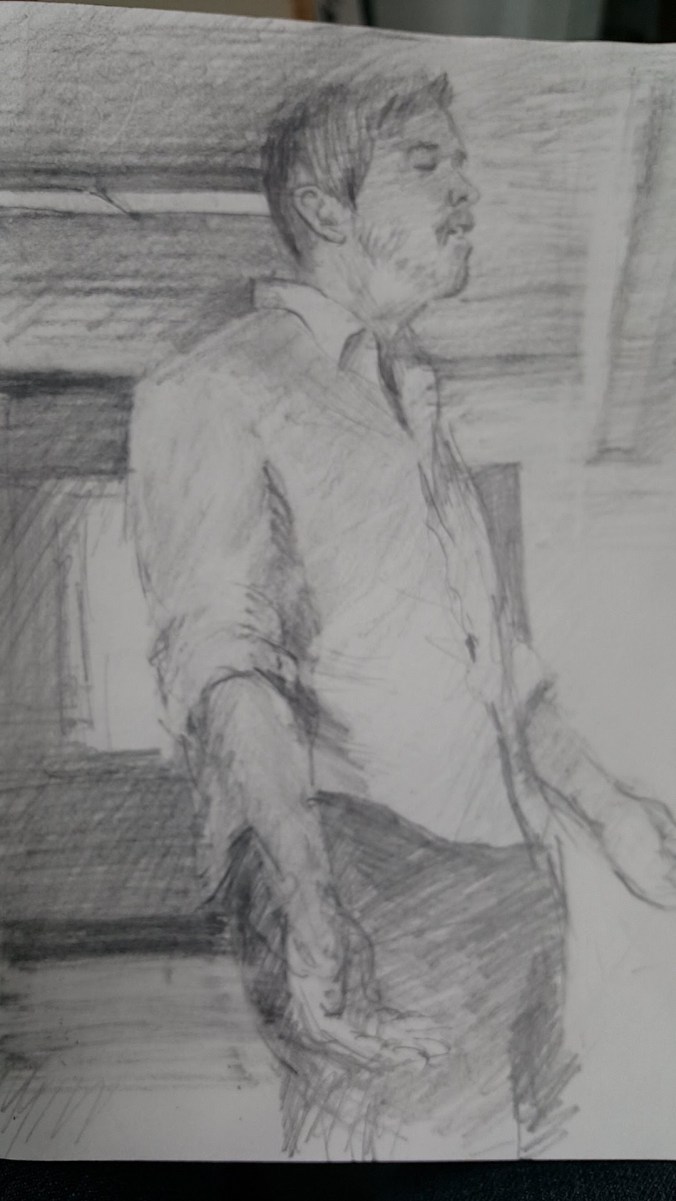
(sketch: Paul Brahms)
The people you have loved deeply remain with you. – Henri Nouwen

Respect the elders.
Embrace the new.
Encourage the impractical and improbable,
without bias.
– David Fricke

 Edge of Atlantic