
Brilliant!


My complicated past is an anthology,
a long line painted on the plains.
I feel like literary history
about to startle the professors.
But it’s not true.
Days ahead, snow heaps up
in the mountains
like undelivered mail.
After driving all night
I guess what it’s like
to fly over them.
For the first time you see
how close things are together,
how the foothills push up
just past where you quit
driving. Urgencies
sputter in the exaltation
of chill air.
Your heart
begins to fall like snow
inside a paperweight.
Oh when in your long damn life,
I ask myself, when will
you seek not a truce,
but peace?

Photo by Skitterphoto on Pexels.com
There is a chase where a falcon dives into the forest and doesn’t come back up. Every moment, the sunlight is totally empty and totally full. – Rumi (of course!)

Photo by Min An on Pexels.com
Darkness is a good and necessary teacher. It is not to be avoided, denied, run from, or explained away. First, like Ezekiel the prophet, we must eat the scroll that is “lamentation, wailing, and moaning” in our belly, and only eventually becomes sweet as honey (see Ezekiel 2:9-10; 3:1-3).
By the time most people reach middle age, they’ve had days where life has lost its meaning, they no longer connect with an inner sense of motivation or joy. Sometimes this manifests as clinical depression and requires a therapist’s skilled care and medication. But even if we don’t experience depression, most of us go through a period of darkness, doubt, and malaise at some point in our lives.
There’s a darkness that we are led into by our own stupidity, sin (the illusion of separation), and selfishness (living out of the false self). We have to work our way out of this kind of darkness by brutal honesty, confession, surrender, forgiveness, apology, and restitution. It may feel simultaneously like dying and being liberated. We resist going through the darkness and facing our shadow, so we usually need help, as the Twelve Steps wisely identify. An accountability partner, spiritual director, or counselor can help us navigate this difficult, ego-humiliating process.
There’s another darkness that we’re led into by God, grace, and the nature of life itself. In many ways, the loss of meaning, motivation, purpose, and direction might feel even greater here. The saints and mystics called it “the dark night of the soul.” But even while we feel alone and that God has abandoned us, we sense that we have been led here intentionally. We know we are in “liminal space,” betwixt and between, on the threshold—and we have to stay here until we have learned something essential. It is still no fun and filled with doubt and “demons” of every sort. But it is the darkness of being held closely by God without our awareness. This is where transformation happens.
The darkness that we get ourselves into by our own “sinful” choices can also become the darkness of God. Regardless of the cause, the dark night is an opportunity to look for and find God—in different forms and ways than we’ve become accustomed. Even if we don’t feel like praying, staying committed to contemplative practice is particularly important.
Sometimes it may be tempting to remain in the darkness—it becomes familiar and we rebel against the light; the paralysis and self-pity has a strange attraction. We may feel an inner restlessness, as if we’re aimlessly pacing back and forth on the same path. Allowing periods of this seemingly fruitless darkness may be part of deconstructing our false self so that we can rebuild on the foundation of our True Self. We must lose our old image of God and our old ways of experiencing God’s presence to discover the absolute reality beneath all of our egoic fantasies and fears.
Photo by Min An on Pexels.com






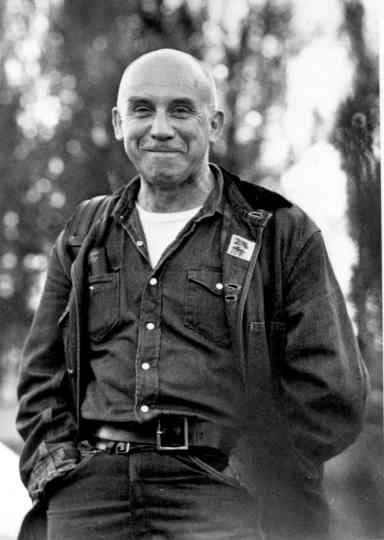
The Voice of God is heard in Paradise:
“What was vile has become precious. What is now precious was never vile. I have always known the vile as precious: for what is vile I know not at all.
“What was cruel has become merciful. What is now merciful was never cruel. I have always overshadowed Jonas with my mercy, and cruelty I know not at all. Have you had sight of Me, Jonas, my child? Mercy within mercy within mercy. I have forgiven the universe without end, because I have never known sin.
“What was poor has become infinite. What is infinite was never poor. I have always known poverty as infinite: riches I love not at all. Prisons within prisons within prisons. Do not lay up for yourself ecstasies upon earth, where time and space corrupt, where minutes break in and steal. No more lay hold on time, Jonas, my son, lest the rivers bear you away.
“What was fragile has become powerful. I loved what was most frail. I looked upon what was nothing. I touched what was without substance, and within what was not, I am.”
There are drops of dew that show like sapphires in the grass as soon as the morning sun appears, and leaves stir behind the hushed flight of an escaping dove.
– Thomas Merton, Journal, July 4, 1952
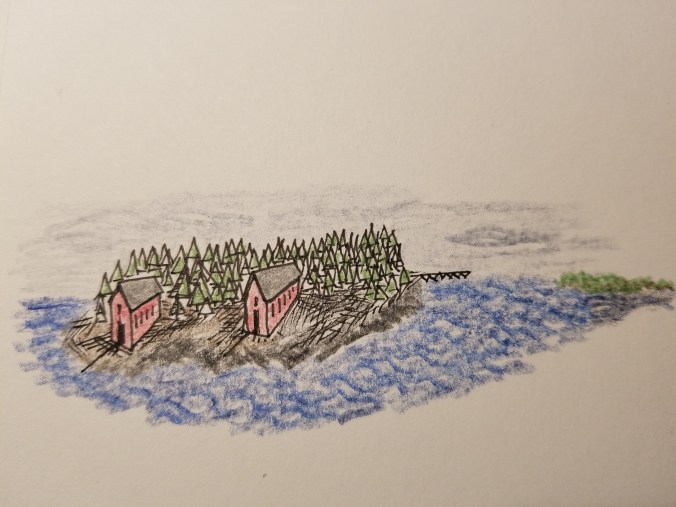
 Edge of Atlantic