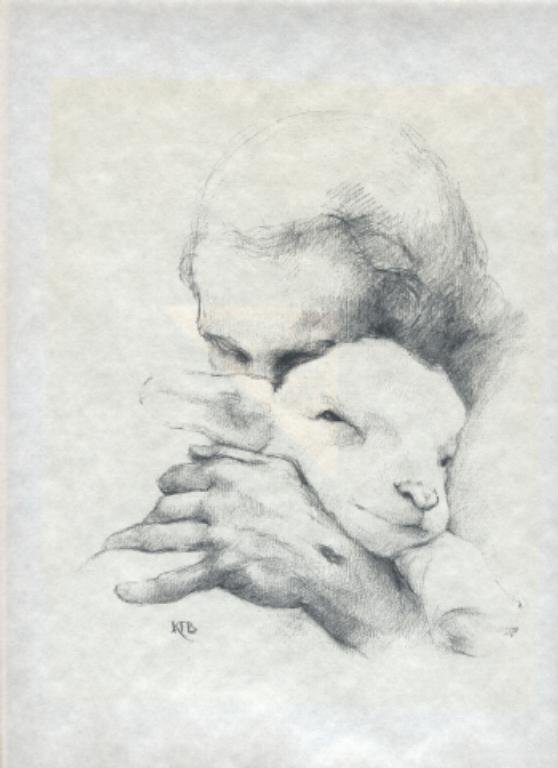
Too bruised to touch…

The Oblate priest and theologian, Ronald Rolheiser, writes about suicide once a year. He explains it this way – “So each year I write a column on suicide, hoping it might help produce more understanding around the issue and, in a small way perhaps, offer some consolation to those who have lost a loved one in this way. Essentially, I say the same things each year because they need to be said. As Margaret Atwood once put it, some things need to be said and said and said again, until they don’t need to be said any more.  Some things need still to be said about suicide.”

Talk about suicide does not come easy – particularly if you are someone who has lived and has seen the darkness lifted. Best, we may think, to ponder those dark moments alone. But this morning I will be on my knees giving thanks to God for another chance to breathe deeply, to laugh, to cry, to feel pain and heartbreak, to feel remorse and sorrow, to love. This afternoon I will give thanks for all who have held me up when I couldn’t stand. This evening I will close my eyes and pray for all those who suffer alone, even when in a crowd, may they – like me – find refuge in the shadow of God’s wings.

Rolheiser writes:

What things? What needs to be said, and said again and again about suicide?  For the sake of clarity, let me number the points:

  1. First, in most cases, suicide is the result of a disease, a sickness, an illness, a tragic breakdown within the emotional immune system or simply a mortal biochemical illness.
  2. For most suicides, the person dies, as the does the victim of any terminal illness or fatal accident, not by his or her own choice. When people die from heart attacks, strokes, cancer, and accidents, they die against their will. The same is true in suicide.
  3. We should not worry unduly about the eternal salvation of a suicide victim, believing (as we used to) that suicide is the ultimate act of despair. God’s hands are infinitely more understanding and gentler than our own. We need not worry about the fate of anyone, no matter the cause of death, who leaves this world honest, over-sensitive, over-wrought, too bruised to touch, and emotionally-crushed, as is the case with most suicides. God’s understanding and compassion exceed our own. God isn’t stupid.
  4. We should not unduly second-guess ourselves when we lose a loved one to suicide: What might I have done? Where did I let this person down? What if? If only I’d been there at the right time!Rarely would this have made a difference. Most of the time, we weren’t there for the very reason that the person who fell victim to this disease did not want us to be there. He or she picked the moment, the spot, and the means precisely so we wouldn’t be there. Suicide seems to be a disease that picks its victim precisely in such a way so as to exclude others and their attentiveness. This is not an excuse for insensitivity, but is a healthy check against false guilt and fruitless second-guessing. Suicide is a result of sickness and there are some sicknesses which all the love and care in the world cannot cure.
  5. Finally, it’s incumbent upon us, the loved ones who remain here, to redeem the memory of those who die in this way so at to not let the particular manner of their deaths become a false prism through which their lives are now seen. A good person is a good person and a sad death does not change that. Nor should a misunderstanding.
DSC_5192

Inscription for the Entrance to a Wood – William Cullen Bryant

Stranger, if thou hast learned a truth which needs
No school of long experience, that the world
Is full of guilt and misery, and hast seen
Enough of all its sorrows, crimes, and cares,
To tire thee of it, enter this wild wood
And view the haunts of Nature. The calm shade
Shall bring a kindred calm, and the sweet breeze
That makes the green leaves dance, shall waft a balm
To thy sick heart. Thou wilt find nothing here
Of all that pained thee in the haunts of men
And made thee loathe thy life. The primal curse
Fell, it is true, upon the unsinning earth,
But not in vengeance. God hath yoked to guilt
Her pale tormentor, misery. Hence, these shades
Are still the abodes of gladness; the thick roof
Of green and stirring branches is alive
And musical with birds, that sing and sport
In wantonness of spirit; while below
The squirrel, with raised paws and form erect,
Chirps merrily. Throngs of insects in the shade
Try their thin wings and dance in the warm beam
That waked them into life. Even the green trees
Partake the deep contentment; as they bend
To the soft winds, the sun from the blue sky
Looks in and sheds a blessing on the scene.
Scarce less the cleft-born wild-flower seems to enjoy
Existence, than the winged plunderer
That sucks its sweets. The massy rocks themselves,
And the old and ponderous trunks of prostrate trees
That lead from knoll to knoll a causey rude
Or bridge the sunken brook, and their dark roots,
With all their earth upon them, twisting high,
Breathe fixed tranquillity. The rivulet
Sends forth glad sounds, and tripping o’er its bed
Of pebbly sands, or leaping down the rocks,
Seems, with continuous laughter, to rejoice
In its own being. Softly tread the marge,
Lest from her midway perch thou scare the wren
That dips her bill in water. The cool wind,
That stirs the stream in play, shall come to thee,
Like one that loves thee nor will let thee pass
Ungreeted, and shall give its light embrace.

DSC_4887

Keep your eyes on the Prince of Peace…

From Henri Nouwen:

Keep your eyes on the prince of peace, the one who doesn’t cling to his divine power; the one who refuses to turn stones into bread, jump from great heights and rule with great power; the one who says, “Blessed are the poor, the gentle, those who mourn, and those who hunger and thirst for righteousness; blessed are the merciful, the pure in heart, the peacemakers and those who are persecuted in the cause of uprightness” (see Matt. 5:3-11); the one who touches the lame, the crippled, and the blind; the one who speaks words of forgiveness and encouragement; the one who dies alone, rejected and despised. Keep your eyes on him who becomes poor with the poor, weak with the weak, and who is rejected with the rejected. He is the source of all peace.

134243_1371204099323_5595849_o

Dharma

“If you bring forth what is within you, what you bring forth will save you; if you do not bring forth what is within you, what you do not bring forth will destroy you.” – The Gnostic Gospel of Thomas

“Every man has a vocation to be someone: but he must understand clearly that in order to fulfill this vocation he can only be one person: himself.” – Thomas Merton

“Resurrection does not only mean an eternal reward in the future. “As now, so later!” Resurrection is the Incarnation taken to its full and logical conclusion. What we choose now, we will indeed be.” – Richard Rohr

2311916955_8da74ae1a5_o

Luxembourg Gardens

Thomas Merton entered the monastery Gethsemani on December 10, 1941 and died by accident in Bangkok, Thailand, on December 10, 1968

In October 1968—a few months before his death, Merton gave a talk in Calcutta, in which he said:
The only ultimate reality is God. God lives and dwells in us. We are not justified by any action of our own, but we are called by the voice of God…to pierce through the irrelevance of our own life, while accepting that our life is totally irrelevant in order to find relevance in Him. And this relevance in Him is something that can only be received, not something we grasp or possess. It is something that can only be received as a gift. Consequently, the kind of life that I represent is a life that is openness to gift; a gift from God and a gift from others.

merton4.278190127_std